OSHA Rigging and Signaling Requirements: What the Crane Standard Says
Where the Rules Live
Most OSHA rigging and signaling requirements for construction cranes are found in 29 CFR 1926 Subpart CC, Cranes and Derricks in Construction, which starts at section 1926.1400. A few related rules sit elsewhere, notably 1926.251 for rigging equipment used for material handling.
This article summarizes the key sections in plain language. It is a starting point, not legal advice. Always read the current text on osha.gov (opens in a new tab) and follow your employer's site-specific procedures.
Rules for Riggers
1926.1404: Assembly and disassembly
When a crane is being assembled or disassembled, rigging work must be done by a qualified rigger. Assembly and disassembly involve heavy components, temporary supports and blocking, and errors are often catastrophic, so OSHA does not leave this rigging to just anyone.
1926.1425: Keeping clear of the load
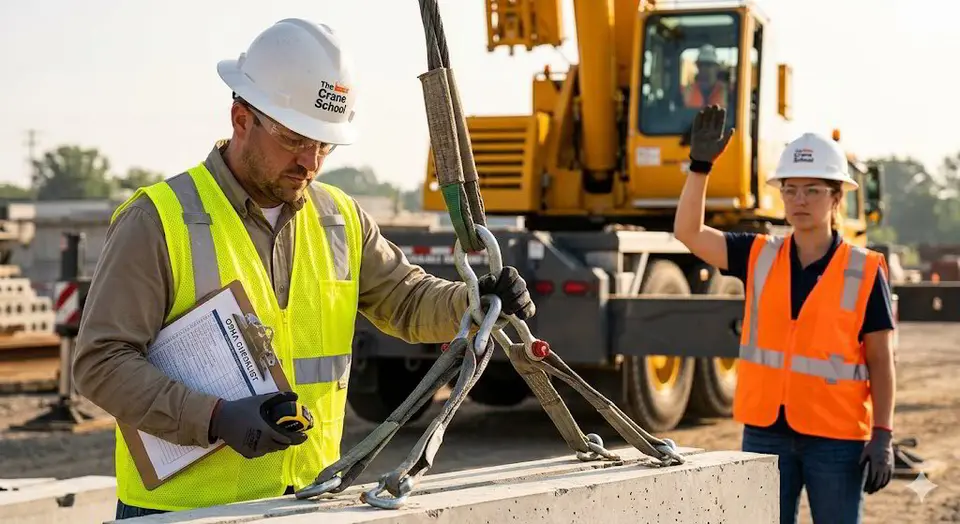
This section limits who may be in the fall zone during a lift. Workers may be there only when they are hooking, unhooking or guiding a load, or making the initial connection of a load to a component or structure. When workers are in the fall zone for those tasks, the materials must be rigged by a qualified rigger to prevent unintentional displacement.
What "qualified" means
OSHA defines a qualified person as someone who, by possessing a recognized degree, certificate or professional standing, or by extensive knowledge, training and experience, has demonstrated the ability to solve problems related to the subject matter. OSHA does not require riggers to hold third-party certification. Employers decide who is qualified, but they need to be able to back that decision up. NCCCO Rigger Level I and Level II certifications are widely used for exactly that reason.
Rules for Rigging Equipment
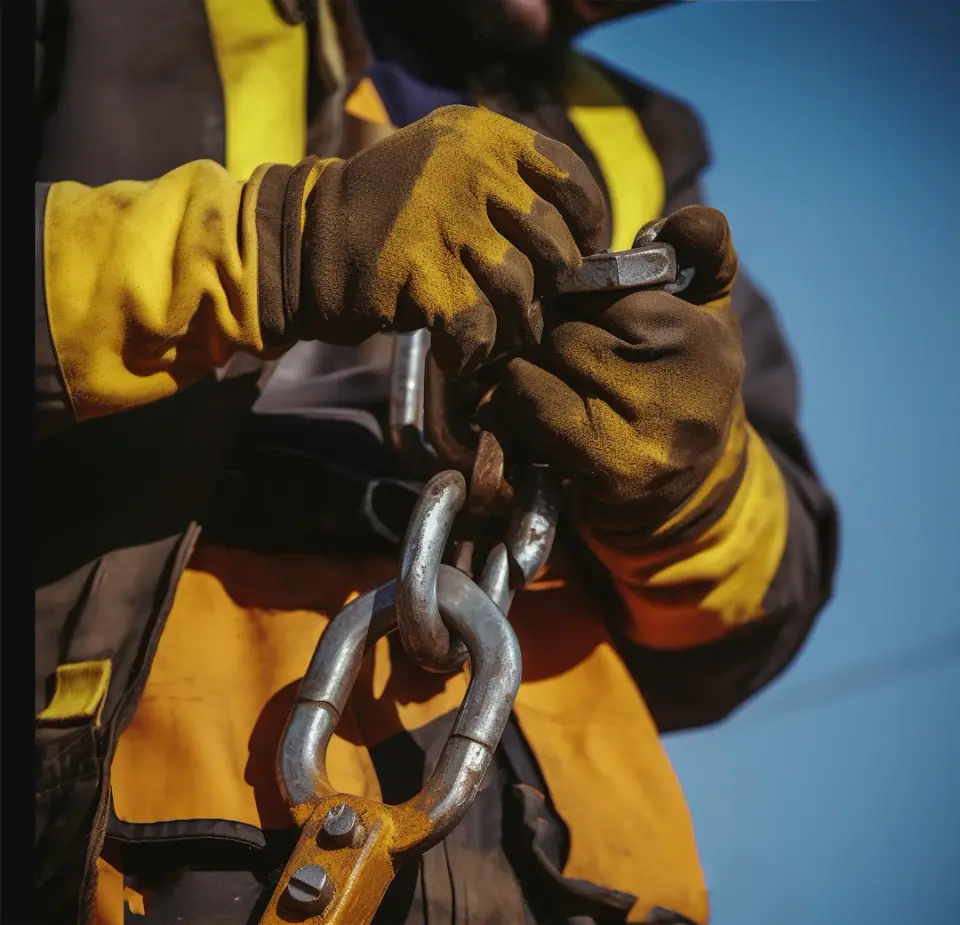
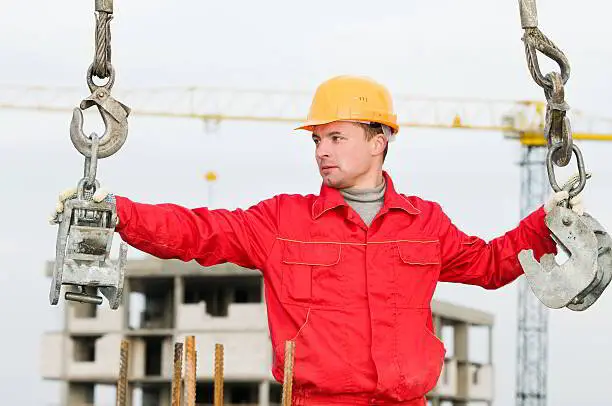
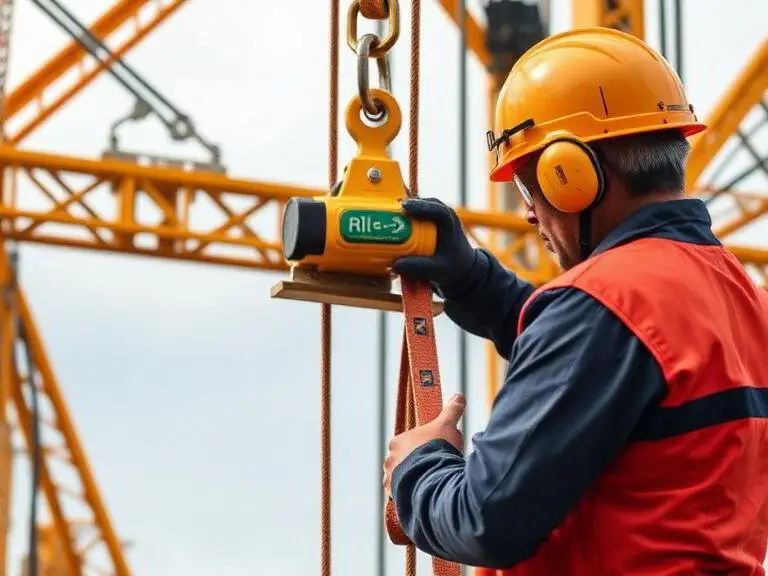
Section 1926.251 covers slings and rigging hardware used in construction. Its themes are straightforward:
- Rigging equipment must be inspected before use on each shift and as needed during use, by a competent person.
- Defective gear must be removed from service.
- Slings and hardware must not be loaded beyond their rated capacity, and that capacity must be identifiable on the gear.
- Specific removal criteria apply to wire rope, alloy steel chain and synthetic slings, such as broken wires, stretched links, cuts or heat damage.
Training programs spend real time on these inspection criteria because they are where many rigging failures begin.
Rules for Signaling
1926.1419 through 1926.1422: How signals are given
A signal person must be provided when:
- The point of operation is not in full view of the operator.
- The operator's view in the direction of travel is obstructed.
- Site-specific safety concerns lead the operator or the person handling the load to decide one is needed.
Signals may be hand, voice, audible or new signals, as long as the method is appropriate for the site. Hand signals must follow the standard method shown in OSHA's Appendix A to Subpart CC, unless that is infeasible. Before beginning operations, the operator, signal person and lift director (if there is one) must agree on the voice signals to be used. The operator must obey an emergency stop signal from anyone.
1926.1428: Signal person qualifications
Before giving signals, a signal person must be qualified by either a third-party qualified evaluator or the employer's qualified evaluator. The person must know and understand the signals used, be competent applying them, have a basic understanding of crane operation and limitations (including boom deflection), and know the relevant OSHA requirements. Qualification is demonstrated through an oral or written test and a practical test, and documentation must be available at the site.
Power Lines and Other Related Sections
Rigging and signaling also show up in other parts of Subpart CC. Section 1926.1408 covers work near power lines and can require a dedicated spotter to watch clearance distances. The spotter role is distinct from the signal person, though the same communication skills apply.
Operator certification under 1926.1427 is a separate requirement for the person in the cab. OSHA's 2018 update clarified that operator certification is by crane type, not capacity. If you are on a crew, it helps to know what the operator is required to hold, even though it is not your credential.
How Training Lines Up With the Rules
Each OSHA requirement points to a specific kind of preparation:
- Qualified rigger work under 1926.1404 and 1926.1425 points to rigger training and, for portable proof, NCCCO Rigger Level I or Level II certification. Both levels have written and practical exams.
- Signal person qualification under 1926.1428 points to signalperson training and either employer evaluation or NCCCO Signalperson certification, which has written and practical exams.
- Rigging gear inspection under 1926.251 is covered in any solid rigging course.
The Crane School's Rigger Qualification and Certification Program references OSHA Subpart CC throughout, and the Signalperson Qualification and Certification Program is built around the standard signals and the 1926.1428 criteria.
Common Compliance Gaps
Experienced safety managers see the same issues come up during audits and incident reviews:
- A worker "everyone knows is good at rigging" handling loads with no documentation of qualification.
- Signal person qualification paperwork kept at the office instead of at the site.
- Voice signals used without a pre-lift agreement on the terms.
- Damaged slings left in the gang box instead of being tagged out and removed.
- Non-standard hand signals that only one operator understands.
Each of these is easy to fix with training and simple site procedures. For a supervisor-level look at crane compliance, see the Managing Crane Safety Class. Our article on rigger certification requirements covers the NCCCO side in more detail.
Get Your Crew Qualified
The Crane School has trained crews for more than 21 years and can deliver rigging and signaling programs at your facility anywhere in the country. Contact us or call (813) 402-2017 to plan training that matches the OSHA requirements on your sites.
FAQ
Does OSHA require riggers to be certified?
No. OSHA requires a qualified rigger for certain work, such as assembly and disassembly (1926.1404) and lifts where workers are in the fall zone (1926.1425). Certification is a common way to show qualification, but not the only one.
Which OSHA section covers signal person qualification?
29 CFR 1926.1428. It allows qualification by a third-party qualified evaluator or by the employer's qualified evaluator.
Where are OSHA's standard crane hand signals?
In Appendix A to 29 CFR 1926 Subpart CC. Hand signals must follow that standard method unless it is infeasible for the operation.
Can anyone give an emergency stop signal?
Yes. The operator must obey an emergency stop signal no matter who gives it.