
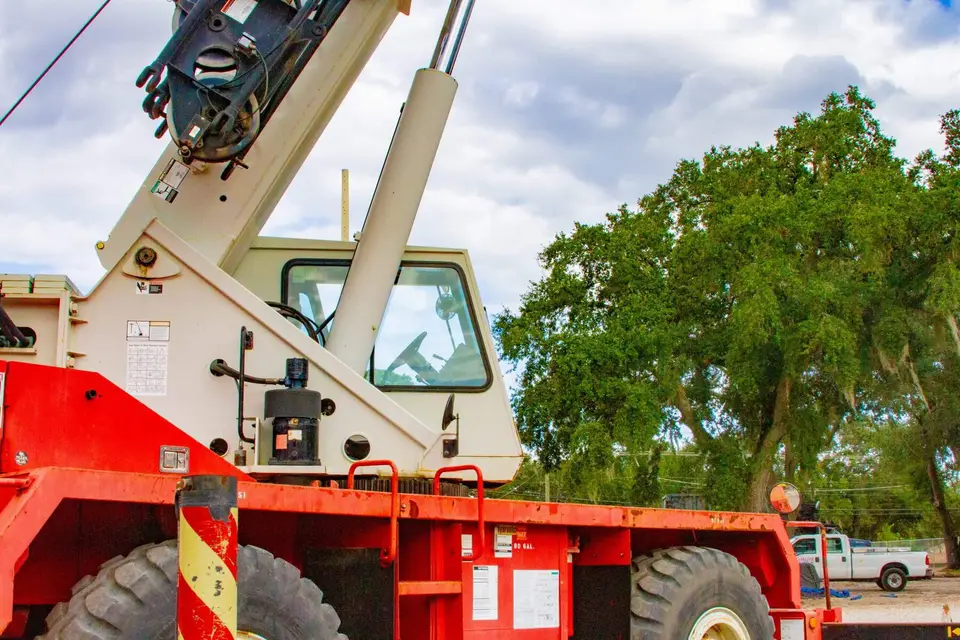
Crane operator reviewing a load chart in the cab of a mobile crane before an NCCCO practical exam
Questions and answers

NCCCO Crane Certification FAQ

Straight answers about NCCCO certification, OSHA requirements, exams and training at The Crane School.

Your NCCCO crane certification FAQ

This NCCCO crane certification FAQ collects the questions we hear most from new operators, experienced hands who need to recertify, and safety managers trying to keep a crew compliant. The answers are grouped by topic below: certification basics, OSHA requirements, exams and results, choosing a school, and pay.

A quick note on roles before you dive in. The National Commission for the Certification of Crane Operators (NCCCO) is an independent body that writes the exams and issues certifications. The Crane School is a training provider: we prepare you for the written and practical exams, and our programs include the required NCCCO exams whether you train at our Seffner, Florida center or we bring a scheduled program to your company's site.

Federal rules are covered here in general terms. For the exact wording, read OSHA 29 CFR 1926.1427 directly, and remember that some states and cities add their own crane operator licensing on top of the federal standard.

If your question isn't answered here, email info@thecraneschool.com or call (813) 402-2017, Monday through Friday, 7:00 AM to 4:00 PM. You can also browse our training programs, read our step-by-step certification guide, or reach the office through the contact page.
NCCCO and certification basics

What is NCCCO?

NCCCO stands for the National Commission for the Certification of Crane Operators, often shortened to CCO. It is an independent non-profit organization formed in January 1995 to set performance standards for people who operate and work around load-handling equipment, and to assess their knowledge and skills through written and practical exams.

Why does crane operator certification matter to the industry?

Crane incidents can cause serious injuries, property damage, project delays and lawsuits. Operator skill is one of the biggest factors in preventing them, and a standardized, third-party assessment gives everyone on site a common measure of whether an operator has the required knowledge and ability.

How does certification help make crane work safer?

Certification sets a clear minimum standard and pushes operators to train for it, so they arrive on the job knowing load charts, setup, inspections and signals. It also gives employers an objective way to confirm competence before putting someone in the seat, which reduces the guesswork that leads to accidents.

Who helped build the CCO certification program?

The program was industry-led from the start, with crane operators playing a central role. Volunteers from construction, steel erection, general industry, training, manufacturing, insurance, the military, OSHA and the International Union of Operating Engineers (IUOE) helped define what a safe operator needs to know.

How are the questions on NCCCO exams developed?

Panels of subject-matter experts work with NCCCO staff to write and review every question. Each exam draws a combination of items from a question bank according to a test blueprint built from NCCCO's job analysis, so each version covers the same content areas at a consistent level of difficulty.

Why doesn't NCCCO provide training?

To keep its assessments independent and objective, NCCCO does not train candidates. Training is left to separate providers such as The Crane School. NCCCO's website at nccco.org (opens in a new tab) has more about how the certification side works.

Why is testing kept separate from training?

A fair exam has to be free from the influence of any one company or interest group. Separating testing from training lets NCCCO combine input from every part of the industry with professional exam developers, so a passing result means the same thing no matter where you trained.

What do employers and operators gain from CCO certification?

Employers get independent evidence that a certified operator has shown the core knowledge and skills for safe crane operation, rather than relying on personal judgment alone. Operators get a recognized, portable credential that documents their ability to current and future employers.

OSHA rules and certification requirements

Does OSHA require crane operators to be certified?

Yes, for construction work. Under OSHA's cranes and derricks standard (29 CFR 1926 Subpart CC), section 1926.1427 requires operators of covered equipment to be certified before operating, with limited exceptions such as operators-in-training under supervision. Different rules apply in general industry and maritime settings, so check the standard that governs your work.

Is NCCCO the only way to get certified?

No. OSHA requires certification from an accredited crane operator testing organization (or one of the other limited routes the rule allows), and NCCCO is one of several accredited certifiers. It is the most widely recognized program in the U.S., and some employers and unions specifically ask for NCCCO cards, so confirm what your employer accepts.

Do all crane operators need to be certified, or only some?

NCCCO certification itself is voluntary, but federal OSHA requires certification for operators doing construction work with covered cranes. Outside construction, more employers now require certification as a condition of hiring, and some states and cities add their own licensing on top of the federal rule.

How does the CCO program relate to OSHA rules and ASME standards?

The CCO mobile crane program was built around the ASME B30.5 mobile crane standard and OSHA's crane regulations. Because NCCCO is an accredited certifier, its certifications can be used to meet OSHA's construction operator certification requirement.

Do I need a separate certification for each type of crane?

Yes. OSHA's construction rule requires certification by type of crane, not by lifting capacity. If you run a telescopic boom crane and a lattice boom crawler, for example, you need a certification that covers each type.

Do unions recognize NCCCO certification?

NCCCO certification is widely recognized across the industry, and many union training programs prepare members for CCO exams. Requirements can vary by local, so ask your union hall which credentials it expects.

Do I need a CDL to operate a crane?

No. A commercial driver's license is not required to operate a crane. An employer may still require a CDL if your job includes driving a crane on public roads or highways.

What vehicles can I drive with a Class A CDL?

CDL classes and endorsements are set by each state, so check with your state's department of motor vehicles or department of transportation for exact rules. The Crane School does not provide CDL training.

Exams, results and recertification

When and where can I take NCCCO exams?

NCCCO written exams are offered around the country on demand when employers, unions and other groups request them. The Crane School offers CCO written exams every month at our Seffner, FL headquarters, and our accredited practical examiners can schedule CCO practical exams nationwide. Contact us to set a date.

Can I take all of my mobile crane exams during one course?

Yes. Our mobile crane programs include the NCCCO written and practical exams, so you can complete all of them during your scheduled course rather than booking each one separately.

How long does it take to receive my NCCCO certification card?

Timing varies, but cards typically arrive by mail 3 to 5 weeks after you pass both your written and practical exams. The MyCCO app can show your results sooner in digital form.

Who can explain why I didn't pass a written exam?

Call NCCCO Testing Services at 727-449-8525. The Crane School only receives pass or fail results, so we cannot see which questions you missed or why.

How long is a crane operator certification valid?

CCO certifications are valid for five years. We suggest enrolling in recertification during your final year so there is no lapse; when you pass, NCCCO adds five years to your current expiration date.

Choosing and attending a crane school

How should I choose a crane operator school?

Compare total cost, course length, whether the prep class, written exams and practical exams are all included, how much seat time you get, and the instructors' certifications. The Crane School publishes a guarantee on its written-exam training; ask us for the terms before you enroll. Our class schedule lists upcoming start dates.

What do I need to bring to class?

Bring hard-toe footwear, a hard hat, work clothing and gloves suited to the weather, a government-issued photo ID and a driver's license in good standing. Sunglasses help in the field. Training materials and handouts are provided.

Crane operator careers and pay

How much do crane operators earn?

Pay depends heavily on location, experience, crane type, industry and union status. For current figures, see the U.S. Bureau of Labor Statistics Occupational Employment and Wage Statistics for crane and tower operators (53-7021) (opens in a new tab).

Which crane operators earn the most?

Higher pay generally follows experience, specialized certifications such as lattice boom or tower cranes, demanding industries and high-cost regions. BLS publishes wage data by state, metro area and industry, which is the most reliable way to compare markets.

What is a typical hourly rate for a crane operator?

Hourly rates vary widely from one region and employer to the next. Rather than rely on a single number, check the BLS occupational data for crane and tower operators in your state or metro area, and ask local employers or union halls about current rates.

The Crane School

Training Programs & Services

All programs are delivered in compliance with current OSHA regulations.

Mobile Crane Operator Certification Prep Program

For experienced operators ready to certify or recertify. Includes NCCCO TSS, TLL and LAT written and practical exams.

Learn more about Mobile Crane Certification Prep

Initial Mobile Crane Operator Training Program

For people with little or no crane experience. 3-week (TSS/TLL) and 5-week (adds LAT) programs with NCCCO exams.

Learn more about Initial Mobile Crane Training (3 & 5 Week)

Articulating Crane Operator Certification Prep Program

For knuckle-boom operators. Prepares you for the NCCCO ABC, ABL and ABW written and practical exams.

Learn more about Articulating Crane Certification Prep

Rigger Qualification / Certification Program

For personnel who rig loads to cranes — supports your rigger qualification and NCCCO Rigger Level I/II exams.

Learn more about Rigger Level 1 & 2

Signalperson Qualification / Certification Program

Standard hand and voice signals for directing cranes, plus preparation for the NCCCO Signalperson exams.

Learn more about Signalperson

Managing Crane Safety Class

For managers and supervisors: OSHA compliance, lift planning, inspections, certification and liability.

Learn more about Managing Crane Safety

Telehandler Operator Program

Certification or recertification for telehandler operators. Includes the NCCCO THO written and practical exams.

Learn more about Telehandler Operator

Crane Inspection Services

Annual, monthly, post-assembly and post-incident inspections plus load testing by NCCCO-certified inspectors.

Learn more about Crane Inspections

Related Reading

Crane Operator Practice Test

Ten quick questions on crane safety rules and NCCCO basics. Pick one answer per question — your score shows on the next page.

1. Which OSHA standard covers cranes and derricks used in construction?
2. How long is an NCCCO crane operator certification valid before recertification?
3. What does NCCCO stand for?
4. Under OSHA's current construction crane rule, operator certification must be obtained by:
5. Under OSHA Table A (1926.1408), what is the minimum clearance from power lines rated up to 50 kV?
6. When is a signal person required?
7. Whose emergency stop signal must a crane operator obey?
8. What does an anti-two-block device prevent?
9. Which document gives a crane's rated capacity for a given boom length and radius?
10. Which NCCCO designation covers telescopic boom cranes with a swing cab?