How to Become a Certified Crane Operator When You Are Starting From Zero
Who This Roadmap Is For
If you have never sat in a crane cab, this post is for you. Maybe you are coming out of the military, a warehouse, trucking, or a general labor job, and you want a skilled trade with clear credentials. Learning how to become a certified crane operator from scratch is very doable, but the path looks different than it does for someone who already runs equipment.
We focus here on the career side: building skills, earning certification and getting hired. If you want the administrative checklist of exam registration and results, see our crane operator certification process in 8 steps.
Stage 1: Find Out if the Work Fits You
Before you spend money on training, get a feel for the job. Crane operators often start early, work outdoors in heat or cold, and spend long stretches in the cab paying close attention. The work rewards people who are calm, patient and precise, and who are comfortable saying "stop" when something looks wrong.
Ways to test the fit:
- Talk to working operators, riggers or site supervisors you know.
- Watch crane work on a job site from a safe public spot and notice how much of it is communication.
- Read about daily routines in posts like a day in the life of a Florida crane operator.
You also need to meet NCCCO's candidate rules: be 18 or older, meet medical criteria for your crane type, and follow its substance abuse policy and code of ethics.
Stage 2: Get Real Seat Time Through Training
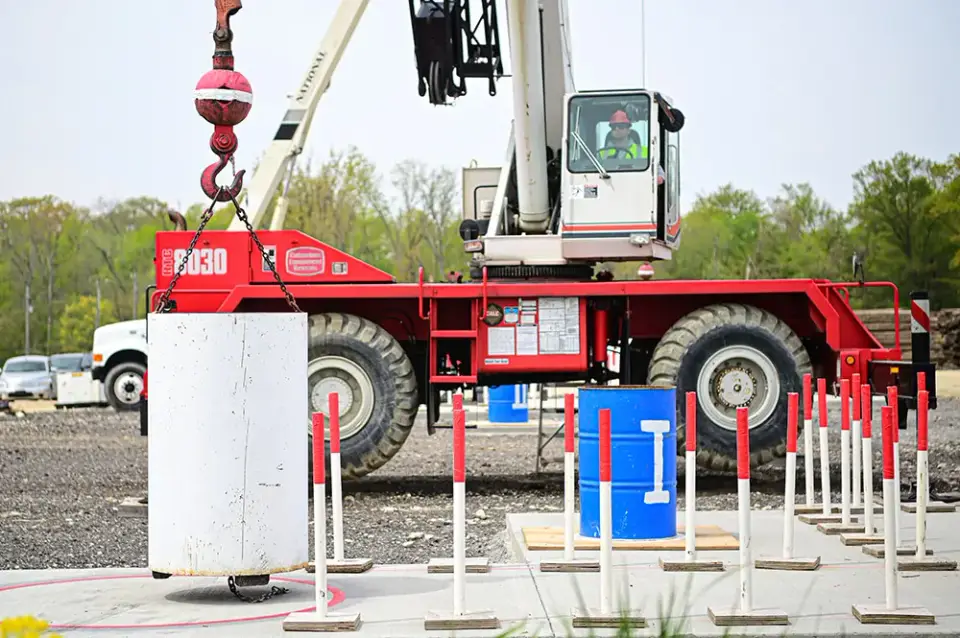
This is the stage that separates newcomers from experienced operators. NCCCO does not require a minimum number of hours to test, but the practical exam is graded on how you actually run the crane. Without guided practice, most beginners do not pass.
A beginner program should give you:
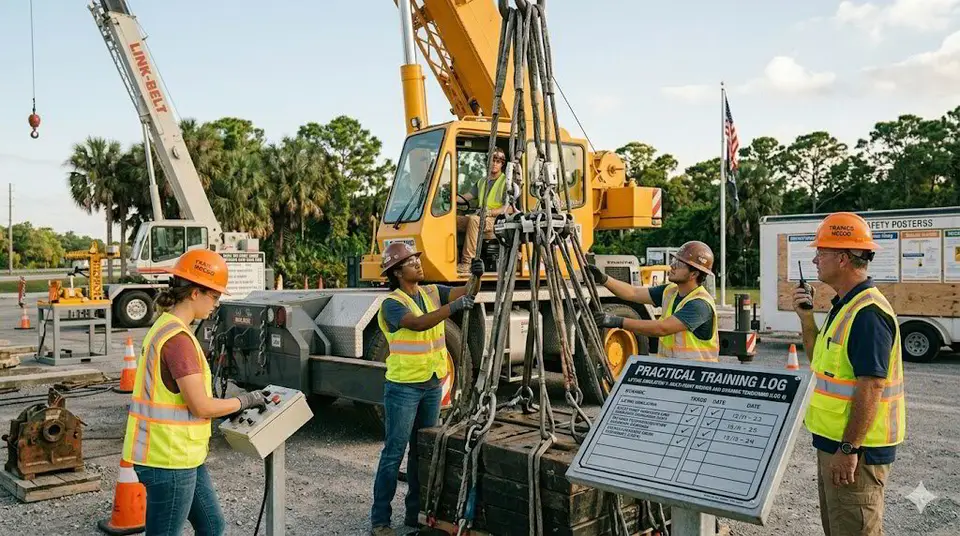
- Classroom fundamentals: crane components, terminology, OSHA rules, signals, rigging basics and safe setup.
- Load chart training: reading charts, calculating capacity, and understanding what reduces it.
- Daily operating time: smooth swing, boom and hoist control, then precise placement under time pressure.
- Exam preparation: written and practical exams built into the schedule.
At The Crane School, the initial mobile crane operator training program is built for this. The 3-week version covers telescopic boom cranes and NCCCO TSS and TLL exams. The 5-week version adds lattice boom and the LAT exam. Classes run full-time, Monday through Thursday, 7:00 AM to 4:00 PM.
When you compare programs anywhere, ask a few direct questions. How many hours will I personally spend operating, not watching? Are the instructors certified operators? Are NCCCO exams included in the schedule, or do I arrange them separately? What happens if I do not pass one part? Clear answers to those questions tell you more than any brochure.
Stage 3: Earn Your NCCCO Certification
Certification has two halves. The written exam tests knowledge: a core exam plus specialty exams for each crane type. The practical exam has you run the crane through timed tasks in front of an accredited examiner.
For beginners, the practical is usually the harder half, because nerves and inexperience show up as jerky movements and overswing. That is why steady daily practice during training matters more than cramming. When the card arrives, typically 3 to 5 weeks after passing, you have a credential employers recognize nationwide, valid for five years.
Stage 4: Land Your First Crane Job
A new card does not make you an experienced operator, and employers know that. Expect your first role to involve close supervision, smaller cranes, or a mix of operating and ground work. That is normal and valuable.
Tips for the job search:
- Lead with your designations. List exactly which crane types you are certified on.
- Show safety habits. Mention inspection routines, signal training and any rigging or signalperson coursework.
- Be flexible on location and shift. Some of the best starter jobs are on night work, plants or remote projects.
- Ask about mentoring. A crew that pairs you with a senior operator is worth more than a slightly higher starting rate.
Browse openings through our crane job resources. For pay ranges, check the U.S. Bureau of Labor Statistics data for crane and tower operators (occupation code 53-7021). Pay varies widely by region, industry and union status, so look at local figures rather than national averages.
Stage 5: Your First Year and Beyond
Your employer must evaluate you on each machine before you run it on its own, as OSHA 29 CFR 1926.1427 requires. Treat those evaluations as learning opportunities, not hurdles.
During the first year, focus on:
- Doing a thorough pre-shift inspection every single time.
- Keeping a log of hours and crane types. You will want it at recertification.
- Learning from riggers and signalpersons. Many operators add those certifications later.
- Asking questions before a lift, not during it.
After a few years, operators often add designations, move to larger cranes, or branch into roles like lift planning or inspection. Our post on crane operator career paths after NCCCO certification maps those options.
Take the First Step
Becoming an operator from zero takes a few weeks of focused training and a willingness to keep learning on the job. If you are ready to look at dates, check the class schedule. If you have questions about whether a 3-week or 5-week program fits your goals, give us a call at (813) 402-2017.
FAQ
Can I become a crane operator with no prior experience?
Yes. Beginner programs are designed for people with little or no seat time and include the daily operating practice needed to pass the NCCCO practical exam.
Should I choose the 3-week or 5-week program?
Choose 3 weeks if you want telescopic boom certifications (TSS and TLL). Choose 5 weeks if you also want lattice boom (LAT) certification for larger crawler and truck cranes.
Do I need a CDL before starting crane training?
No. A CDL is not required for training or certification, though some employers want one if you will drive cranes on public roads.
Will one certification qualify me for every crane?
No. NCCCO certifies by crane type, so you test separately for each designation you need.