Crane Industry Regulation Updates You Need to Know
Why These Crane Regulation Updates Still Matter
Many operators and supervisors learned the trade under one set of rules and now work under another. If you have ever heard conflicting answers about whether certification needs to list capacity, or whether a certified operator still needs an employer evaluation, the reason is that the rule changed more than once.
This post walks through the crane regulation updates that still affect construction work today, in plain language. If you want a process for spotting the next change before it catches you off guard, read our companion guide on how to keep up with crane industry regulation updates.
2010: Subpart CC Replaces the Old Crane Rule
For decades, construction cranes were covered by a short section of OSHA's construction standards that relied heavily on older industry standards. In 2010, OSHA published 29 CFR 1926 Subpart CC, Cranes and Derricks in Construction, which took effect in November 2010.
Subpart CC was a major overhaul. Among other things, it introduced or expanded:
- Ground conditions responsibilities, including duties for the controlling contractor (1926.1402)
- Assembly and disassembly procedures and the role of the A/D director
- Power line safety with defined clearance distances and planning steps (1926.1408)
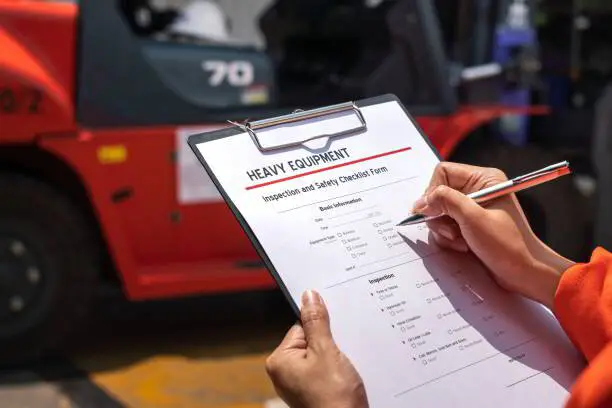
- Inspection requirements for each shift, monthly, annual and event-triggered inspections (1926.1412)
- Qualified signal persons (1926.1428)
- Qualified riggers for assembly/disassembly work
- Operator certification (1926.1427), with a phase-in period
These provisions are still the backbone of crane safety on construction sites.
2014 and 2017: Certification Deadline Extensions
The original rule gave employers until November 2014 to make sure operators were certified. Industry raised concerns about how certification by capacity would work and about whether certification alone proved an operator was ready for a specific job.
OSHA extended the certification deadline, first to November 2017 and then to November 2018, while it worked on revisions. During that time, employers still had a duty to ensure operators were competent to run the equipment safely. Many companies did not wait, and certification through organizations like NCCCO became standard practice well before the final deadline.
2018: The Operator Qualification Rule
In late 2018, OSHA finalized changes to 1926.1427 that define how operator qualification works today.
Certification by type
Operators must be certified by crane type. Certification that also lists capacity is acceptable but no longer required. NCCCO certifications, for example, are issued by crane type, such as TSS (telescopic boom, fixed cab), TLL (telescopic boom, swing cab) and LAT (lattice boom).
Employer evaluation
Certification alone is not enough. Employers must evaluate operators to make sure they can safely operate the specific equipment they will use, including any attachments or configurations, and must document that evaluation. This requirement took effect in early 2019.
Operator-in-training provisions
Uncertified operators may run equipment as operators-in-training under defined supervision and limits while they work toward certification.
Training
The 2018 changes also clarified training duties, including retraining when needed, under 1926.1430.
The practical result: hiring a certified operator is the starting point, and the employer's evaluation and documentation complete the picture.
Smaller Changes Worth Knowing
Since 2010, OSHA has also made narrower adjustments to Subpart CC, including how the rule applies to certain digger derricks used in utility work. If you work in a niche area, such as utility, demolition or underground construction, check the current text of the standard for provisions that apply to your equipment.
OSHA also adjusts its maximum civil penalty amounts each year for inflation. That means the cost of a citation for missing inspections or uncertified operators tends to rise over time, even when the rule itself has not changed.
Industry Standards Keep Moving Too
OSHA rules are not the only moving target.
- ASME B30 volumes are revised periodically. B30.5 (mobile and locomotive cranes), B30.2 (overhead and gantry cranes), B30.9 (slings) and B30.26 (rigging hardware) all influence what inspectors and trainers expect.
- Manufacturers issue service bulletins and updated manuals that can change inspection items or operating limits.
- NCCCO updates candidate handbooks, exam content and policies from time to time. CCO certifications are valid for five years, so an operator recertifying may notice changes since their last exam.
Check NCCCO's website (opens in a new tab) for current candidate handbooks before you test or recertify.
Signal Persons and Riggers Under the Current Rule
Operator certification gets the most attention, but Subpart CC also set lasting expectations for the people working with the operator.
- Signal persons must be qualified under 1926.1428, either by a third-party qualified evaluator such as NCCCO or by an employer's qualified evaluator. The employer must have documentation of the qualification available at the site.
- Riggers doing assembly and disassembly work, and those hooking or unhooking loads in certain situations, must be qualified riggers. OSHA does not require a specific rigger certification, but the rigger must meet the definition of a qualified person for the rigging work.
These requirements have not changed as dramatically as operator certification, but they are often the ones crews overlook.
What These Updates Mean for You
For operators
- Keep your certification current and know which crane types it covers
- Expect your employer to evaluate you on the specific equipment you will run
- Keep copies of your cards and evaluation records
For employers
- Verify certification by crane type for every operator
- Document an evaluation for each operator on each type of equipment and relevant configuration
- Retrain when an operator's performance or new equipment calls for it
- Make sure signal persons and riggers meet their own qualification requirements
For supervisors and safety managers
- Update company procedures that still reference the pre-2018 rule
- Train site leaders on who is responsible for ground conditions, power lines and inspections
Stay Current With Training
Our mobile crane operator certification prep program prepares experienced operators for NCCCO TSS, TLL and LAT exams and recertification. Supervisors can get up to speed on current OSHA responsibilities in our Managing Crane Safety Class. For a role-by-role look at training duties, read OSHA crane training requirements explained.
Have a question about how the current rules apply to your crew? Contact The Crane School.
FAQ
Does my crane operator certification need to list capacity?
No. Since OSHA's 2018 changes, certification by crane type is acceptable. Certifications that also include capacity are still allowed.
If an operator is NCCCO certified, do I still need to evaluate them?
Yes. Employers must evaluate each operator's ability to safely run the specific equipment they will use and document that evaluation, in addition to verifying certification.
Has the operator certification requirement been delayed again?
The certification requirement has been in effect since November 2018, and the employer evaluation requirement since early 2019. Always check OSHA's website for the current text of 1926.1427.