Mission, Precision, Power: Why a Crane Operator Career Fits Florida's Military Veterans
A New Mission After Service
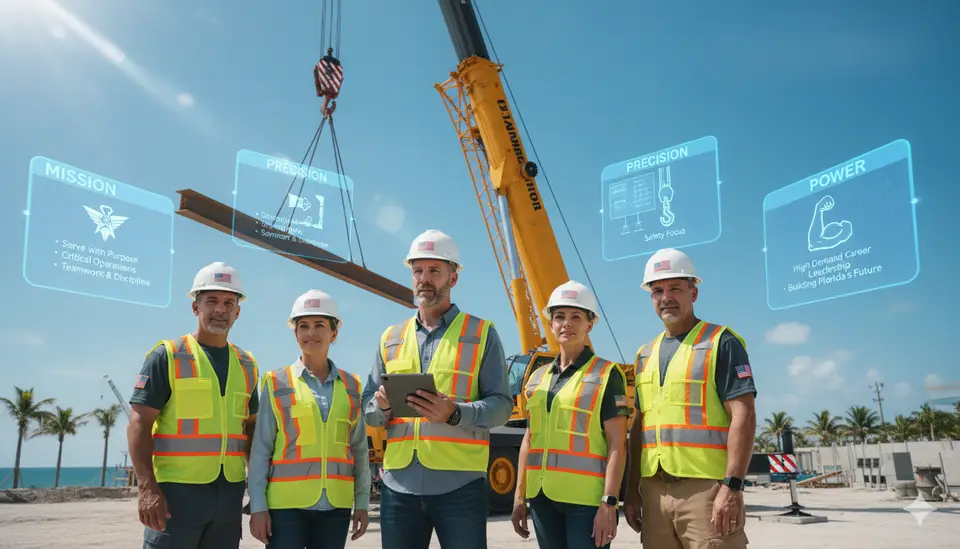
Leaving the military means leaving structure, purpose and a team that depends on you. Many veterans look for civilian work that offers the same things. For a lot of people, crane operator jobs for veterans check those boxes: clear procedures, real responsibility and a crew that has to trust each other.
Florida has a large veteran population and steady construction activity. This article explains which military habits carry over to the cab and what the path to certification looks like.
Skills That Transfer From Uniform to Cab
Your job title may not have a civilian twin, but your habits do. Four stand out.
Checklists and procedure
In the service, you learned that skipped steps cost lives, whether on a pre-flight check, a weapons inspection or a convoy briefing. Crane operators start every shift with a documented inspection and run every lift from a plan. Veterans tend to treat those steps as mission requirements rather than chores.
360-degree awareness
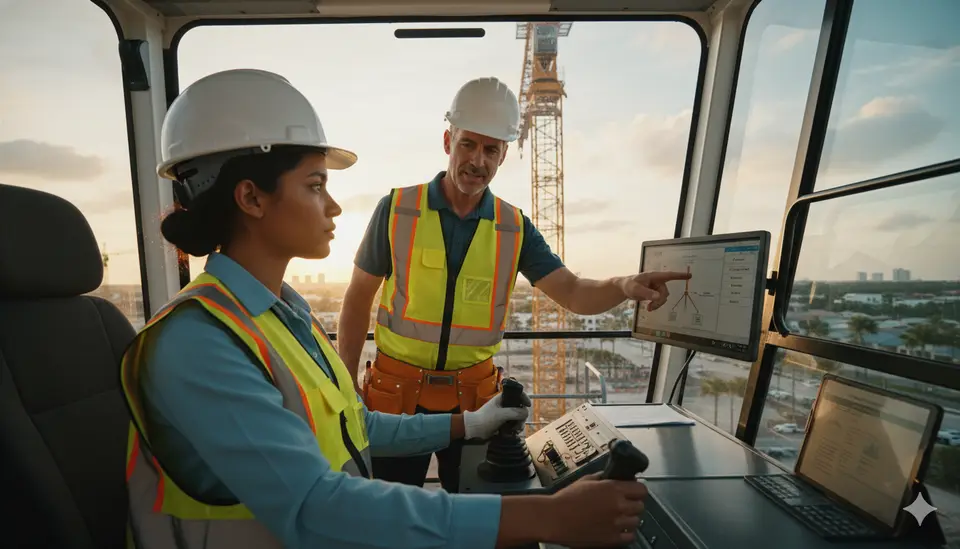
You were trained to track people, vehicles and changing conditions around you. An operator is responsible for everything inside the crane's swing radius: ground crew, traffic, power lines and weather. That constant scan is one of the most important safety skills on site.
Composure under pressure
Deadlines, congested sites and unexpected problems are part of construction. Operators who stay calm and methodical make better decisions. Veterans have often been tested in far harder conditions, and they know that the right response to a surprise is to stop, assess and communicate, not to rush.
Radio and signal discipline
Military communication is short, standardized and confirmed. That is exactly how an operator and signalperson should work, whether by hand signals or radio. If you already use readbacks and clear call signs, the crane signal protocols will feel familiar.
What You Still Need to Learn
Mindset gets you halfway. The rest is technical skill and certification.
- Load charts: reading capacity by boom length, radius and configuration, and calculating gross load.
- Machine control: smooth, precise movements and setup on outriggers, learned through hours in the seat.
- Inspections: daily, monthly and annual inspection practices and what to document.
- Rigging and signals: how loads are attached, sling angles and the standard hand signals used on job sites.
- OSHA rules: the construction cranes and derricks standard, including power line safety and operator authority to stop an unsafe lift.
For people without crane experience, the initial mobile crane operator training program at The Crane School covers these areas in a 3-week or 5-week format.
What the First Year Can Look Like
Every path is different, but many new operators follow a similar arc. After training and certification, you may start on smaller telescopic cranes or in an assist or oiler role on larger machines, learning how a particular company sets up, plans and documents its lifts.
The first months are about building seat time and trust. Supervisors watch how you handle inspections, how you communicate with riggers and signalpersons, and whether you stop when something looks wrong. Veterans often adapt quickly here because the culture of briefings, checklists and accountability is familiar.
Expect some adjustment, too. Civilian job sites can feel less structured than a military unit, and chains of command are not always clear. Ask who the lift director is, who has authority over each lift and how stop-work calls are handled. Clarifying those lines early is the same instinct that served you in uniform.
The Certification Goal
Training prepares you; NCCCO certifies you. The National Commission for the Certification of Crane Operators is an independent non-profit that tests operators by crane type through written and practical exams. Certification is valid for five years and is recognized nationwide, which helps if you relocate.
OSHA's construction rules require certified operators, and employers must also evaluate you on their equipment. Once you are certified on telescopic boom cranes, you can add lattice boom, rigger or signalperson credentials as your career grows. Learn more on the NCCCO certifications page.
Paying for Training: Ask Directly
Veterans often ask about using GI Bill or other VA benefits. Approval status for specific programs changes, and The Crane School's published information has not always been consistent on this point. Ask our staff for the current answer before you enroll, and verify any school's approval using the VA's official GI Bill tools.
Published tuition for the initial programs is listed in the store, and there is a negotiated hotel rate near the Seffner facility for students who travel.
Your Path, Step by Step
- Talk to the school about your background and which program fits.
- Complete hands-on training on the crane types you plan to test on.
- Pass NCCCO written and practical exams. Written exams are held monthly at the Seffner headquarters.
- Start building seat time in an entry role under experienced operators.
- Add certifications as your experience grows, and recertify every five years.
For a broader overview of the steps, see how to become a crane operator in Florida.
Report for Your Next Mission
Veterans already have the discipline, awareness and teamwork that crane work demands. The rest can be trained. Bring the same commitment you brought to your unit, and you will fit in quickly on a well-run lift crew. Look over the Florida crane operator training options, then contact The Crane School to talk through your next step.
FAQ
Do I need crane experience from the military to enroll?
No. The initial mobile crane program is built for people with little or no crane experience. Prior equipment experience helps but is not required.
Can I use my GI Bill at The Crane School?
Ask the school directly for its current status, and confirm any program's approval through the VA's official GI Bill tools before you enroll.
Is NCCCO certification recognized if I move to another state?
NCCCO certification is recognized nationwide. Some states and cities have their own licensing requirements on top of it, so check before you work there.