Top Mobile Crane Operator Training Programs in Florida: Comparing Formats by Experience Level
Why Format Matters More Than Marketing
Every training provider says its program is the best. The more useful question is which format fits your situation. Mobile crane operator training programs in Florida range from multi-week beginner courses to a long weekend of exam prep, and choosing the wrong one wastes time and money.
This article compares the main formats by who they suit. If you are still weighing schools against colleges and apprenticeships, start with our comparison of crane training program types.
Format 1: Full Beginner Programs
Beginner programs assume little or no crane experience. They combine classroom instruction on load charts, rigging, signals, inspections and OSHA rules with extended time at the controls, then finish with NCCCO written and practical exams.
Shorter version: telescopic cranes only
A program of around three weeks typically focuses on telescopic boom cranes and the TSS and TLL designations. This suits most people entering residential, commercial and general construction work, where hydraulic mobile cranes dominate.
Longer version: adding lattice boom
A longer program of around five weeks adds lattice boom crawler and truck cranes and the LAT designation. It suits people aiming at infrastructure, port or heavy industrial work.
The Crane School's initial mobile crane operator training program follows this pattern, with 3-week (TSS and TLL) and 5-week (TSS, TLL and LAT) options, held full-time Monday through Thursday.
Format 2: Short Exam Prep for Experienced Operators
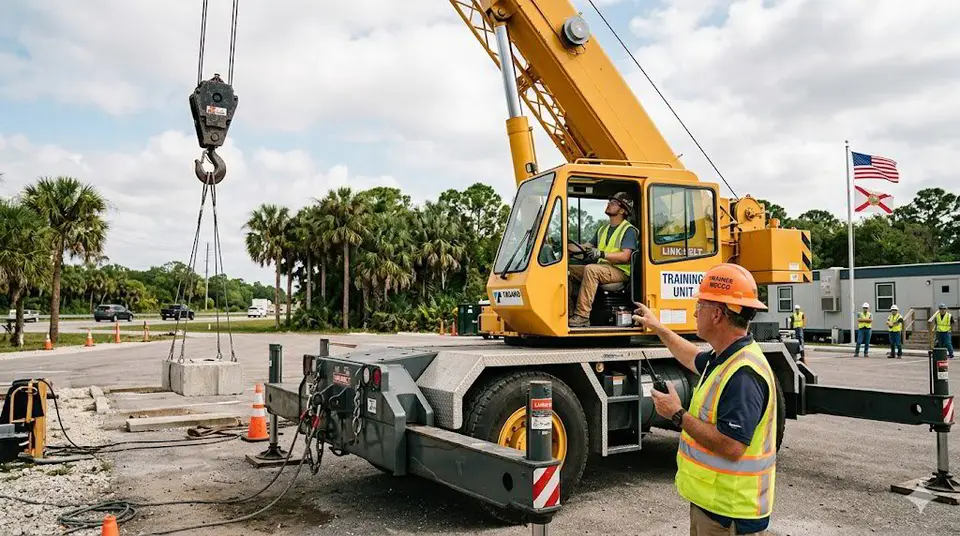
If you already run cranes but are not certified, or you are recertifying, you do not need weeks of basics. Short prep courses focus on exam content and give you time on the exam crane.
The Crane School's mobile crane certification prep program runs once a month from Friday to Monday: practical exams Friday, classroom Saturday and Sunday, and written exams Monday morning. It is not designed for people with no operating experience.
Operators recertifying on written exams only can also look at a classroom-only recertification prep option.
Format 3: Practice Hours
Sometimes the gap is seat time, not knowledge. Paid practice hours, with or without an instructor coaching you, let you get comfortable on a specific crane before a practical exam. At The Crane School, practice is booked in one-hour slots, such as the Thursday before the monthly prep weekend. This format works well alongside prep courses or for candidates who want to retest a practical.
Format 4: On-Site Employer Training
Employers with several people to train often bring the program to their own yard. On-site delivery lets crews learn on familiar equipment and avoids travel and lodging. The Crane School delivers programs with required NCCCO exams at client facilities nationwide, and its accredited practical examiners can schedule practical exams on site.
This format suits contractors, utilities and municipalities building a certified crew rather than individuals.
Format 5: Online Components
Online modules can help with written-exam topics such as load chart practice and regulations. They cannot teach you to run a crane. Practical exams require real control skills, and those come only from time in the seat with feedback. Treat online content as a supplement, not a replacement for hands-on training.
Side-by-Side Comparison
| Format | Best for | Typical length | Designations | Seat time |
|---|---|---|---|---|
| Beginner, telescopic | New operators | About 3 weeks | TSS, TLL | Extensive |
| Beginner, with lattice | New operators targeting heavy work | About 5 weeks | TSS, TLL, LAT | Extensive |
| Exam prep | Experienced or recertifying | Long weekend | TSS, TLL, LAT | Limited, plus optional practice |
| Practice hours | Anyone needing more seat time | Hourly | Supports practicals | Focused |
| On-site | Employers and crews | Varies | As scheduled | On your equipment |
| Online | Written exam study | Self-paced | Supports written exams | None |
Three Example Candidates
These examples show how the same set of formats leads to different choices:
- Maria, career changer, no seat time. She wants work on commercial sites in Central Florida, where telescopic cranes are everywhere. A 3-week beginner program covering TSS and TLL fits her goal and budget. She can add LAT later if her career moves toward heavier work.
- James, oiler on a crawler crew. He has spent time around lattice boom cranes but never sat for certification. A full 5-week program would repeat things he knows. The prep weekend plus booked practice hours on a lattice crane is more efficient.
- A utility contractor with eight linemen who run boom trucks. Sending them away one at a time disrupts crews. On-site training on the company's own equipment, with practical exams scheduled in the yard, keeps work moving.
These are illustrative examples, not real students, but they reflect the decisions people commonly face. Start from your own experience and goals, and the right format usually becomes clear.
Questions to Ask Before You Commit
Whichever format you choose, ask any provider:
- How much time will I spend operating, and on which crane types?
- Are NCCCO written and practical exams scheduled as part of the program?
- What is included in the price, and what costs extra?
- Who are the instructors, and what certifications do they hold?
- What happens if I do not pass an exam?
Published pricing for The Crane School's formats is listed in its online store. For more on how to vet a school, see our checklist for choosing a crane operator school in Florida.
Choose Your Format and Get Started
Match the format to your experience, then pick the designations that fit the work you want. To confirm which option suits you, contact The Crane School or read the Florida NCCCO training overview.
FAQ
Should I choose the 3-week or 5-week mobile crane program?
Choose 3 weeks if you plan to work mainly on telescopic hydraulic cranes. Choose 5 weeks if you also want lattice boom (LAT) certification for heavier infrastructure or industrial work.
Can I take the weekend prep course with no experience?
It is not designed for beginners. The prep program assumes you already have operating experience.
Can I learn to operate a mobile crane online?
Online material can support written-exam study, but operating skill and practical exam readiness require hands-on time on a crane.