Understanding OSHA Guidelines for Crane Operations: Construction vs. General Industry
Why OSHA Crane Standards for Construction vs. General Industry Both Matter
OSHA splits its rules by type of work. Construction falls under 29 CFR 1926, and general industry, such as manufacturing, warehousing and many maintenance activities, falls under 29 CFR 1910. Cranes are covered in both, with different standards.
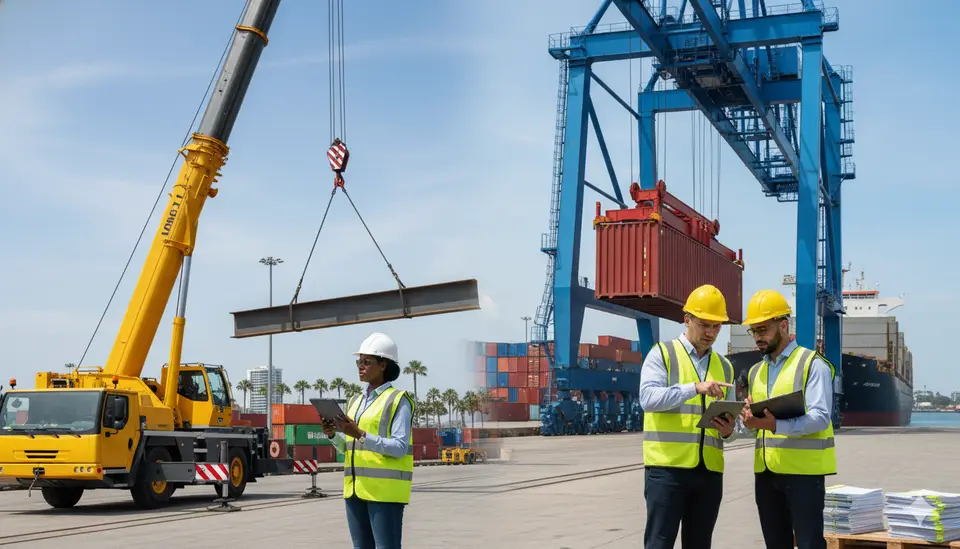
Understanding OSHA crane standards for construction vs. general industry matters because the same machine can move between them. A truck crane setting equipment inside a factory during routine maintenance may be under general industry rules. The same crane erecting steel for a new building addition is doing construction work and falls under Subpart CC. Maritime work, at marine terminals and in longshoring, has its own standards again.
The Standards at a Glance
Construction: 29 CFR 1926 Subpart CC
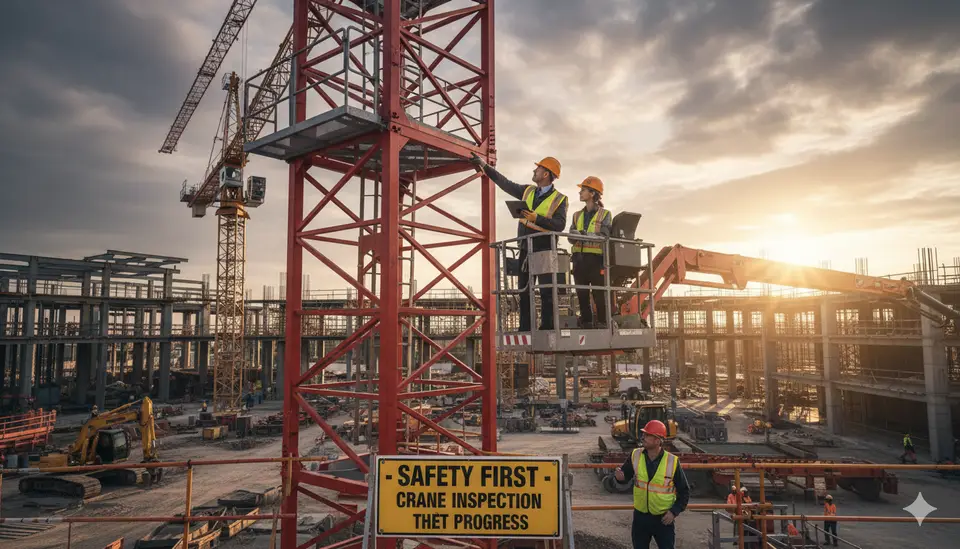
Adopted in 2010, Subpart CC (1926.1400 through 1926.1442) covers cranes and derricks used in construction. It is detailed and modern, addressing ground conditions, assembly and disassembly, power lines, inspections, operator certification, signal persons, riggers and training.
General industry: 1910.179 and 1910.180
- 1910.179 covers overhead and gantry cranes, the bridge cranes found in plants and shops
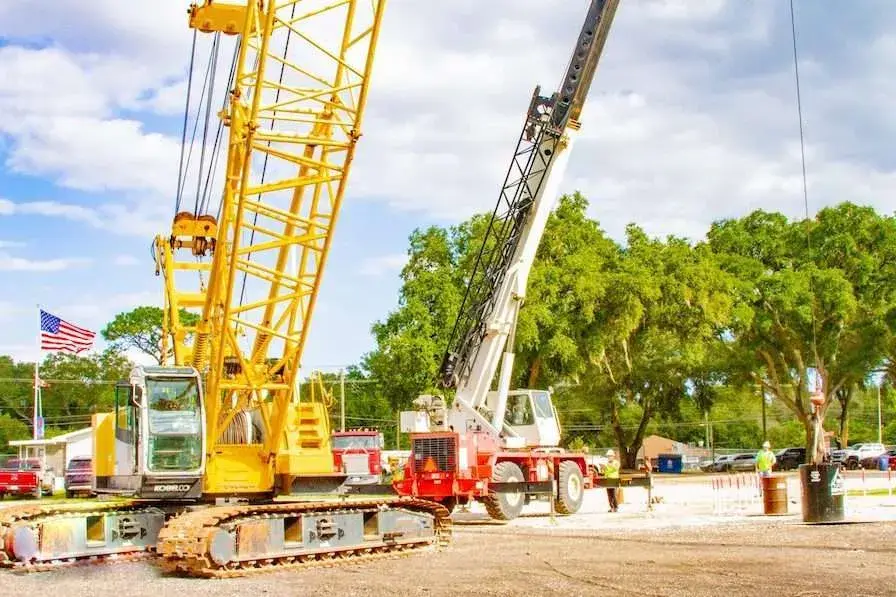
- 1910.180 covers crawler, locomotive and truck cranes used outside construction
These standards date back to OSHA's early years and are based on the consensus standards of that time. They are shorter and less prescriptive than Subpart CC. Current ASME B30 volumes, such as B30.2 for overhead cranes and B30.5 for mobile cranes, are widely used to fill in detail.
Inspections Compared
Construction
Subpart CC (1926.1412) requires a shift inspection by a competent person, a documented monthly inspection, and an annual/comprehensive inspection by a qualified person. It also requires inspections after assembly, modification or repair and for equipment that has been idle. Wire rope inspections are covered in 1926.1413.
General industry
Both 1910.179 and 1910.180 use two categories:
- Frequent inspections: daily to monthly intervals, covering items such as functional operating mechanisms, hooks, hoist ropes or chains and air or hydraulic systems
- Periodic inspections: one- to 12-month intervals, covering deformed or cracked members, worn parts, brakes, indicators and power plants, with records for certain items
The intervals depend on the service the crane sees. A crane in heavy service needs more frequent attention. Our daily crane inspection checklist covers the construction shift inspection in detail.
Operator Qualification Compared
This is where the two diverge most.
Construction: 1926.1427 requires operators to be certified by crane type through an approved option, such as an accredited testing organization like NCCCO, and to be evaluated and documented by the employer.
General industry: 1910.179 and 1910.180 require that only designated personnel operate the crane, and employers are expected to make sure those operators are trained, but the standards do not include the third-party certification requirement found in Subpart CC. Many employers in manufacturing, utilities and ports still choose certification because it provides a clear, consistent measure of skill and knowledge.
For more on construction requirements, see OSHA compliance for crane operators.
Power Lines Compared
Construction: 1926.1408 requires a work-zone assessment before operating. If any part of the crane, load line or load could come within 20 feet of a line rated up to 350 kV, the employer must de-energize and ground the line, keep a 20-foot clearance with specified precautions, or use OSHA's voltage table and precautions. Greater distances apply for higher voltages.
General industry: 1910.180 sets a minimum clearance of 10 feet for lines rated 50 kV or below, with greater clearances for higher voltages, unless the lines are de-energized and visibly grounded. OSHA's electrical standards in Subpart S also apply.
In both settings, treat every line as energized until the utility confirms otherwise.
Signals, Rigging and Planning
Subpart CC requires qualified signal persons (1926.1428) and qualified riggers for certain tasks, and has detailed rules on assembly, ground conditions and work zone control.
General industry standards require standard signals and designated signal persons, and include rules for handling loads, but they are far less prescriptive about qualification and planning. In practice, many general industry employers adopt construction-style practices, such as written lift plans and qualified signal persons, because they work.
Side-by-Side Summary
| Topic | Construction (Subpart CC) | General industry (1910.179 / 1910.180) |
|---|---|---|
| Scope | Cranes and derricks in construction | Overhead/gantry; crawler, locomotive, truck cranes |
| Inspections | Shift, monthly, annual, event-triggered | Frequent and periodic |
| Operator | Certified by type, employer evaluation | Designated operators |
| Signal person | Qualified under 1926.1428 | Designated, standard signals |
| Power lines | 20 ft starting point (up to 350 kV) with options | 10 ft minimum (50 kV or below), more for higher voltage |
| Detail level | High | Lower; ASME B30 often fills gaps |
Which Standard Applies to Your Job?
Ask what the work is, not what the crane is. Building, altering, repairing (beyond routine maintenance) or demolishing a structure is generally construction. Moving product, maintaining production equipment or loading trucks in a yard is generally general industry. When a project mixes both, or when you are not sure, follow the more protective requirements and check OSHA's letters of interpretation for similar situations.
For how the construction inspection schedule works in practice, read construction crane inspection requirements.
Training and Inspections for Both Settings
The Crane School's crane inspection services cover mobile, tower, overhead, articulating and buck hoist equipment, in both construction and industrial settings. Supervisors who manage cranes in either environment can take the Managing Crane Safety Class. Contact us to talk about your equipment and work.
FAQ
Do overhead crane operators in a factory need NCCCO certification?
The general industry standard does not require third-party certification; it requires that only designated operators run the crane. Many employers still choose NCCCO overhead crane certification as a consistent measure of competence.
What is the difference between frequent and periodic inspections?
Under the general industry standards, frequent inspections happen at daily to monthly intervals and focus on working components. Periodic inspections happen at one- to 12-month intervals and look deeper at structure, wear and brakes.
Can the same crane be covered by both standards?
Yes, at different times. The standard depends on the work being done. A crane doing construction work falls under Subpart CC, and the same crane doing general industry work falls under 1910.