Essential Crane Safety Regulations for Florida Operators
The Framework Behind Florida Crane Safety Regulations
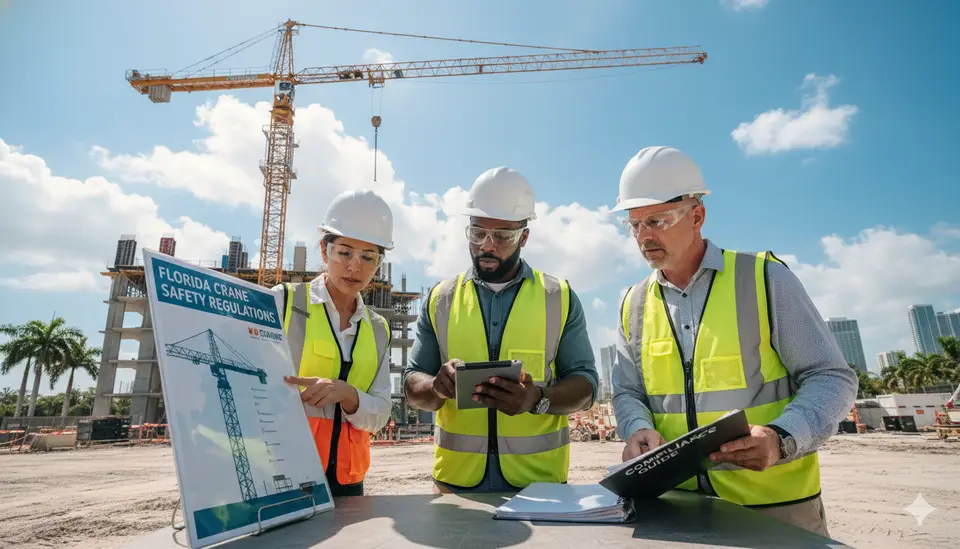
Florida private employers are covered by federal OSHA, and the state does not issue its own crane operator license. That means the core Florida crane safety regulations for construction work are the federal rules in 29 CFR 1926 Subpart CC. On top of those, your employer, the general contractor, the project owner and sometimes the local building department may set stricter rules.
This guide is written for operators. It covers the rules you deal with in the seat and on the ground. For a side-by-side look at OSHA minimums versus NCCCO certification, see Florida OSHA crane requirements compared.
Your Certification and Evaluation
Under 1926.1427, construction crane operators must be certified for the type of crane they operate, through an accredited testing organization such as NCCCO or another option allowed under the rule. Your employer must also evaluate you on the equipment you will actually run and keep a record of that evaluation.
What this means for you:
- Carry or have quick access to your certification card
- Know which crane types your certification covers. A TSS certification does not cover a lattice crawler.
- Expect an evaluation when you start with a new employer or move to a different type of equipment
- Recertify before your five-year CCO certification expires
Operators without certification may work only as operators-in-training under the supervision and limits set out in the rule.
Power Lines: The Rule You Cannot Get Wrong
Florida jobs often sit under or near distribution and transmission lines, from residential streets to industrial corridors. Under 1926.1408, before assembling or operating a crane, the employer must determine whether any part of the equipment, load line or load could get within 20 feet of a power line (for lines up to 350 kV) if the crane were operated to its maximum working radius in the work zone.
If it could, the employer must take one of the allowed steps: confirm with the utility that the lines are de-energized and visibly grounded, keep the equipment at least 20 feet away using specified precautions, or determine the required clearance using the voltage table and keep that distance with precautions in place. Precautions can include a planning meeting, a dedicated spotter, warning lines or barriers, and range-limiting devices.
Higher-voltage lines require greater distances. Always assume a line is energized until the utility confirms otherwise.
Ground Conditions
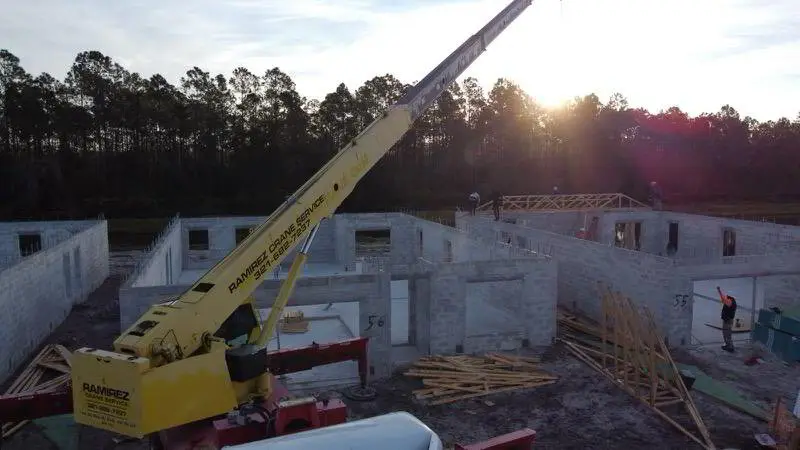
Florida's sandy soils, high water tables and frequent heavy rain make ground conditions a real concern. Under 1926.1402, equipment may not be assembled or used unless the ground is firm, drained and graded enough, with supporting materials such as mats or blocking where needed, to meet the manufacturer's requirements for support and levelness.
The controlling contractor has duties to provide adequate ground conditions and to tell the crane user about known hazards underneath, such as voids, tanks or utilities. As the operator, you still need to look. Check for soft spots, recent excavation and standing water, and use properly sized outrigger pads or mats every time.
Signals and Communication
When you cannot see the load or the area around it, or when you are working near power lines, a signal person is required. That person must be qualified under 1926.1428, either through a qualified evaluator or a third-party evaluation such as NCCCO Signalperson certification.
Agree on the method before the lift: hand signals, voice signals by radio, or both. Radios used for crane signals should be on a dedicated channel. If you lose communication, stop. Our signalperson qualification and certification program trains crews on standard hand and voice signals.
Swing Radius and Work Zone Control
OSHA requires the employer to control the hazard area created by the rotating superstructure when someone could be struck or crushed. That usually means barricades, warning lines or similar controls around the swing radius of the counterweight. Before swinging, make sure the area is clear and that workers know where the boundary is.
Never hoist loads over people unless the conditions in the standard are met, and keep the work zone defined in your lift plan.
Florida Weather
Florida weather can change in minutes. Plan for:
- Wind: follow the manufacturer's wind speed limits in the load chart or manual. Large loads with big surface areas, such as roof trusses or panels, act like sails.
- Lightning: afternoon thunderstorms are common in summer. Follow your company's lightning policy and stop crane work when storms approach.
- Heat: stay hydrated and watch for heat stress, both in yourself and the ground crew.
- Hurricane season (June through November): know your company's storm plan for securing or lowering the crane, and expect an inspection before returning to work after a storm.
Weather decisions are part of your authority as an operator. If conditions are unsafe, you can stop the lift.
Assembly, Rigging and Lift Planning
Many Florida jobs involve assembling lattice booms, jibs or tower cranes. Under Subpart CC, assembly and disassembly must be directed by a competent and qualified A/D director following the manufacturer's procedures, and riggers doing that work must be qualified. Never remove pins or blocking until you understand which parts are supported and which are not.
For every lift, know the load weight, rigging weight, radius and configuration, and check the load chart before you pick. Critical lifts, tandem lifts and lifts near power lines deserve a written plan. Riggers can build those skills in our rigger qualification and certification program.
Training That Matches the Rules
The Crane School in Seffner trains operators for NCCCO certification in the same weather and soil conditions Florida crews face every day. New operators start with our three- or five-week initial training, and experienced operators prepare for certification or recertification in the mobile crane certification prep program. See our Florida training page for more, or contact us with questions.
FAQ
Do I need a Florida state crane license?
Florida does not issue its own crane operator license. For construction work, federal OSHA requires certification under 1926.1427, and employers or project owners may set additional requirements.
How far does a crane have to stay from power lines?
For lines up to 350 kV, the starting point under 1926.1408 is 20 feet, unless the utility de-energizes and grounds the line or the employer uses the voltage table with required precautions. Higher voltages require more distance.
Can an operator refuse a lift because of wind?
Yes. Operators have authority to stop and refuse to handle loads until safety is assured. Wind limits come from the crane manufacturer and should be followed.