
Shreveport's Lifting Landscape
Shreveport and Bossier City sit on the Red River in northwest Louisiana, close to the Texas and Arkansas lines. Natural gas development in the Haynesville Shale has shaped much of the region's industrial activity, alongside manufacturing, distribution and steady commercial construction.
So local employers need people who can rig and run cranes equally well inside a plant fence, out on a gas lease or on a commercial job. We handle crane training for Shreveport companies in two ways: our instructors come to your property, or your people join a public class in Seffner, Florida. We do not have a Shreveport office.
Gas Field and Service Company Work
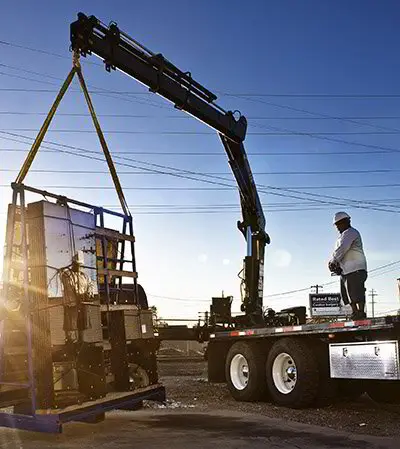
Out in the Haynesville, service hands set compressors, tanks, separators and joints of pipe using telehandlers, boom trucks and hydraulic cranes, frequently on pads and lease roads nobody designed for crane loads. Ground conditions, overhead lines and tight access all need attention.
For those crews, the right credentials depend on the machine. Anyone on a telescopic boom works toward TSS and TLL in our hydraulic crane exam prep. Knuckle boom drivers belong in the articulating program instead. Material handlers on pads and in pipe yards can certify through the telehandler operator program.
Working Across the Ark-La-Tex
Shreveport crews often take jobs in Texas and Arkansas. A CCO card is recognized across state lines, and Texas, Arkansas and Louisiana are all absent from the usual lists of states with their own crane licenses, leaving federal OSHA in charge. OSHA's 29 CFR 1926.1427 ties certification to crane type, and oil and gas customers often stack extra conditions on top of that.
One exception inside the state: New Orleans is often listed as having city crane rules, so look those up before taking a job there. Our Louisiana certification page covers statewide details.
Weather in Northwest Louisiana
Northwest Louisiana sees hot, humid summers, strong spring thunderstorms and tornado risk, and occasional winter ice. Afternoon storms can bring sudden gusts and lightning, so operators should have clear wind limits and be ready to set loads down quickly.
We discuss those calls during training, along with ground evaluation after heavy rain, which can soften pads and lease roads for days. Summer heat deserves its own plan as well: water, shade and rest breaks keep operators sharp through long afternoons, and fatigue is a factor in many crane incidents. Supervisors who build these points into daily job briefings tend to see fewer close calls.
On-Site Training or Florida
On-site training suits service companies and plants with several employees who need certification. Your own machines can be used for the NCCCO practical, given by our accredited examiners. Solo candidates head to Seffner instead, choosing either the once-a-month Friday-to-Monday prep or a longer beginner course held Mondays through Thursdays. See the Seffner course calendar for what's open.
When calling, have a list of candidates, the equipment each runs and any certifications coming due. Since a CCO card is good for five years, start recertification prep once someone enters year five. Need riggers or signalpersons qualified before a customer audit? Fold those courses into the same trip and train the whole crew at once.
Newcomers can pick three weeks, centered on telescopic cranes with TSS and TLL testing, or five weeks, which tacks on lattice boom work and LAT.