
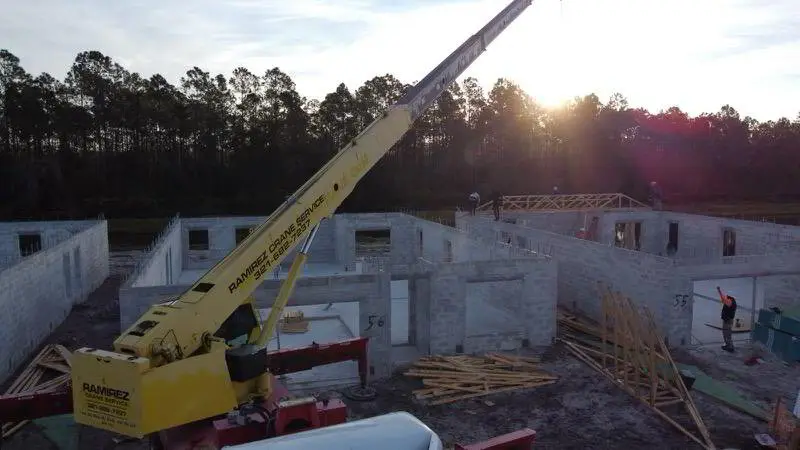
Hydraulic crane setting roof steel on a large warehouse near Reno, Nevada
Truckee Meadows

Reno, Nevada NCCCO Crane Training for Operators and Employers

Warehouses, manufacturing and steady construction keep Reno-area cranes working. Train on-site or join a scheduled class in Seffner, Florida.

Who in Reno needs NCCCO crane training

The Reno and Sparks area has grown into a distribution and manufacturing hub, with large industrial parks along Interstate 80 east of town. Add commercial building, housing, university work and highway projects, and you get a wide mix of people who touch a crane or a lift.

Reno NCCCO crane training from The Crane School serves that mix. Employers can host our instructors on-site, and individuals can attend open-enrollment classes at our Seffner, Florida campus. There is no Reno office.

Because northern Nevada's industrial growth has drawn workers from many other trades, a lot of people here are relatively new to lifting equipment. For them, the 3-week or 5-week initial course in Seffner provides a structured start. Experienced operators who came from other states, on the other hand, may only need exam prep and a practical test.

Programs by role

Industrial construction crews

Steel erection and equipment setting for big warehouses calls for hydraulic and sometimes lattice boom cranes. The mobile crane prep program prepares experienced operators for TSS, TLL and LAT.

Plant and warehouse maintenance

Millwrights and maintenance techs moving machinery often use boom trucks, carry-deck cranes or telehandlers. Articulating crane and telehandler programs fit here.

Riggers and signalpersons

When heavy machinery is skidded, lifted and set, rigging decisions carry a lot of risk. Our rigger qualification and certification program covers Level I and Level II, and we also offer signalperson certification prep.

Sierra wind and winter

Reno sits in a high desert valley at the foot of the Sierra Nevada. Strong afternoon winds, cold winters with occasional snow and big daily temperature swings are routine here.

Those conditions make wind limits, load sail area and ground preparation practical concerns. Our instructors work through them with real examples, including how to decide when to stop a lift and wait out a gust front. The guide to load calculations is a helpful refresher for candidates who have not studied charts in a while.

On-site training or the Florida trip

For a company with several operators, on-site crane training usually saves the most time. The instructor comes to your facility, trains on your machines and schedules practical exams there with an NCCCO accredited examiner.

For individuals, Seffner is the alternative. The prep program runs once a month from Friday through Monday, the initial programs run Monday through Thursday for three or five weeks, and written exams are held at our headquarters every month. Fly into Tampa International and ask about the negotiated hotel rate near the fairgrounds.

Whichever route you choose, build in time for card processing. NCCCO cards typically arrive three to five weeks after a passing result, so schedule training well ahead of a project start date.

Nevada rules to confirm

Nevada has state-level crane operator requirements in addition to OSHA. Confirm current rules with the state agency and NCCCO's state licensing information before you work there. If your Reno crew crosses into California for work near Lake Tahoe, check California's requirements too, since that state is also commonly cited for its own crane rules.

More statewide detail is on our Nevada certification page, and you can contact us to line up dates for your Reno or Sparks crew.
Frequently Asked Questions

Do warehouse maintenance teams need NCCCO certification?

Requirements depend on the equipment and how it is used. OSHA's construction crane rules require operator certification, and many employers apply similar standards to plant work by policy.

Can Reno operators get practice time before a practical exam?

In Seffner, optional practice is available the Thursday before the Friday practical in reserved one-hour slots. On-site groups can build practice into the schedule.

How long does it take to get my card?

Cards typically arrive three to five weeks after you pass, and you can check results through the MyCCO app.

The Crane School

Training Programs & Services

All programs are delivered in compliance with current OSHA regulations.

Mobile Crane Operator Certification Prep Program

For experienced operators ready to certify or recertify. Includes NCCCO TSS, TLL and LAT written and practical exams.

Learn more about Mobile Crane Certification Prep

Initial Mobile Crane Operator Training Program

For people with little or no crane experience. 3-week (TSS/TLL) and 5-week (adds LAT) programs with NCCCO exams.

Learn more about Initial Mobile Crane Training (3 & 5 Week)

Articulating Crane Operator Certification Prep Program

For knuckle-boom operators. Prepares you for the NCCCO ABC, ABL and ABW written and practical exams.

Learn more about Articulating Crane Certification Prep

Rigger Qualification / Certification Program

For personnel who rig loads to cranes — supports your rigger qualification and NCCCO Rigger Level I/II exams.

Learn more about Rigger Level 1 & 2

Signalperson Qualification / Certification Program

Standard hand and voice signals for directing cranes, plus preparation for the NCCCO Signalperson exams.

Learn more about Signalperson

Managing Crane Safety Class

For managers and supervisors: OSHA compliance, lift planning, inspections, certification and liability.

Learn more about Managing Crane Safety

Telehandler Operator Program

Certification or recertification for telehandler operators. Includes the NCCCO THO written and practical exams.

Learn more about Telehandler Operator

Crane Inspection Services

Annual, monthly, post-assembly and post-incident inspections plus load testing by NCCCO-certified inspectors.

Learn more about Crane Inspections

Related Reading

Training Program

Telehandler Operator Certification Program

Telehandler certification prep for the NCCCO THO written and practical exams, fixed or rotating. Certify or recertify. Join the list for upcoming dates.

Crane Operator Practice Test

Ten quick questions on crane safety rules and NCCCO basics. Pick one answer per question — your score shows on the next page.

1. Which OSHA standard covers cranes and derricks used in construction?
2. How long is an NCCCO crane operator certification valid before recertification?
3. What does NCCCO stand for?
4. Under OSHA's current construction crane rule, operator certification must be obtained by:
5. Under OSHA Table A (1926.1408), what is the minimum clearance from power lines rated up to 50 kV?
6. When is a signal person required?
7. Whose emergency stop signal must a crane operator obey?
8. What does an anti-two-block device prevent?
9. Which document gives a crane's rated capacity for a given boom length and radius?
10. Which NCCCO designation covers telescopic boom cranes with a swing cab?