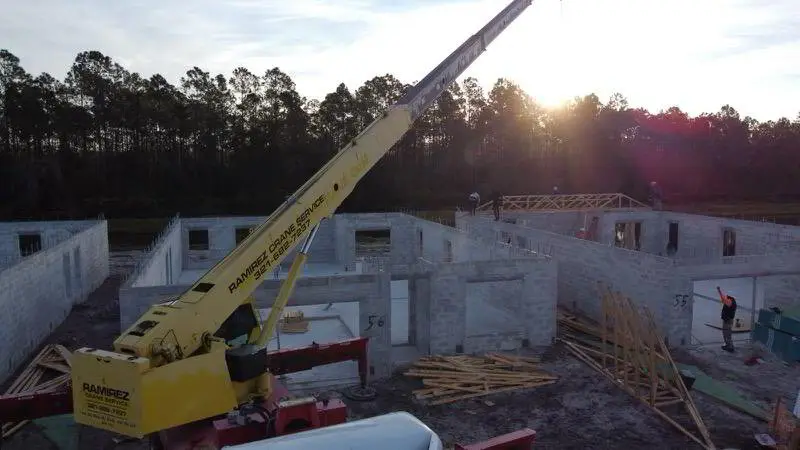

Crane lifting rooftop equipment onto a renovated brick mill building in Pawtucket, Rhode Island
Pawtucket, RI crews

NCCCO Crane Training Options Near Pawtucket, Rhode Island

Mill redevelopment and tight riverfront lots call for careful crane work. Here is how Pawtucket operators and employers can prepare for NCCCO exams.

Old Mills, New Buildings, Narrow Streets

Pawtucket grew up around textile mills on the Blackstone River, and many of those brick structures are being renovated or replaced. Reusing an old mill means lifting HVAC units onto aging roofs, swinging steel over existing walls and setting up on narrow streets with overhead lines nearby.

That is demanding work for a crane crew. NCCCO crane training for Pawtucket operators should cover load charts, ground conditions and power line clearance, along with the exam content itself.

Lift Planning Starts Before the Operator Climbs In

On renovation jobs, the ground beneath the outriggers may be fill, old foundations or basement voids. Rigging around fragile masonry and coordinating blind picks with a signal person are just as important as smooth control in the cab.

That is why many employers here pair operator prep with:

OSHA 1926.1408 power line rules apply on every one of those jobs, so we spend time on it in class.

Why the ground crew matters on reuse projects

When a load disappears behind a four-story mill wall, the operator is relying entirely on the signal person and the rigger's judgment. Certified ground crew who speak the same signal language reduce that risk. They also make it easier for a general contractor to show the owner and insurer that the lift team was qualified, which is increasingly expected on redevelopment work.

Seasons on the Blackstone

Pawtucket weather swings from humid summers to cold, snowy winters, with nor'easters capable of shutting down outdoor work for a day or more. Wind gusts channeled between tall mill buildings can also be stronger than what a forecast for the region suggests, so operators should know their crane's wind limits and how to measure on-site conditions.

When you schedule on-site training, consider timing practical exams for spring or fall, when outdoor conditions are steadier. Classroom days can happen any time of year indoors. If an operator needs certification before then, our Florida campus is an option in any month.

Rhode Island's Extra Layer of Requirements

Rhode Island is one of the states with state-level crane operator requirements in addition to OSHA. Confirm current rules with the state agency and NCCCO's state licensing information before you operate in Pawtucket. Our Rhode Island overview covers the statewide basics, and NCCCO's own site lists state licensing details.

Training On-Site in Pawtucket or in Seffner

The Crane School has trained crane operators for more than 21 years from its single campus in Seffner, Florida. For Pawtucket employers, we can schedule instruction and NCCCO practical exams at your own facility, which avoids pulling a whole crew off the job for travel.

Individuals can also come to us. The mobile crane prep program runs once a month from Friday to Monday, with optional practice slots on the Thursday before. Check the current class calendar and book early during winter, when Florida classes tend to be popular with northern operators.
Frequently Asked Questions

Do you have instructors based in Pawtucket?

No. Our instructors are based at our Seffner, Florida campus and travel to employers' sites for on-site training.

Is the Managing Crane Safety class only for operators?

No. It is designed for management personnel such as project managers, superintendents and safety staff who plan and oversee lifts.

What does the mobile crane prep weekend include?

Practical exams on Friday, classroom review Saturday and Sunday, and NCCCO written exams Monday morning, with optional practice time the Thursday before.

The Crane School

Training Programs & Services

All programs are delivered in compliance with current OSHA regulations.

Mobile Crane Operator Certification Prep Program

For experienced operators ready to certify or recertify. Includes NCCCO TSS, TLL and LAT written and practical exams.

Learn more about Mobile Crane Certification Prep

Initial Mobile Crane Operator Training Program

For people with little or no crane experience. 3-week (TSS/TLL) and 5-week (adds LAT) programs with NCCCO exams.

Learn more about Initial Mobile Crane Training (3 & 5 Week)

Articulating Crane Operator Certification Prep Program

For knuckle-boom operators. Prepares you for the NCCCO ABC, ABL and ABW written and practical exams.

Learn more about Articulating Crane Certification Prep

Rigger Qualification / Certification Program

For personnel who rig loads to cranes — supports your rigger qualification and NCCCO Rigger Level I/II exams.

Learn more about Rigger Level 1 & 2

Signalperson Qualification / Certification Program

Standard hand and voice signals for directing cranes, plus preparation for the NCCCO Signalperson exams.

Learn more about Signalperson

Managing Crane Safety Class

For managers and supervisors: OSHA compliance, lift planning, inspections, certification and liability.

Learn more about Managing Crane Safety

Telehandler Operator Program

Certification or recertification for telehandler operators. Includes the NCCCO THO written and practical exams.

Learn more about Telehandler Operator

Crane Inspection Services

Annual, monthly, post-assembly and post-incident inspections plus load testing by NCCCO-certified inspectors.

Learn more about Crane Inspections

Related Reading

Crane Operator Practice Test

Ten quick questions on crane safety rules and NCCCO basics. Pick one answer per question — your score shows on the next page.

1. Which OSHA standard covers cranes and derricks used in construction?
2. How long is an NCCCO crane operator certification valid before recertification?
3. What does NCCCO stand for?
4. Under OSHA's current construction crane rule, operator certification must be obtained by:
5. Under OSHA Table A (1926.1408), what is the minimum clearance from power lines rated up to 50 kV?
6. When is a signal person required?
7. Whose emergency stop signal must a crane operator obey?
8. What does an anti-two-block device prevent?
9. Which document gives a crane's rated capacity for a given boom length and radius?
10. Which NCCCO designation covers telescopic boom cranes with a swing cab?