
Rhode Island's Crane Requirements at a Glance
Rhode Island may be the smallest state, but it sits on the short list of places with their own crane operator rules on top of OSHA. So Rhode Island crane certification takes more than one check. Find out what the responsible Rhode Island agency currently asks of operators, and skim NCCCO's state notes, which describe how each state handles CCO cards.
Under the state layer is the same federal floor found everywhere. Federal OSHA's Subpart CC governs construction cranes, and its paragraph 1926.1427 keeps operators off covered equipment until they hold accredited certification or clear an approved qualification program. Most employers in the region look for NCCCO certification for each type of crane an operator runs.
The Crane School prepares candidates for NCCCO written and practical exams. NCCCO, an independent non-profit, issues the certification, and any state credential is handled by the state. Keeping those roles straight helps you plan the full process from training to your first day on site.
A New England Patchwork
Rhode Island operators rarely stay inside one state for long. Projects in Massachusetts and Connecticut are a short drive away, and both of those states are also commonly cited for state-level crane requirements. A credential that satisfies one state may not automatically satisfy the next.
The practical advice is simple: treat each state separately. Before you accept work across a border, check that state's current rules and confirm with the employer which credentials they expect. Your NCCCO card is national and travels with you, which is one reason it serves as the foundation for most state processes.
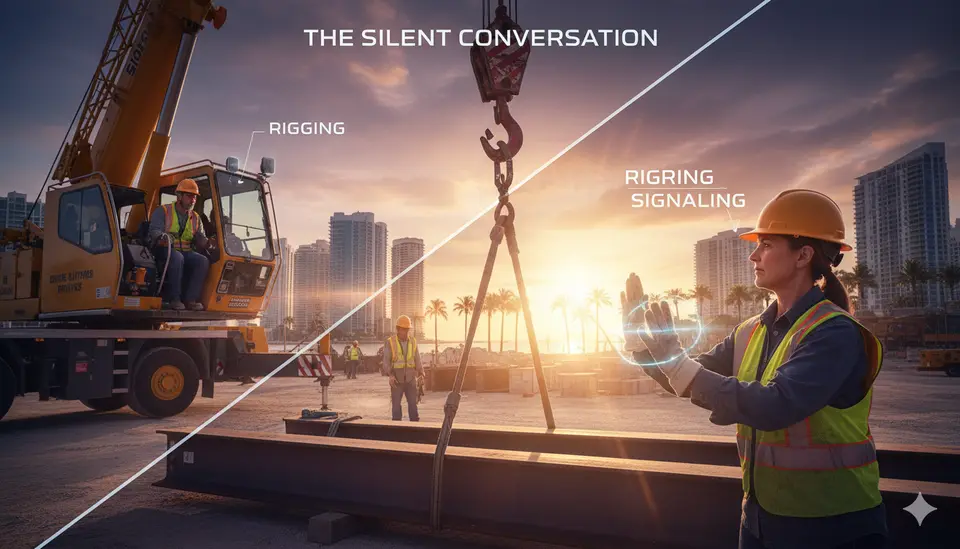
For employers, this patchwork is a reason to keep a written record of every operator's certifications and state credentials, with expiration dates, in one place. If you supervise a mixed crew, consider building a simple chart that lists each person, the states they are cleared to work in, and the date each credential expires. Our article on rigging and signaling is a good reminder that ground crew qualifications deserve the same tracking as operator cards.
Lifting Around Narragansett Bay
Much of Rhode Island's heavy lifting happens near the water. The Port of Providence handles bulk and general cargo, and the Quonset area supports port operations, marine industry and shipbuilding-related fabrication. Waterfront work brings saltwater corrosion, wind off the bay and soft ground near bulkheads. Salt air also speeds up wear on wire rope, sheaves and pins, which makes daily inspection habits especially important for operators who work near the water.
Offshore wind has become part of the state's identity, starting with the Block Island Wind Farm, the first commercial offshore wind farm in the United States. Staging, assembly and marine construction for wind projects require careful rigging and close coordination between crane crews and vessel crews.
In Providence and the surrounding cities, mobile cranes support hospital, university, residential and bridge work on tight urban lots. New England winters add snow, ice and short daylight to the list of setup considerations.
Tight sites, close neighbors
Rhode Island is densely built, and many projects sit next to occupied buildings, busy streets or rail lines. Lift plans often have to account for limited outrigger space, overhead obstructions and the public walking nearby. Operators who can work calmly with a small margin for error, and who communicate clearly with their signalperson, are in demand on these jobs.
How Rhode Island Crews Can Train
At your site
Our instructors can bring on-site crane training and CCO practical exams to your yard, terminal or project anywhere in Rhode Island. Because the state is compact, one on-site session can often serve a contractor's entire crew without anyone traveling far. Practical exams are run by NCCCO Accredited Practical Examiners on our staff.
In Seffner, Florida
A single operator might rather fly south. T.F. Green to Tampa is an easy trip, our Seffner headquarters hosts written testing every month, seat time on our cranes is sold by the hour and a hotel close to the yard gives our students a lower rate.
Remember that passing NCCCO exams prepares you for the certification piece. Rhode Island's state-level requirements are a separate step to confirm and complete. Open Seffner dates are listed on the training calendar.
Programs That Fit Marine and Urban Crews
Operators who have been running cranes around the bay for years usually just need our monthly Friday-to-Monday review before taking TSS, TLL and LAT, whether it is a first card or a renewal.
Waterfront and wind work puts heavy demands on the ground crew. Our rigging course teaches both levels of rigger work and lines up with NCCCO's two rigger certifications. Signalperson training covers standard hand and voice signals, which matter on noisy docks where radio and visual signals have to be clear.
Newcomers should start with the initial mobile crane operator program, which runs three or five weeks. Supervisors and project managers can benefit from the Managing Crane Safety class, which covers responsibilities, planning, inspections and compliance from the management side.
Career Notes for Rhode Island Operators
Because Rhode Island sits in the middle of a busy region, operators who hold several crane type certifications and understand how neighboring states handle credentials have more options. Riggers and signalpersons with NCCCO credentials also move easily between marine, wind and building work. Some experienced operators eventually step into lift planning, inspection or supervisory roles, where knowledge of multiple states' rules becomes a real asset.
Track two calendars: your NCCCO card expires every five years, and any state credential has its own renewal schedule. Curious how Providence pay stacks up against Boston or Hartford? The BLS wage tables for occupation 53-7021 (opens in a new tab) answer that by metro area.