
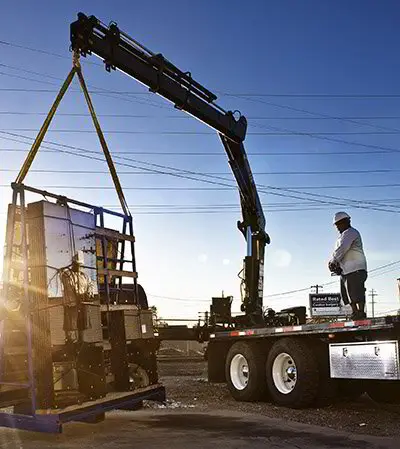
Articulating boom truck lifting a motor at a manufacturing plant in Chattanooga, Tennessee
Chattanooga, TN

Crane Operator Training for Chattanooga, Tennessee

Manufacturing plants, riverfront construction and mountain terrain keep Chattanooga's lifting crews busy. Here are your options for NCCCO training.

Manufacturing Roots, Modern Plants

Chattanooga has a long manufacturing history and today includes a major auto assembly plant and many suppliers and industrial employers. Those facilities need lifting for equipment installs, maintenance and expansions. The city's riverfront along the Tennessee River and steady downtown development add construction work on top of that.

Whether you work for a plant or a contractor, crane operator training in Chattanooga usually means preparing for several different machines, from a knuckle boom on a service truck to a hydraulic crane on a building site.

Plant Crews and Articulating Cranes

Maintenance and millwright crews frequently use truck-mounted articulating cranes to move motors, gearboxes and components. The articulating crane certification prep program prepares operators with that experience for the NCCCO ABC, ABL and ABW exams.

The same crews often rig heavy machinery, so Rigger Level I and II training is a natural pairing. For more background, read our articulating crane exam prep guide.

Starting From Zero

If you are new to cranes and live in the Chattanooga area, the initial mobile crane operator program is the path. It runs at our Seffner, Florida campus for three weeks (telescopic boom, NCCCO TSS and TLL exams) or five weeks (adding lattice boom and the LAT exam). Classes meet full-time Monday through Thursday.

It is roughly a day's drive from Chattanooga to Seffner. We have a negotiated hotel rate nearby, and you will need hard-toe boots, a hard hat, work clothes, gloves and a government-issued photo ID.

Ask about our written-exam guarantee when you enroll, and check the class calendar early, since many students plan their start date around work and family commitments.

Ridges, River and Weather

Chattanooga sits in a valley surrounded by ridges such as Lookout Mountain and Signal Mountain. Sloped sites and tight access roads affect crane travel and setup, and some hillside jobs require cranes to be assembled in stages or moved in pieces. The area gets hot, humid summers, heavy rain and occasional severe storms, so ground conditions can change quickly after a downpour. Operators should recheck outrigger pads and cribbing after heavy rain rather than assuming yesterday's setup is still sound, and keep an eye on lightning during summer afternoons.

Tennessee is not on the commonly cited list of states with a separate crane license, so federal OSHA crane rules govern construction lifting; employers may require more. We have no Chattanooga office and train on-site or in Seffner. Visit the Tennessee training page for more, or contact us to plan.

Getting the Most From On-Site Training

Plants that host us usually schedule training during a planned maintenance week or a slower production period. That way, crane operators and riggers are available for full days and equipment is free for practice and practical exams.

It also helps to think beyond the current crew. If several people are approaching the end of their five-year certification, grouping their recertification with new operators' initial certification can make one visit cover most of your needs for years. We can talk through the combinations that make sense for your headcount and equipment. Plant safety staff are welcome to sit in on the classroom portion as well.
Frequently Asked Questions

Can maintenance staff at a Chattanooga plant train on-site?

Yes. On-site training lets your staff practice on your own equipment, and our accredited examiners can give NCCCO practical exams at your facility.

Do I need experience before the articulating crane program?

Yes. That program is for people who already have articulating crane experience and are ready to certify.

How long is the drive from Chattanooga to your campus?

Seffner is east of Tampa, Florida. Many students drive; others fly into Tampa International.

The Crane School

Training Programs & Services

All programs are delivered in compliance with current OSHA regulations.

Mobile Crane Operator Certification Prep Program

For experienced operators ready to certify or recertify. Includes NCCCO TSS, TLL and LAT written and practical exams.

Learn more about Mobile Crane Certification Prep

Initial Mobile Crane Operator Training Program

For people with little or no crane experience. 3-week (TSS/TLL) and 5-week (adds LAT) programs with NCCCO exams.

Learn more about Initial Mobile Crane Training (3 & 5 Week)

Articulating Crane Operator Certification Prep Program

For knuckle-boom operators. Prepares you for the NCCCO ABC, ABL and ABW written and practical exams.

Learn more about Articulating Crane Certification Prep

Rigger Qualification / Certification Program

For personnel who rig loads to cranes — supports your rigger qualification and NCCCO Rigger Level I/II exams.

Learn more about Rigger Level 1 & 2

Signalperson Qualification / Certification Program

Standard hand and voice signals for directing cranes, plus preparation for the NCCCO Signalperson exams.

Learn more about Signalperson

Managing Crane Safety Class

For managers and supervisors: OSHA compliance, lift planning, inspections, certification and liability.

Learn more about Managing Crane Safety

Telehandler Operator Program

Certification or recertification for telehandler operators. Includes the NCCCO THO written and practical exams.

Learn more about Telehandler Operator

Crane Inspection Services

Annual, monthly, post-assembly and post-incident inspections plus load testing by NCCCO-certified inspectors.

Learn more about Crane Inspections

Related Reading

Crane Operator Practice Test

Ten quick questions on crane safety rules and NCCCO basics. Pick one answer per question — your score shows on the next page.

1. Which OSHA standard covers cranes and derricks used in construction?
2. How long is an NCCCO crane operator certification valid before recertification?
3. What does NCCCO stand for?
4. Under OSHA's current construction crane rule, operator certification must be obtained by:
5. Under OSHA Table A (1926.1408), what is the minimum clearance from power lines rated up to 50 kV?
6. When is a signal person required?
7. Whose emergency stop signal must a crane operator obey?
8. What does an anti-two-block device prevent?
9. Which document gives a crane's rated capacity for a given boom length and radius?
10. Which NCCCO designation covers telescopic boom cranes with a swing cab?