NCCCO Articulating Crane Exam Prep: A Study Plan That Works
Know What You Are Preparing For
Good NCCCO articulating crane exam prep starts with knowing exactly which credential you are after. NCCCO's articulating crane program covers three designations:
- ABC: articulating boom crane
- ABL: articulating boom crane used with a loader or material-handling configuration
- ABW: articulating boom crane equipped with a winch
Each requires passing a written exam and a practical exam. Check NCCCO's current candidate handbook for the exam structure, time limits and eligibility rules for the designation you want, because details can change. If you are still sorting out which designation fits your work, read our guide to knuckle boom crane certification first.
Build a Study Timeline
How long you need depends on your experience. Operators who run a knuckle boom every day often need a few weeks of focused review. Operators who are rusty, or who learned informally, should plan for more.
A sample four-week plan
- Week 1: Read the operator's manual for the type of crane you will test on. List every control, safety device and limit you do not fully understand.
- Week 2: Work load chart problems daily. Start simple, then add deductions for attachments and rigging.
- Week 3: Study OSHA rules that apply to articulating cranes, including power line safety, signals and inspection requirements. Take timed practice questions.
- Week 4: Review weak areas, do a full practice test and get as much supervised seat time as possible for the practical.
Short daily sessions beat a weekend of cramming. Load chart skills in particular need repetition.
Written Exam: Topics That Deserve the Most Time
Load charts
This is where most candidates lose points. You should be comfortable with:
- Reading capacity at a given boom configuration and radius
- Understanding how each boom section and extension changes capacity
- Accounting for the weight of hooks, slings and other lifting gear
- Knowing which chart applies to the configuration you are using, including winch or loader setups
Setup and stability
Expect questions on outrigger and stabilizer deployment, level setup, ground bearing and how crane position relative to the load changes capacity.
Hydraulic system and safety devices
Know how the hydraulic system powers each boom function, what overload protection does and what should prompt you to stop and report a problem.
Rules and site hazards
Study the OSHA crane rules in 1926 Subpart CC that apply to articulating cranes, especially power line clearances, signals, inspections and who may operate. Know the hand signals a signal person will use.
Practical Exam: How to Prepare
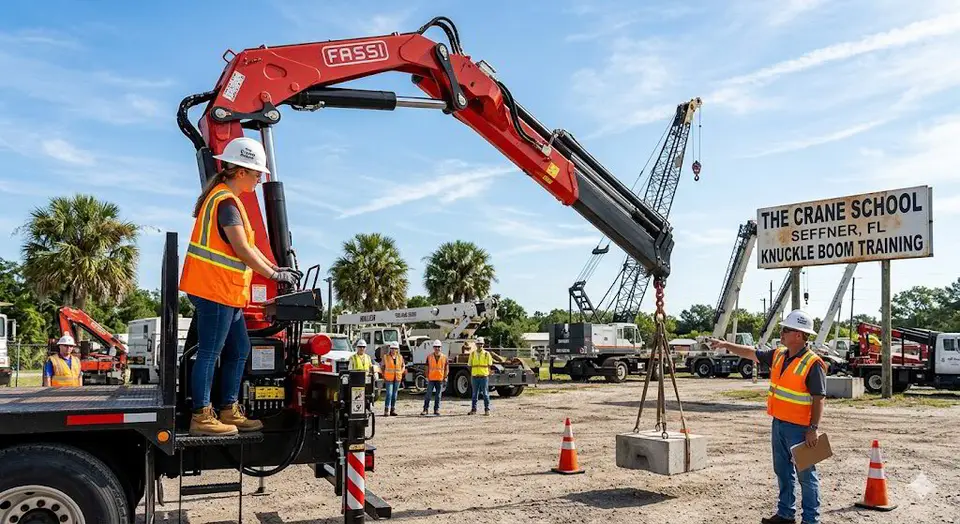
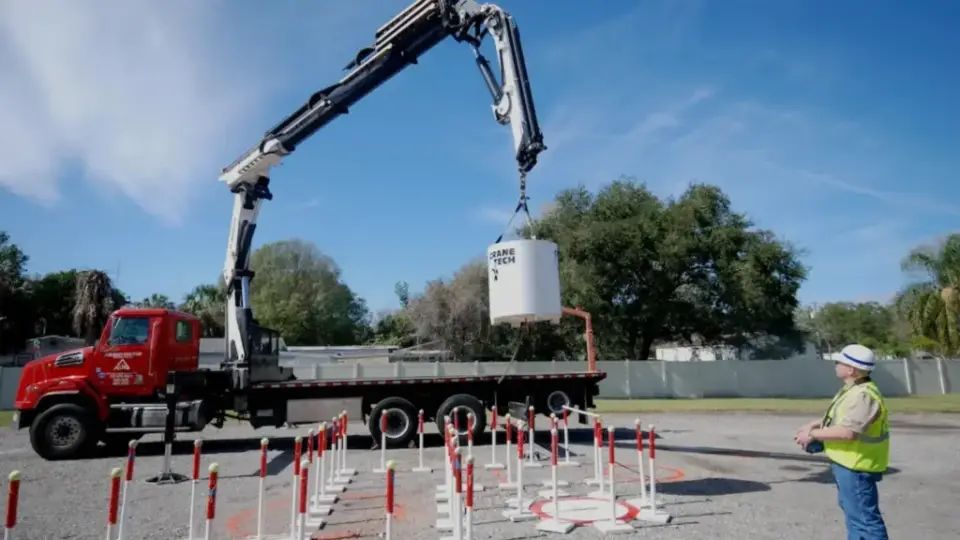
On the practical exam, an NCCCO accredited practical examiner watches you complete a set of defined tasks. The exam rewards control and safety, not speed.
Habits to build before test day
- Do a deliberate pre-use check. Walk around, look at hoses, pins, outriggers and safety devices, and confirm the load chart is in the crane.
- Set up correctly. Deploy stabilizers fully as the configuration requires and level the crane.
- Feather the controls. Practice starting and stopping each function smoothly, without jerks that swing the load.
- Keep the load under control. Avoid contact with obstacles and keep the load from swinging.
- Watch the signals. Respond only to the designated signal person and stop immediately on a stop signal.
If you can, practice on a crane similar to the one used for testing. Different makes place controls differently, and you want your hands to know where to go.
Why Candidates Fall Short
When experienced knuckle boom operators struggle with the exams, the causes tend to repeat:
- Relying on feel instead of the chart. Years of operating build instinct, but the written exam asks you to prove capacity on paper. Operators who never had to calculate deductions for lifting gear are often caught off guard.
- Studying the wrong configuration. If you test for ABW, you need to know winch-related limits and procedures, not only boom functions.
- Skipping the rules. Questions on power line clearances, signals and inspection frequency are easy points that unprepared candidates give away.
- Practicing on a different machine. Unfamiliar control layouts lead to hesitation and jerky movements on the practical.
- Rushing the practical. Trying to look efficient leads to load swing and contact with obstacles, which cost more than a slow, steady run.
- Nerves. A run-through under realistic conditions, with someone watching, takes the edge off test day.
Each of these is fixable with structured preparation and honest feedback from an instructor.
Exam-Day Tips
- Get a full night of sleep and arrive early with your photo ID and anything else your registration requires.
- On the written exam, read each question fully. Answer the ones you know first, then return to the hard ones.
- Show your work on load chart problems on scratch paper if allowed.
- On the practical, take a breath before each task and slow down. An examiner would rather see a careful operator than a fast one.
After You Pass: Keep the Card Current
Your certification is valid for five years. Recertification requires passing the written exam again, and NCCCO's experience rules determine whether you also need a practical exam. Plan your renewal during the last year before expiration so a busy season does not leave you uncertified.
Prepare With The Crane School
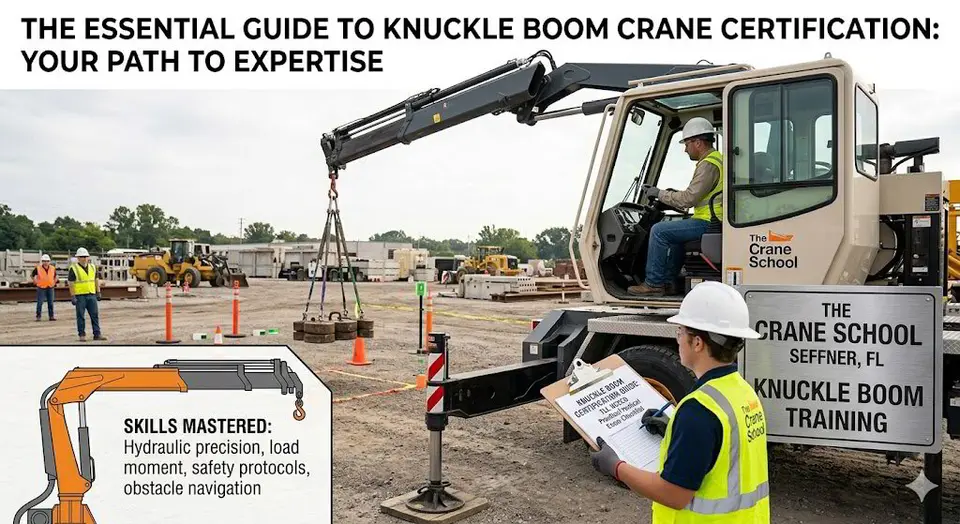
The Crane School's Articulating Crane Operator Certification Prep Program is designed for people with knuckle boom experience who are ready to take the NCCCO ABC, ABL or ABW written and practical exams. Our instructional staff includes NCCCO accredited practical examiners for articulating cranes, and CCO written exams are offered every month at our Seffner, Florida headquarters.
Have no crane experience yet? Start with a foundation program such as the Initial Mobile Crane Operator Training Program and build seat time first. For more general study advice, see our tips for passing NCCCO exams on the first try.
When you are ready to schedule, contact us for exam dates or on-site group options.
FAQ
How long should I study for the NCCCO articulating crane exam?
Experienced operators often need a few weeks of focused review, especially on load charts. Less experienced candidates should plan more time and more supervised seat time before the practical.
Do I need to pass both the written and practical exams?
Yes. NCCCO certification requires passing both. Check the current candidate handbook for timing rules between the two exams.
What is the hardest part of the articulating crane written exam?
For most candidates it is load chart interpretation, including accounting for lifting gear and choosing the right chart for the configuration.
Can my company host the practical exam?
Often, yes. The Crane School has accredited practical examiners who can schedule practical exams nationwide, including at an employer's site.