NCCCO Telehandler Certification: Everything You Need to Know
What NCCCO Telehandler Certification Is
NCCCO telehandler certification is the Telehandler Operator (THO) credential issued by the National Commission for the Certification of Crane Operators. It shows that an operator passed an independent written exam and a hands-on practical exam on a telescopic handler, also called a rough-terrain variable-reach forklift.
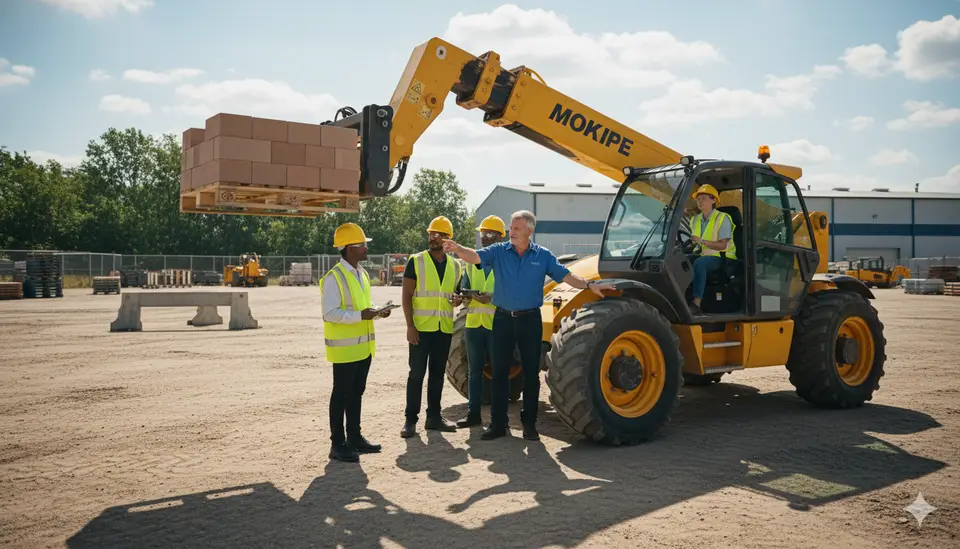
Telehandlers sit in an unusual spot. They drive like a forklift, but the boom extends and raises like a small crane, so the load and stability picture changes constantly as you boom out. That combination is why many contractors want proof of competence that goes beyond a basic forklift card.
One point to keep straight: NCCCO certifies, it does not train. Schools like The Crane School prepare you for the exams, and NCCCO issues the card. Certifications are valid for five years.
Who Should Pursue the THO Credential
The credential fits several kinds of people:
- Operators already running telehandlers who want a portable, third-party credential that follows them from employer to employer.
- Crane operators and riggers who switch between equipment on jobsites and want their telehandler skills documented too.
- Employers and safety managers who want a consistent benchmark across crews instead of relying on informal sign-offs.
- Career-changers who have some seat time and want a credential to put on an application.
If you have never sat in a telehandler, plan on getting supervised hands-on time before the practical exam. The exam evaluates skill; it is not a place to learn the controls.
How Telehandler Certification Relates to OSHA
Federal OSHA treats telehandlers as powered industrial trucks. Under 29 CFR 1910.178(l), employers must make sure each operator is trained and evaluated on the type of truck they use, with formal instruction, practical training and an evaluation in the workplace. OSHA also calls for a refresher evaluation at least every three years, and sooner after an incident or near miss. Construction work picks up the same training requirement through OSHA's construction standards.
OSHA does not require NCCCO certification for a standard telehandler. What it requires is training and evaluation, and the employer is responsible for it. A THO card is strong evidence of the knowledge and skill portion, but your employer still has to evaluate you on the specific machine and site.
There is one important exception to know about. When a telehandler is set up with a winch or hook to hoist and swing a suspended load, OSHA's crane rules in 1926 Subpart CC can apply. If your crew does that kind of work, talk with your safety department about what credentials apply. You can read the general standard at osha.gov (opens in a new tab).
The Path to Your THO Card, Step by Step
1. Confirm you meet NCCCO's candidate requirements
NCCCO publishes candidate policies covering minimum age, identification and conduct. Check the current candidate handbook on nccco.org before you register, because requirements can change.
2. Build seat time and study the reference material
Get supervised time on a telehandler similar to what you will test on. At the same time, study load charts, stability concepts, attachments and the operator's manual.
3. Take the written exam
The THO written exam is multiple choice and focuses on the knowledge an operator needs on the job: reading load charts, understanding how boom angle and extension change capacity, inspection items, site hazards and the rules that apply to the machine.
4. Take the practical exam
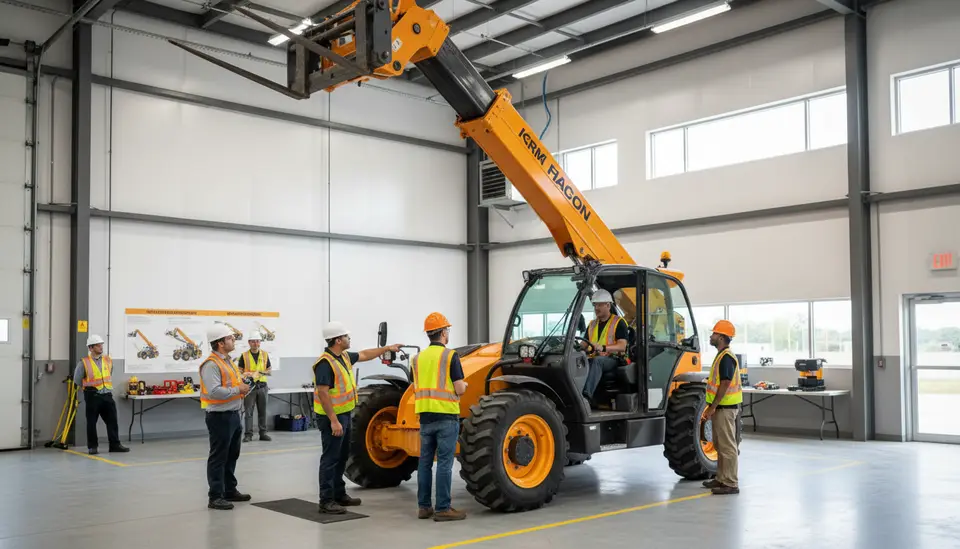
On the practical exam, an NCCCO accredited practical examiner watches you complete a defined set of tasks. Expect a pre-use check, maneuvering the machine, placing loads with control and following signals. Smooth, deliberate movements and safe habits count more than speed.
5. Receive your card and keep it current
After passing both exams, your results appear in NCCCO's system and the card follows. Plan to recertify before the five-year expiration date.
Topics to Master Before Exam Day
Candidates who struggle usually have gaps in the same few areas. Focus your study here:
- Load charts: reading capacity zones by boom angle and extension, and knowing that each attachment has its own chart.
- Stability: how the center of gravity moves as you raise and extend the boom, why the machine should be level before lifting, and what happens when outriggers or frame leveling are used incorrectly.
- Attachments: forks, carriages, buckets, truss booms and work platforms, and why an attachment must be approved for that specific machine.
- Pre-use inspection: tires, hydraulics, boom wear pads, controls, safety devices and decals.
- Site hazards: soft or sloped ground, overhead power lines, pedestrians and blind spots.
- Travel practice: keeping the boom low and retracted while moving, and driving loaded on slopes the way the manufacturer specifies.
If you are still deciding whether formal training is worth it, our post on the benefits of telehandler operator training walks through what operators and employers typically gain.
Preparing With The Crane School
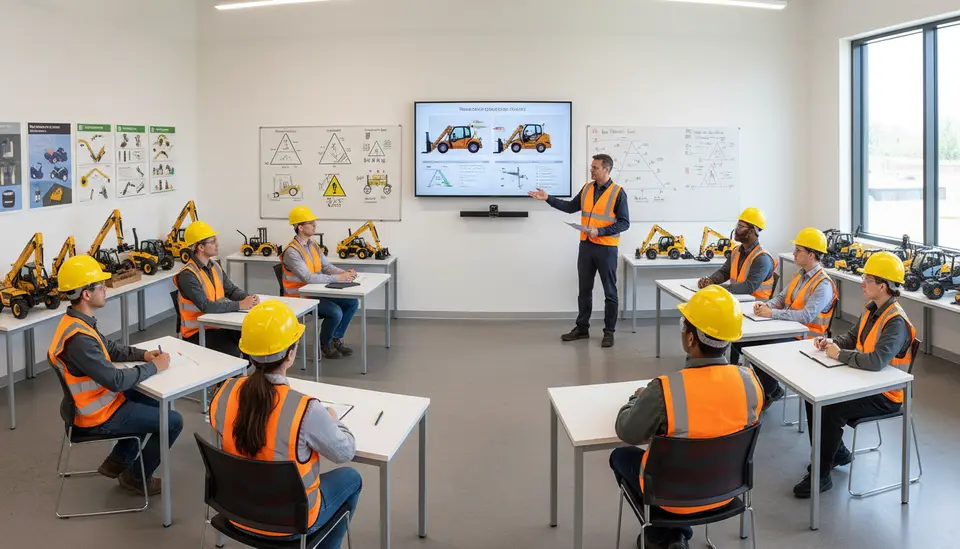
The Crane School's Telehandler Operator Program prepares candidates for the NCCCO THO written and practical exams, for both first-time certification and recertification. Our instructional staff includes NCCCO certified operators and NCCCO accredited practical examiners, including examiners accredited for telehandler.
CCO written exams are offered every month at our Seffner, Florida headquarters, and practical exams can be scheduled at locations across the country. For companies with several operators, we can bring the program to your facility so crews test on familiar ground.
If your team also runs knuckle boom trucks, the articulating crane certification prep program is a natural pairing.
Recertification: Staying Current
Every NCCCO certification lasts five years. Recertification requires passing the written exam again, and NCCCO sets rules on operating experience that determine whether you also need to retake the practical. Check the current requirements on nccco.org well before your expiration date.
A good habit is to start planning in the final year of your certification. That leaves time to schedule exams around work and to brush up on anything that has changed in the equipment you run.
Next Steps
If you are ready to earn or renew your THO card, or you need to certify a group of operators, contact The Crane School and we will help you choose dates and a location that fit your schedule.
FAQ
Does OSHA require NCCCO telehandler certification?
No. OSHA requires employers to train and evaluate telehandler operators under 1910.178(l). NCCCO certification is a voluntary third-party credential that many employers ask for because it documents knowledge and skill consistently.
How long is an NCCCO THO certification valid?
Five years. You recertify by passing the written exam again and meeting NCCCO's experience rules, which determine whether a practical exam is also required.
Can I take the telehandler practical exam at my company's site?
Often, yes. The Crane School has accredited practical examiners and can schedule practical exams at sites nationwide, which is convenient for employer groups.
Is a telehandler card the same as a forklift card?
No. A warehouse forklift certificate usually covers a different truck type. OSHA requires training on the specific type of truck you operate, and the THO credential is specific to telehandlers.