Federal, State and Mine Rules in West Virginia
Three sets of rules can touch a West Virginia crane job. First, the state itself: West Virginia is one of the states commonly cited for state-level crane operator requirements in addition to OSHA. Check what the responsible state agency currently requires, and read NCCCO's licensing notes for West Virginia, before you climb into a cab here.
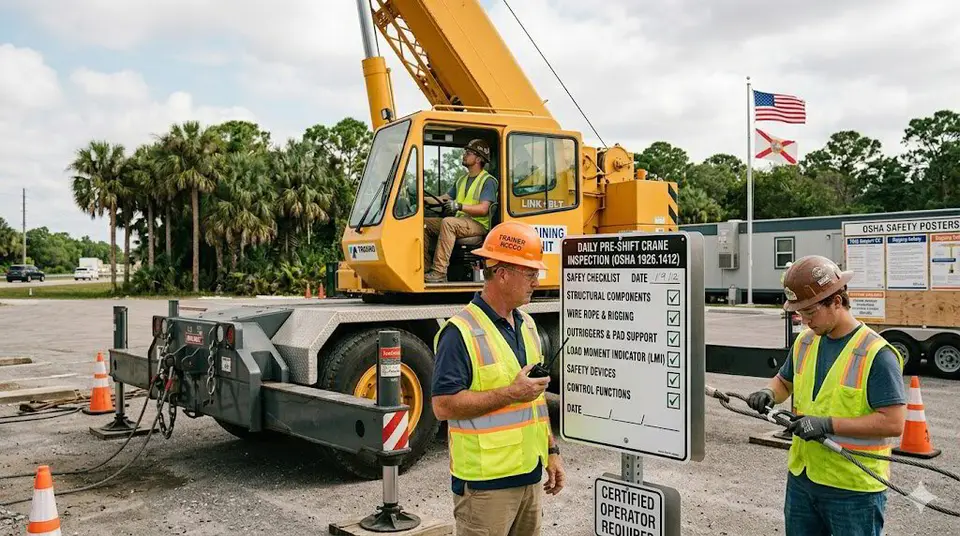
Second, federal OSHA. On construction sites, Subpart CC of 29 CFR 1926 applies, and 1926.1427 says covered cranes may only be run by operators who are certified by an accredited body or who pass an approved qualification program. An NCCCO card for each crane type is the usual way to meet that rule.
Third, the Mine Safety and Health Administration. Coal mines, quarries and preparation plants fall under MSHA rather than OSHA, and mine operators often write their own crane training and qualification rules on top. Our instructors are familiar with OSHA, MSHA and ANSI/ASME requirements for lifting equipment and can help you figure out which apply to your work.
Getting this straight for West Virginia crane operator certification saves you from discovering a missing credential at the gate.
Coal, Gas, Chemicals and the Rivers
Mining
Coal has defined much of West Virginia's history. Mines, preparation plants and loading facilities need cranes for equipment installation, conveyor work and maintenance, often in tight hollows with limited setup space.
Natural gas
The Marcellus and Utica shale plays reach into northern and central West Virginia. Well pads, compressor stations, processing plants and pipelines bring boom trucks and hydraulic cranes onto rural roads and hilltop pads.
The Kanawha Valley and the Ohio River
Chemical manufacturing along the Kanawha River near Charleston has long earned the area the nickname "Chemical Valley." Plant maintenance and turnarounds need skilled operators and riggers. Barge terminals and industrial plants along the Ohio River add marine and heavy industrial lifting.
Roads through the mountains
Highway, bridge and public building projects are a steady source of crane work, and almost every one of them involves steep grades or narrow access.
Setting Up on Mountain Ground
West Virginia's terrain is the defining challenge for crane crews. Level ground is scarce, and a crane often has to be set on a cut bench, a fill pad or a narrow road shoulder.
That puts heavy weight on two parts of Subpart CC: ground conditions and assembly. The controlling entity has responsibilities for ensuring ground conditions are adequate, and the operator has to recognize when they are not. Our classroom days spend real time on how outrigger loads transfer to the ground, when mats or cribbing are needed and what a crane's level requirements mean for capacity.
Rock is the other surprise. Hitting ledge where you expected soil can force a change in crane position or require extra matting, and that decision has to be made before the lift, not during it.
Weather complicates things further. Freeze-thaw cycles weaken fill in winter and spring, heavy rain can soften pads overnight and fog in the valleys reduces visibility for signals. Travel to remote sites on winding roads also means planning crane routes and assembly space before mobilization, not after.
On-Site Classes or Open Enrollment
Mines, gas operators and chemical plants usually have several people to certify and strict site rules. For them, we go to the site. Classroom work can happen in your training room from Wheeling to Bluefield, and an Accredited Practical Examiner from our staff can give the NCCCO hands-on test on your crane after we finish your orientation and gate requirements.
Operators working for themselves, or for a small contractor, may prefer to come to Florida. Our Seffner facility, just east of Tampa, hosts NCCCO written exams monthly and rents hourly practice on telescopic and lattice cranes. Students get a negotiated rate at a nearby hotel.
Our training covers the NCCCO exams. West Virginia's state requirements are a separate process to complete with the state. Look up dates on the class calendar, or talk with us about a visit.
Choosing the Right Course
- A pad crew operator or plant hand who has years in the cab can sit for TSS, TLL and LAT after our monthly long-weekend crane review.
- A former miner or laborer starting from zero will want the hours that come with our three- or five-week beginner program.
- Kanawha Valley turnarounds rely on people who rig and signal well; we teach both as short courses aimed at the NCCCO tests and at your plant's own qualification.
Safety managers responsible for crane programs across several sites may also want the Managing Crane Safety class, which covers compliance, inspections and planning from the management perspective. Our guide to OSHA compliance for crane operators is useful background for anyone in that role.
Building a Career in West Virginia
Operators who can work in mining, gas and plant settings, and who understand both OSHA and MSHA expectations, have the widest range of options in the state. Adding crane types and rigging credentials helps when one industry slows.
Keep one calendar entry for the five-year NCCCO renewal and another for whatever the state requires. If you want to compare pay in Charleston, Morgantown or the Northern Panhandle, the BLS wage estimates for crane operators (opens in a new tab) are broken out by area.
Experience in the hollows counts. Operators who can set up safely on a sidehill bench, read a chart with confidence and keep a calm radio voice when the load is out of sight are the ones supervisors ask for by name. Those skills travel well, too, if work takes you into neighboring states, though you should check each state's rules before you go.