
Arkansas Has No Crane License — Here Is What Applies Instead
Arkansas leaves crane operator credentials to federal law. Private-sector employers are covered by federal OSHA, and for construction cranes the governing rule is 29 CFR 1926 Subpart CC. Section 1926.1427 requires operators to be certified by an accredited testing organization for the type of equipment they run, and the employer must also evaluate each operator before turning them loose on a job.
That makes Arkansas crane operator training a matter of preparing for an accredited exam, most often NCCCO. The Crane School teaches and prepares; NCCCO tests and certifies. If a general contractor or plant owner in Arkansas asks for more than the federal minimum, their rules apply on their property.
What Arkansas Crews Lift
Arkansas has a mix of rural and industrial work that keeps cranes busy. The Arkansas River is a navigable commercial waterway, and river terminals and ports handle barges, bulk material and heavy cargo. Timber, paper and wood products mills run large maintenance lifts. Food processing, especially poultry, is a major industry with plant expansions and equipment changeouts. Steel production in the northeast part of the state and general manufacturing round out the industrial picture.
Northwest Arkansas has seen substantial commercial growth, and highway and bridge projects run statewide. Spring storms and severe weather are part of the planning season, so crews need solid habits around wind and lightning.
Your Two Training Options From Arkansas
At your location. We send instructors to your plant, terminal or contractor yard anywhere in Arkansas. Training happens on the cranes your people use, and our accredited practical examiners can hold NCCCO practical exams on-site. This is especially efficient for plants where downtime is expensive.
At our Florida campus. Individuals and small groups can come to Seffner, Florida, east of Tampa, for open-enrollment classes. Written CCO exams are given every month at that location. Students coming from Arkansas usually fly into Tampa International; the schedule calendar lists upcoming class dates.
Many Arkansas employers mix the two. A plant might bring us on-site to certify its core crane crew, then send a new hire to Seffner for a full beginner course so that person returns with real seat time on several machines.
Matching Arkansas Workers to Programs
Industrial crews in Arkansas often include people with years of plant crane experience but no card. For them, the four-day mobile crane certification prep is usually enough. It is not designed for people without operating experience.
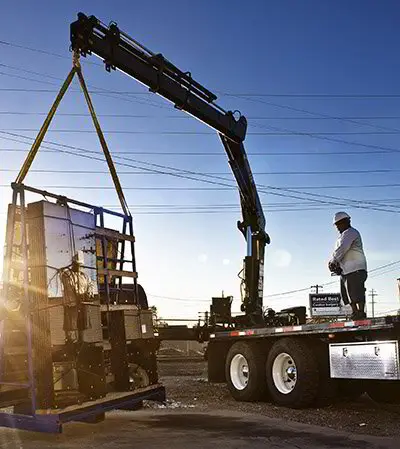
Mill and utility crews that use knuckle boom trucks fit the articulating crane certification prep program. Riggers on river terminals and plant maintenance teams benefit from the signalperson qualification and certification program and rigger training, since OSHA requires qualified people in those roles. Anyone starting from scratch should look at the 3-week or 5-week initial programs.
Plant Lifts Versus Construction Lifts in Arkansas
A question we hear from Arkansas plant managers: does the construction crane standard even apply inside a mill or processing plant? The answer depends on the work. Subpart CC covers cranes used in construction, which includes many building, demolition and major equipment installation jobs that take place inside an operating facility. Routine production and maintenance lifting usually falls under OSHA's general industry rules instead.
That line can blur. A crane that spends most of the year on maintenance may be used to set new equipment during an expansion, and that project may count as construction. Many Arkansas plants simplify the question by certifying their operators to the construction standard regardless, so the same people can handle either type of job.
If you are unsure where your work falls, ask OSHA or your safety consultant. Certification under NCCCO meets the construction requirement and documents a level of knowledge most employers value either way. It also gives your insurer and your customers a clear, third-party record of who is qualified to run what, which is easier to defend than an internal sign-off alone.
Building Your Arkansas Crane Career
Arkansas operators who hold multiple certifications can move between plant work, construction and river operations as demand shifts. Adding a lattice boom or articulating credential is a common next step.
To see earnings data, check the U.S. Bureau of Labor Statistics Occupational Employment and Wage Statistics for crane and tower operators (53-7021), which includes Arkansas figures. Our article on the NCCCO certification process explains applications, exams and recertification. Your card is valid for five years, and recertifying in the final year keeps you working without a gap.