
Crane Work in the Delta
Jonesboro is the commercial hub of Northeast Arkansas, home to Arkansas State University and surrounded by some of the most productive farmland in the Mississippi Delta. Grain elevators, rice dryers and storage bins need cranes for construction and maintenance. Manufacturing plants in the area, steel production in nearby Mississippi County, and hospital and campus growth add more work for operators and riggers.
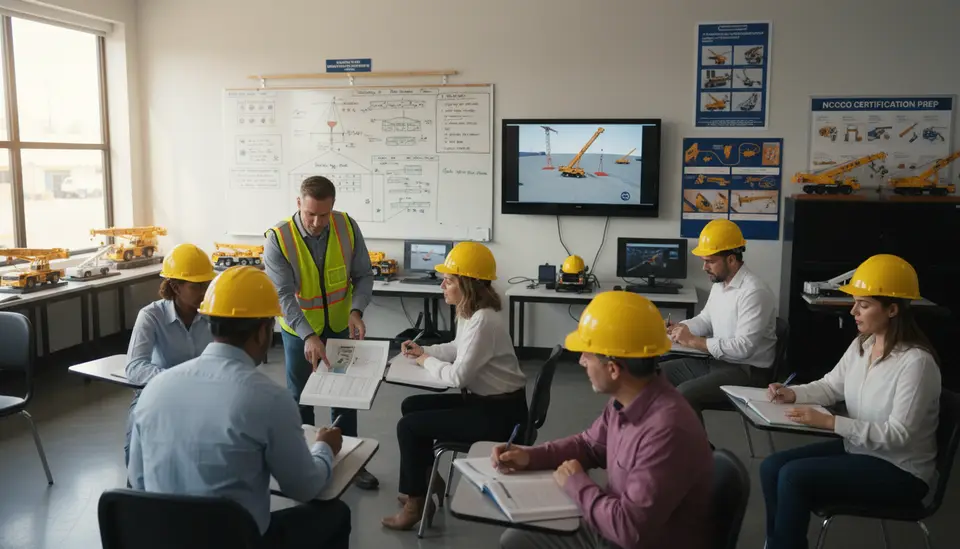
The Crane School offers crane operator certification for Jonesboro crews without a local branch. We bring instructors and NCCCO accredited practical examiners to your site, or you join scheduled classes at our Seffner, Florida campus.
Arkansas State University's campus and the regional medical centers add steady institutional construction, often with occupied buildings close to the work. That kind of project needs operators who can plan swing paths around people and structures, and riggers who can control loads in limited space.
Tall Bins, Flat Ground and Changing Weather
Lifting at agricultural facilities often means working at height beside bins and legs, setting conveyors, roof sections and spouting. The Delta's flat terrain is easy to set up on in dry weather, but saturated clay soils after heavy rain can be deceptively soft under outrigger pads. Spring storms and gusty winds are a regular concern, and long reaches to tall structures make wind limits especially important.
Operators who know their load charts and respect ground conditions are the ones farm cooperatives and industrial owners trust. Exam preparation with our instructors focuses on exactly those skills.
Industrial sites in the region bring a different set of hazards: heat from process equipment, overhead pipe racks, energized lines and congested laydown areas. Crews who move between farm and plant work benefit from training that covers both, including OSHA's power line safety rule in 1926.1408, which applies whenever a crane works near overhead lines.
Programs Suited to Northeast Arkansas
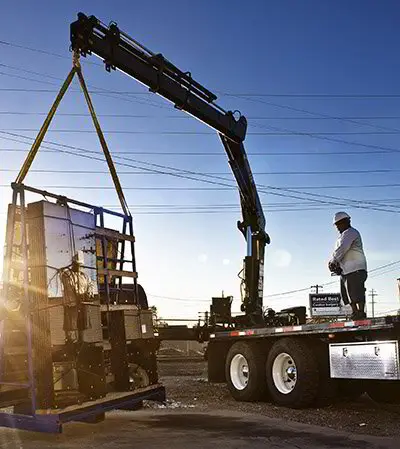
Experienced operators preparing for NCCCO TSS, TLL or LAT certification usually choose the mobile crane certification prep program. Equipment dealers, ag service companies and building-supply yards running knuckle-boom trucks can prepare for ABC, ABL or ABW exams through articulating crane prep.
For crews who work at steel and industrial plants, rigger and signalperson certification helps meet owner requirements for the ground team. Operators approaching the end of their five-year cards should plan recertification during the final year; our article on NCCCO prep tips is a good refresher before the exams.
Training On-Site or in Florida
Employers with several candidates can host on-site training. Our instructors handle classroom work at your facility, and practical exams can be scheduled on your equipment if the yard can accommodate the NCCCO test layout. Harvest season is busy for ag-related companies, so many schedule training in late winter or early summer.
For open enrollment in Seffner, most Jonesboro students drive to Memphis International, roughly an hour and a half away, and fly to Tampa International. Seffner is a short drive east of the airport. CCO written exams are offered monthly at our headquarters, and the class calendar lists upcoming dates.
What Arkansas Law Requires
Arkansas has no state crane operator license, so federal OSHA requirements apply, including certification under 29 CFR 1926.1427 for construction work. Industrial owners commonly require certification for maintenance lifts too. More information is on our Arkansas crane certification page.