Mobile Crane Operator Training Programs: Which Format Fits You?

Choosing Among Mobile Crane Operator Training Programs
Most mobile crane operator training programs end in the same place: NCCCO written and practical exams for one or more crane types. What differs is how much instruction and seat time you get on the way, and that should depend on where you are starting.
A new student and a fifteen-year operator renewing a card need very different things. Putting either one in the wrong format wastes money or sets them up to struggle on the practical.
Below is a side-by-side look at the formats The Crane School offers, who each one serves and which exams it prepares you for.
Format 1: Initial Training, 3 Weeks
Who it is for: People with little or no crane experience who want to run telescopic boom cranes.
What you work toward: NCCCO TSS (telescopic boom, fixed cab) and TLL (telescopic boom, swing cab) written and practical exams.
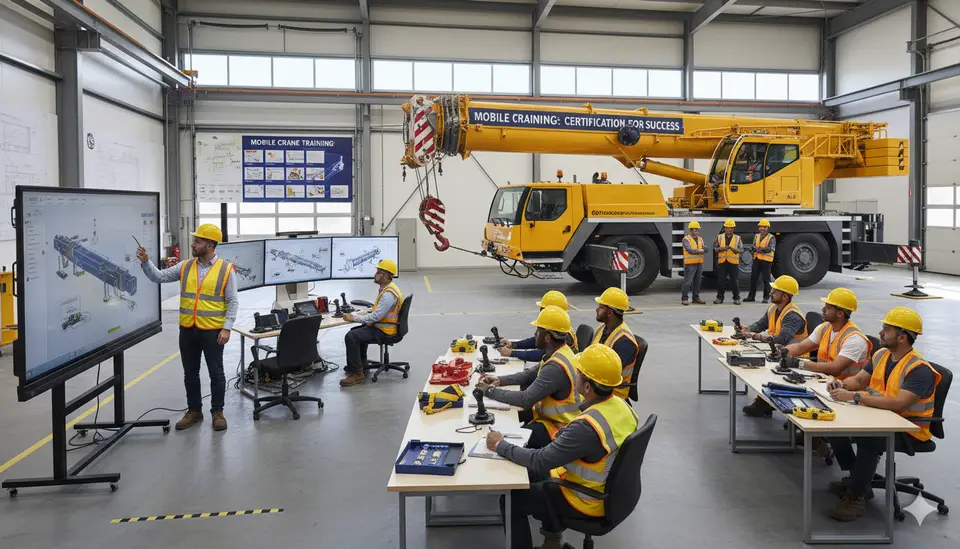
How it runs: Full time, Monday through Thursday, 7:00 AM to 4:00 PM, at our Seffner, Florida yard. Expect classroom work on OSHA rules, load charts and setup alongside daily seat time.
This is the most common starting point because telescopic cranes are what many new operators will see first on the job. Details are on the initial mobile crane operator training page.
Format 2: Initial Training, 5 Weeks
Who it is for: Beginners who want both telescopic and lattice boom credentials, or who expect to work for companies running crawler cranes.
What you work toward: NCCCO TSS, TLL and LAT (lattice boom crawler and truck) exams.
Why the extra time: Lattice cranes involve assembly and disassembly, different rigging considerations and a different feel in the controls. The added weeks give you time on those machines before the practical.
There is also a standalone 4-week lattice class for students focused on lattice equipment. See the store for current listings.
Format 3: Certification Prep for Experienced Operators
Who it is for: Operators who already have real seat time but no NCCCO card, and CCO-certified operators who are recertifying.
What you work toward: TSS, TLL and LAT written and practical exams, depending on what you need.
How it runs: Once a month over four days:
- Friday: practical exams
- Saturday and Sunday: classroom review
- Monday morning: written exams
Optional practice time is available the Thursday before, in reserved one-hour slots. This program is not for people without operating experience. Read more on the certification prep program page, or see what to expect at a certification prep weekend.
Format 4: Recertification and Practical-Only Options
NCCCO certifications are valid for five years. If your card is coming due, you may only need a refresher on recent rule changes and a practical exam.
Options include:
- Recertification prep (classroom only) for TSS, TLL and LAT
- Practical exam only for TSS or TLL, or for LAT
- Hourly practice on telescopic or lattice cranes, with or without coaching
A good rule is to start the process in the last year before your expiration so a scheduling problem does not leave you uncertified.
Format 5: On-Site Training for Employers
Companies with several operators to train can have the program brought to their facility. Instructors travel with the curriculum, and because our staff includes NCCCO accredited practical examiners, practical exams can be scheduled at your location anywhere in the country.
On-site delivery makes sense when:
- You have a group large enough to justify instructor travel
- Your operators need to train on your own equipment
- Pulling crews off the job for travel would cost more than the training
Use the contact page to describe your group size, crane types and location.
Place Yourself: Four Self-Check Questions
Answer these honestly before you choose a format.
1. How many hours have you actually run a crane?
Not ridden along, not rigged for one, but operated with your hands on the controls. If the honest answer is 'very few,' start with initial training.
2. Can you set up a crane alone?
That means leveling, setting outriggers on proper cribbing and configuring the load moment indicator. Experienced operators do this without prompting. If it still feels unfamiliar, you need more instruction than a weekend offers.
3. Can you read a load chart under time pressure?
The written exams include chart problems. If you have never worked through deductions, budget time for classroom work.
4. Do you need lattice now or later?
If your target employer runs crawlers, adding LAT in one trip can save a second round of travel. If not, the 3-week course gets you working sooner.
Your answers usually point clearly to one format. When they do not, an instructor conversation will.
What All Formats Share
Every program ends with the same standard. NCCCO exams are developed and administered independently, and The Crane School does not issue certifications itself. That means the exam you take after a 3-week course is the same exam an experienced operator takes after a weekend prep. The difference is only in how ready you are when you sit down for it.
All programs also expect you to arrive with hard-toe footwear, a hard hat, work clothes, gloves, a government-issued photo ID and a valid driver's license.
Quick Comparison
| Program | Best for | NCCCO exams |
|---|---|---|
| Initial, 3 weeks | New operators | TSS, TLL |
| Initial, 5 weeks | New operators wanting lattice | TSS, TLL, LAT |
| Certification prep | Experienced, uncertified or renewing | TSS, TLL, LAT |
| Recertification / practical only | Card holders renewing | As needed |
| On-site | Employer groups | Program-dependent |
Still unsure? Our post on crane operator courses for beginners covers how newcomers should pick a first course, including rigging and signaling options.
Next Step
Pick the format that matches your seat time, then check open dates on the class schedule. If you are between two options, call and describe your experience; we will tell you honestly which one fits.
FAQ
Can an experienced operator skip the 3-week program?
Yes. If you already operate cranes, the four-day certification prep program is usually the better fit. It assumes you can already run the machine.
What is the difference between TSS and TLL?
TSS covers telescopic boom cranes with a fixed cab, and TLL covers telescopic boom cranes with a swing cab. They are separate NCCCO certifications.
How often are NCCCO written exams held at The Crane School?
Written exams are offered every month at the Seffner, Florida headquarters.
Do I have to come to Florida for training?
Open-enrollment classes are in Seffner. Employers can arrange on-site training and practical exams at their own facility.