Building a Crane Safety Culture Around NCCCO Certification
Certification Is the Floor, Culture Is the Building
When companies talk about safety culture, they mean the habits people follow when nobody is checking. On crane work, those habits decide whether a near miss becomes a report and a lesson, or a secret and a repeat.
NCCCO certification gives you a solid, independent baseline: every certified operator has proven knowledge and skill on a crane type to an accredited third party. But a crane safety culture depends on what the company does around that baseline. This post is written for owners, safety managers and supervisors. If you want the operator's view of how certification protects a job site, read crane operation certification and job site safety.
Why Certification Is a Good Foundation
Third-party certification gives a safety program several things it cannot easily create on its own:
- A common standard. Operators from different backgrounds have all met the same written and practical bar.
- A shared language. Certified operators learned the same hand signals, terms and rules, which makes crews easier to mix.
- Verification. You can confirm certification status instead of relying on a résumé.
- A renewal cycle. Five-year recertification brings operators back to the material on a regular schedule.
It also satisfies the certification part of OSHA 1926.1427 in construction. What it does not do is evaluate an operator on your crane, at your site, on your lifts. That is your job as the employer.
Seven Habits of a Strong Crane Safety Culture
1. Leaders show up for lifts
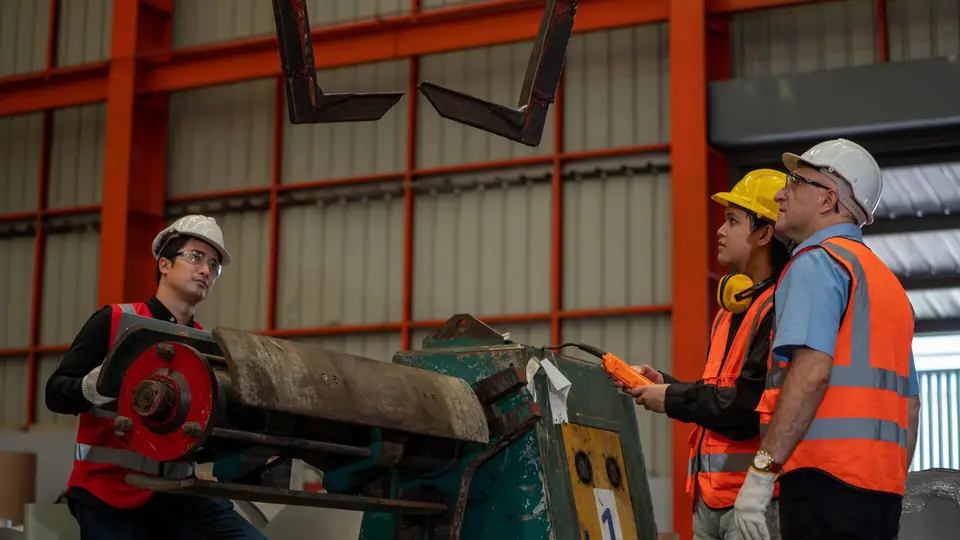
When supervisors attend pre-lift meetings and ask real questions, crews take planning seriously. When they only appear after an incident, crews learn that planning is paperwork.
2. Every role is qualified, not just the operator
Signal persons must be qualified under OSHA 1926.1428, and riggers must be qualified for the work they do. A certified operator taking signals from an unqualified signaler is a weak link.
3. Employer evaluations are real
Watch each operator run each crane type before clearing them, and write it down. Use the evaluation to spot coaching needs, not just to fill a form.
4. Lifts are planned in proportion to risk
Routine picks need a basic plan. Critical lifts, tandem lifts and lifts near power lines need a written plan, a designated person in charge and a pre-lift briefing.
5. Anyone can stop the work
Make stop-work authority explicit and protect people who use it. Any person may give an emergency stop signal, and the operator must obey it. Thank people for stopping a lift that turns out to be fine. The message you want crews to hear is that a pause costs minutes, while a dropped load can cost lives, equipment and the whole project schedule.
6. Near misses get reported and discussed
A near miss is free training. If crews fear blame, you will never hear about them.
7. Inspections are taken seriously
Shift inspections done properly, monthly inspections documented, and annual inspections by a qualified inspector. Equipment problems found early are cheap to fix.
Training Beyond the Operator Seat
Culture is easier to build when everyone involved in crane work understands it. Practical options include:
- Rigger and signalperson training for ground crews, so the people hooking up and directing loads are as qualified as the operator. See our rigger qualification and certification program.
- Training for managers and supervisors on OSHA responsibilities, accident prevention, planning, inspections and limiting liability. Our Managing Crane Safety class is built for this group.
- On-site training at your facility, so crews learn on the equipment and conditions they actually work with. The Crane School can deliver scheduled programs and NCCCO exams anywhere in the country.
Measuring Whether It Is Working
You cannot manage what you do not look at. Simple indicators to track:
- Percentage of operators, riggers and signal persons with current credentials.
- Upcoming certification expirations over the next 12 months.
- Number of near misses reported. Rising numbers early on usually mean trust is growing, not that work got riskier.
- Inspection findings and how quickly they are closed.
- Lift plans completed for critical lifts, and how often pre-lift meetings actually happen.
Review these with crews, not just with management. People support what they help measure.
Keep the list short. Five numbers that get looked at every month do more good than twenty that nobody opens. If a number stops telling you anything useful, replace it with one that does.
Common Pitfalls
Even well-meaning programs stumble in familiar ways:
- Treating the card as the finish line. Certification without evaluation, coaching and supervision leaves gaps.
- Rushing at the end of a schedule. Production pressure is when shortcuts happen. Plan for it.
- One-size training. A plant running overhead and articulating cranes has different needs than a contractor running lattice crawlers.
- Letting renewals slip. A lapsed certification is easy to prevent and awkward to explain.
For more on the management side, our post on crane safety management best practices goes deeper.
Where to Start
Pick one habit from the list above and make it real this month. For many companies, that is either documenting operator evaluations or making stop-work authority clear. Then add the next one.
If you would like help with crew training, supervisor education or bringing NCCCO exams to your site, contact The Crane School. We have been training crane crews for more than 21 years under the belief that safety comes through education.
FAQ
Does NCCCO certification alone make a crane program compliant?
No. In construction it covers the certification requirement, but employers must also evaluate operators, use qualified riggers and signal persons, and maintain inspections.
Who should attend a crane safety class for managers?
Supervisors, project managers, safety staff and anyone responsible for planning or overseeing crane operations.
How do we encourage crews to report near misses?
Respond to reports with thanks and fixes, not blame. When crews see a report lead to a real change, more reports follow.
Can The Crane School train our crew at our own site?
Yes. Scheduled programs, including required NCCCO exams, can be delivered at your facility anywhere in the country.