Why NCCCO Certification Matters So Much in Construction

Construction Is Where Certification Is Most Visible
Cranes work in plants, ports, utilities and shipyards, but construction is where operator certification gets checked most often. Gate checks, prequalification packets, site orientations and OSHA inspections all ask the same question: is this operator certified for this crane?
This post explains why NCCCO certification in construction carries so much weight, who relies on it, and what it does and does not prove. If you need the full regulatory breakdown, our article on crane operator certification requirements covers OSHA scope and exemptions.
Reason 1: Federal Rules Require It
OSHA's construction crane standard, 29 CFR 1926 Subpart CC, requires operators of covered equipment to be certified for the type of crane they run and evaluated by their employer (1926.1427). That makes certification a legal baseline on construction sites, not a nice extra.
NCCCO has been certifying crane operators since its formation in 1995 and is accredited as a personnel certification body, which is what OSHA's rule looks for in a testing organization. That combination is why so many contractors default to it.
Reason 2: Construction Sites Have Many Employers
A single building project can have a general contractor, a crane rental company, a steel erector, mechanical and electrical subs, and the owner's representatives all on site. When a crane swings over that mix of companies, everyone has a stake in who is operating it.
Certification gives every party a common reference point. The general contractor does not have to personally test a rental company's operator. It can verify a current, nationally recognized certification for the right crane type, and then rely on the operator's employer for the site-specific evaluation.
Subpart CC also assigns certain responsibilities to the controlling entity on a site, such as ground conditions. Certified operators who know those rules are better equipped to raise concerns before a lift.
Reason 3: Prequalification and Contracts
Many owners and general contractors write crane requirements into subcontracts and safety plans. Common examples include:
- NCCCO or equivalent accredited certification for every operator.
- Qualified riggers and signal persons, sometimes with third-party certification.
- Documented employer evaluations.
- Current annual crane inspections.
- Written lift plans for critical lifts.
Subcontractors who can produce these documents quickly look organized and low-risk. Those who cannot may lose bids or face delays at mobilization.
Reason 4: Portability for Operators
Construction work moves. Projects end, crews change and operators follow the work. NCCCO certification goes with you from employer to employer and state to state, which makes changing jobs far simpler.
There are limits to that portability. Some states and cities have their own crane operator licensing in addition to OSHA, including New York City, Chicago and several states. Confirm current rules with the local agency and NCCCO's state licensing information before you work there. Our post on crane operator licensing explains how licenses relate to certification.
What Certification Proves, and What It Does Not
It is worth being precise, because overstating certification causes problems.
Certification proves
- The operator passed accredited written and practical exams for a crane type.
- The operator met NCCCO's candidate requirements, including medical, substance abuse and ethics policies.
- The certification is current, if it has not expired.
Certification does not prove
- The operator is familiar with your specific crane model and its attachments.
- The operator is ready for a particular critical lift.
- The rest of the crew is qualified.
That is why OSHA requires employer evaluations on top of certification, and why good contractors match operators to lifts based on experience as well as cards.
A Simple Gate-Check Routine
Contractors who handle crane documentation well tend to follow a short, consistent routine every time a crane arrives on site:
- Check the card against the crane. Confirm the operator's designation matches the crane type being set up, not just that a card exists.
- Verify it is current. Look at the expiration date and verify status online if anything looks off.
- Ask for the evaluation record. The operator's employer should be able to show that the operator was evaluated on this kind of equipment.
- Confirm the ground crew. Identify the qualified signal person and riggers for the day's lifts.
- Check the paperwork for the crane. The current annual inspection and the most recent shift inspection should be available.
- Hold a short pre-lift talk. Agree on signals, communication method, swing area and who can stop the work.
The whole routine takes a few minutes. Done every time, it catches the rare problem before it reaches the hook.
What It Means for You
If you are an operator
Keep your certifications current, carry proof, and know exactly which designations you hold. Add designations as your work demands, and consider rigger and signalperson credentials to round out your skills.
If you are a contractor
Verify certifications for every operator on site, including those supplied by rental companies. Document evaluations. Track renewal dates. And invest in supervisors who understand crane rules; our Managing Crane Safety class covers OSHA and industry compliance, planning, inspections and limiting liability.
Getting Certified for Construction Work
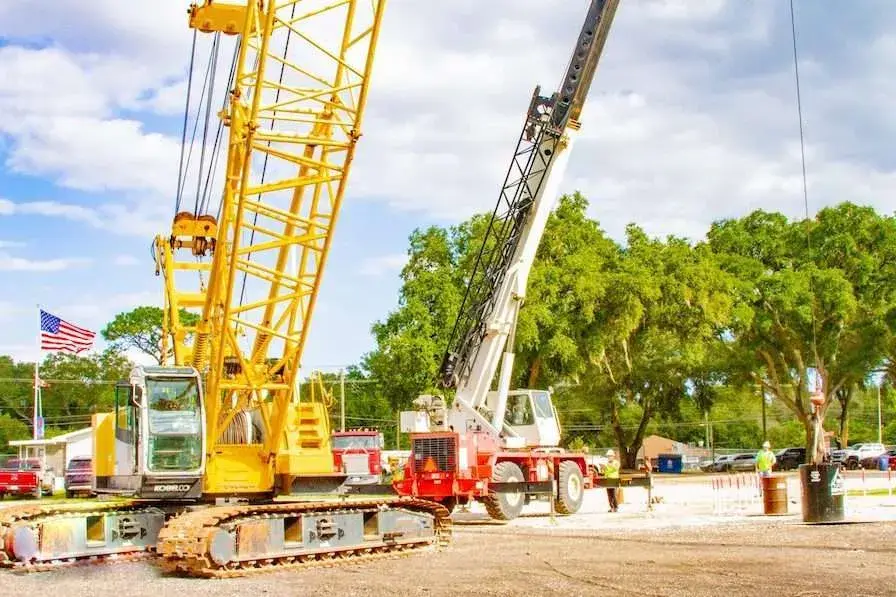
Construction crane work most often calls for telescopic and lattice boom mobile cranes. Experienced operators can prepare for NCCCO TSS, TLL and LAT exams through our mobile crane certification prep program. Newer operators can start with full initial training.
The Crane School can also bring training and NCCCO exams to your site for a crew. Contact us to talk about what your project or company needs.
FAQ
Is NCCCO the only crane certification OSHA accepts?
No. OSHA accepts certification from accredited crane operator testing organizations, and NCCCO is one of the most widely used. Some states have their own licensing as well.
Do rental crane operators need their own certification?
Yes. Anyone operating covered equipment on a construction site must be certified for the crane type and evaluated by their employer.
Who on a construction site checks crane operator certification?
Usually the operator’s employer and the general contractor or controlling entity, often during site orientation or crane mobilization. OSHA inspectors may also ask to see it.
Does NCCCO certification transfer between employers?
Yes. It belongs to the operator and stays valid for five years regardless of employer.