What to Expect in Crane Operator Training Programs

What to Expect in Crane Operator Training, Start to Finish
If you have enrolled in a beginner program, or you are thinking about it, you probably want to know what to expect in crane operator training before you show up. This post walks through the experience of a multi-week program for new operators, like The Crane School's 3-week and 5-week initial mobile crane operator training.
Exact sequencing varies by class, weather and equipment, so treat this as a general picture rather than a fixed day-by-day script. If you are an experienced operator heading to a four-day prep course, read what to expect at a mobile crane certification prep weekend instead.
The Daily Rhythm
Initial programs run full time, Monday through Thursday, 7:00 AM to 4:00 PM, at the training facility in Seffner, Florida, east of Tampa.
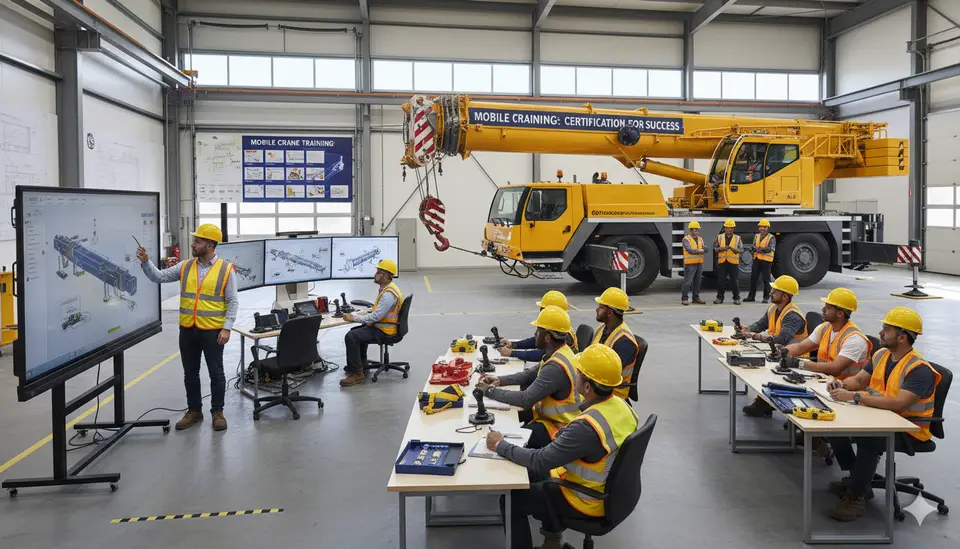
A typical day mixes classroom and yard time, and the balance shifts toward the equipment as your skills develop. In Florida, summer storms can move yard time around, and instructors will adjust when lightning or wind makes crane work unsafe. That is a lesson in itself.
Because class meets four days a week, you have time outside class to rest, review notes and handle errands, which matters on a multi-week program away from home.
What You Learn in the Classroom
Classroom sessions build the knowledge behind every lift and prepare you for the NCCCO written exams.
Regulations
How federal OSHA rules for cranes in construction (29 CFR 1926 Subpart CC) shape daily work: operator certification, signal person qualification, inspections, power line clearances and assembly rules.
Load charts
How to find the right chart for a configuration, read capacities by radius and boom length, and apply deductions. Expect a lot of practice problems. This is where many students need the most repetition.
Setup and stability
Outriggers, cribbing, ground conditions, leveling and how the crane's configuration affects capacity.
Operations and communication
Standard hand signals, radio procedures, pre-lift planning and stop-work authority.
Inspection
Daily pre-operation checks and what to look for on wire rope, hooks, hydraulics and safety devices.
What Happens in the Yard
Seat time is where the classroom comes to life. Students rotate through the cranes with an instructor coaching.
Early on, the focus is on basics: walk-around inspections, getting familiar with the controls, setting up and leveling, and making slow, controlled movements. As skills develop, you move to combined functions, swinging to targets and placing loads accurately, similar to the tasks on a practical exam course.
When you are not in the seat, you are still learning. Watching classmates, listening to the instructor's corrections and practicing signals as part of the ground crew all count.
The 5-week program adds lattice boom equipment, which brings assembly and disassembly concepts and a different control feel.
Exams at the End
Programs end with NCCCO exams for the crane types covered: TSS and TLL for the 3-week program, and TSS, TLL and LAT for the 5-week program.
- Written exams test regulations, operations, setup and load chart knowledge. The Crane School offers written exams every month at its Seffner headquarters.
- Practical exams are performed on a crane in front of an NCCCO accredited practical examiner, who evaluates control, accuracy and safe operation.
After passing, cards typically arrive a few weeks later. The Crane School also publishes a written-exam guarantee; ask for its details when you enroll.
What to Bring
- Hard-toe footwear
- Hard hat
- Work clothes suited to the weather, plus gloves
- Sunglasses for yard work
- Government-issued photo ID and a valid driver's license
- Water and lunch
- A notebook and pen
Training materials and handouts are provided. If you are traveling, The Crane School has arranged a special rate at the Holiday Inn Express Tampa Fairgrounds; see the hotels page.
Common First-Week Surprises
New students tend to be surprised by the same few things.
How much classroom time there is
Many people expect to be in the seat from day one. The classroom foundation comes first because a crane you do not understand is a crane you cannot run safely.
How slow good operating looks
Instructors will ask you to slow down, again and again. Smooth, deliberate movements are the goal; speed comes with time.
How tiring it is
Concentrating in the seat for even short periods is mentally demanding, and Florida heat adds to it. Plan for early nights.
How much math there is
It is not advanced, but it is constant. Load charts, deductions and weights show up every day.
How much you learn from the ground
Watching other students' lifts, practicing signals and helping with setup teach as much as your own seat time. The students who stay engaged when they are not operating usually progress fastest.
How Students Get the Most Out of It
- Review every evening. Short, daily review beats a cram session before exams.
- Ask questions. Instructors bring years of real operating experience. Use it.
- Go slow in the seat. Control matters more than speed, on the exam and on the job.
- Look after yourself. Sleep, food and water make a real difference in Florida heat.
Our post on crane training tips has more detail on study habits and seat-time goals.
Training for Employer Groups
Companies sending several employees can also arrange training at their own facility. Scheduled programs with the required NCCCO exams can be delivered anywhere in the country, which lets crews train on familiar ground and reduces travel time.
Ready to Start?
Check the next start dates on the class schedule, or contact The Crane School with questions about which program fits you.
FAQ
How many hours a day is crane operator training?
Initial programs run Monday through Thursday, 7:00 AM to 4:00 PM, mixing classroom and hands-on time.
Is there homework in crane school?
Expect to review notes and work load chart problems in the evenings. Students who keep up with daily review tend to feel far more ready for the written exams.
What happens if weather stops yard training?
Instructors adjust the schedule when lightning, high wind or heavy rain make crane work unsafe, often shifting to classroom topics.
When do I take the NCCCO exams?
Exams come at the end of the program for the crane types covered: TSS and TLL in the 3-week program, plus LAT in the 5-week program.