Delaware Crane Rules Start and End With OSHA
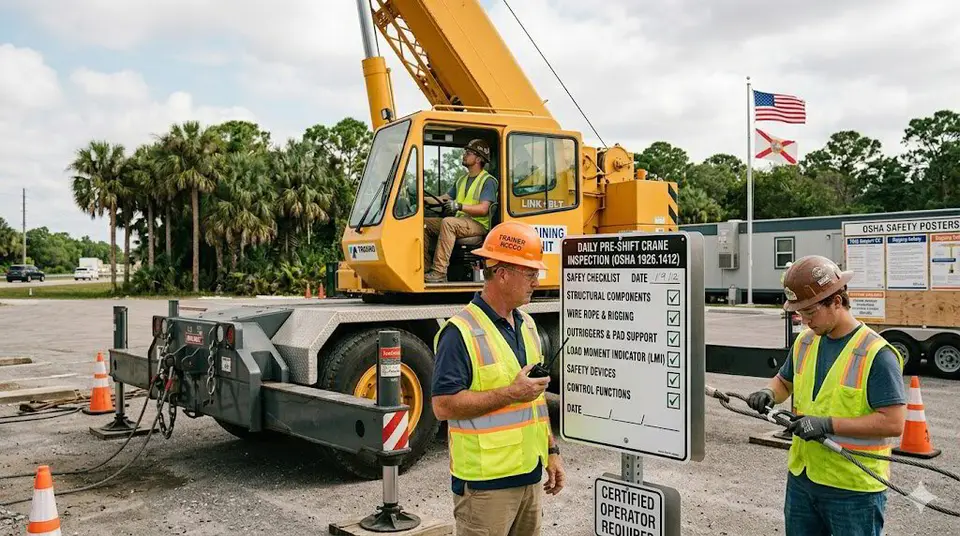
Delaware does not run a state crane license program and does not operate its own OSHA plan for private employers. That keeps the rules simple: 29 CFR 1926 Subpart CC governs cranes in construction, and 1926.1427 requires certification from an accredited testing organization for the type of crane you operate. Employers must also evaluate each operator on the equipment before assigning work.
Delaware crane operator training therefore focuses on passing accredited exams, most often NCCCO's CCO exams. The Crane School prepares you; NCCCO certifies. For background on the federal rules, our article on OSHA compliance for crane operators is a useful starting point.
A Small State With a Busy Riverfront
Delaware's crane work centers on a handful of well-known areas. The Port of Wilmington on the Delaware River handles cargo that requires mobile cranes and rigging crews. The state has a long chemical and industrial history along the river, and plant maintenance and expansions call for skilled lifts. Bridges, including the major Delaware River crossings, need regular construction and repair work.
Farther south, poultry and agriculture on the Delmarva Peninsula support processing plants, and beach-area construction has its own constraints: tight lots, sandy soil and a short window between tourist seasons. Coastal storms play into the schedule as well.
Wind off the Delaware Bay and the Atlantic is a regular factor on waterfront and beach jobs. Operators working near the water should know their crane's wind limits and how a load's surface area changes the picture, and site supervisors should agree in advance on when a lift gets called off.
Crossing State Lines: A Delaware Reality
Many Delaware crews spend part of the year in Pennsylvania, New Jersey or Maryland. All three are commonly cited as having state-level crane operator requirements in addition to OSHA, and Philadelphia is among the cities cited for its own rules. If your company works across the region, confirm current rules with each state agency and NCCCO's state licensing information before you send a crane over the line.
NCCCO certification is a national credential that many of those jurisdictions build on, so it is a sensible foundation for a Delaware operator who expects to travel.
A practical habit for multi-state companies is to keep a simple credential matrix: each operator, each crane type they are certified on, each card's expiration date, and the extra credentials required in each state where the company works. It takes an hour to set up and saves a lot of scrambling when a bid comes in from across the river.
On-Site in Delaware or Classes in Seffner
Delaware is compact enough that one on-site visit can cover crews from the whole state. With on-site training, our instructors come to your yard or plant, teach on your equipment, and our NCCCO Accredited Practical Examiners can run practical exams there.
Individuals can instead join open-enrollment classes at our only campus, in Seffner, Florida, east of Tampa. The written CCO tests run there monthly. A Delaware operator can fly into Tampa International or drive south along I-95; either way, the class calendar shows what is coming up.
Because the trip from Delaware is long either way, students who choose Seffner often combine programs, such as certification prep followed by rigging, to make the most of one stay.
Matching Delaware Crews to Training
- Port and plant operators with experience who need the card: the mobile crane operator certification prep program.
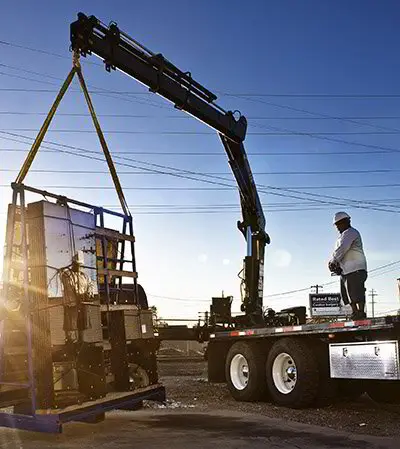
- Boom truck and knuckle boom crews at utilities and building suppliers: the articulating crane operator certification prep.
- Residential and commercial builders moving materials with telehandlers: the telehandler operator program.
Riggers and signalpersons can be trained during the same on-site visit, which keeps the whole lift team on the same page.
Anyone with little or no seat time should not jump straight into the certification weekend. The 3-week or 5-week initial mobile crane course gives a new operator the hours on the controls needed to pass the practical exam and to work safely afterward.
Building a Delaware Crane Career
Because so much Delaware work crosses into neighboring states, operators who keep their credentials current and understand each jurisdiction's rules tend to have more options. Adding rigging or lattice boom certification widens the field further.
For wage information, use the U.S. Bureau of Labor Statistics Occupational Employment and Wage Statistics for crane and tower operators (53-7021). For a deeper look at the federal training framework, see our comparison of OSHA crane training standards.