

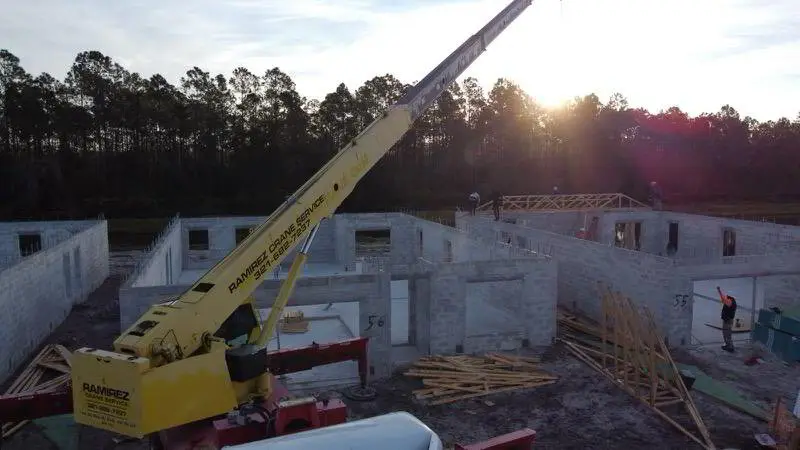
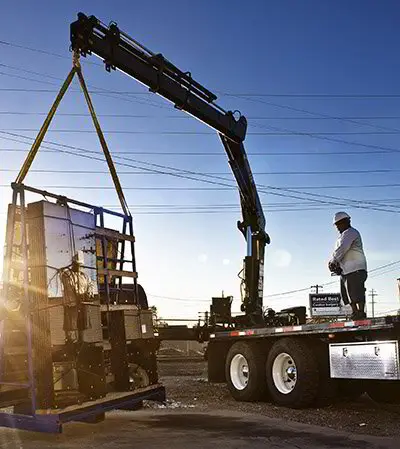
Hydraulic truck crane setting equipment at an industrial site near the Illinois River in Peoria
Peoria, IL

Crane Operator Certification Prep for Peoria, Illinois

Peoria's plant crews, river terminal hands and construction operators can get ready for NCCCO testing without guesswork.

Training Built Around Peoria's Industrial Base

Peoria sits on the Illinois River with a long history of heavy-equipment manufacturing, and much of the lifting here happens inside plants, in fabrication bays and along the riverfront. Grain and bulk terminals on the river, plant maintenance shutdowns and commercial construction all call for people who can plan a lift and run a crane by the book.

Peoria employers have a choice in how they handle crane operator certification prep with us. Our instructors can travel up to the plant, or your employees can fly to Seffner, Florida for a dated class. We have no Peoria office, so every engagement is arranged directly with our Florida staff.

What river and plant work demands

Lifting near the water brings its own checks: ground that may be soft after high water, loads swung over barges or hoppers, and wind funneling down the valley. Inside a plant, the challenge is usually headroom, congested floors and crews who lift often enough to get comfortable. Sound instruction covers both settings by hammering on chart reading and setup, and by building the reflex to halt a lift the moment something seems off.

Matching Programs to the Work

Different crews in the Peoria area need different credentials. A maintenance team that uses truck-mounted knuckle booms to set equipment has different needs from a contractor running a 60-ton hydraulic crane on a hospital addition.

  • Operators who already run mobile cranes generally go to our monthly prep for TSS, TLL and LAT, covering both the written and hands-on portions.
  • Service and maintenance techs who set gear with knuckle boom trucks work toward ABC, ABL and ABW.
  • The people on the ground at terminals and plants gain a lot from rigging and signalperson training; a bad hitch or a misread hand signal is where trouble often begins.

Unsure where someone belongs? Phone us with a rundown of the machines on your floor. We will tell you which exams line up with it.

What Illinois Rules Mean in Peoria

Illinois is not on the commonly cited list of states with their own crane operator licensing, and outside of Chicago that generally leaves federal OSHA rules in charge. Section 1926.1427 of 29 CFR says anyone operating a crane in construction needs certification for that crane type from an accredited organization, and NCCCO qualifies.

Owners and employers may go further. Plenty of manufacturers insist on a card for their own maintenance lifts even when the OSHA construction rule wouldn't reach them. You can read more on our Illinois overview page.

A practical tip for Peoria employers: write down which crane types each operator actually runs, then compare that list with the certifications on file. Gaps show up quickly, especially when a crew has added a new boom truck or a larger hydraulic crane since the last round of training.

Bringing an Instructor to Peoria

Hosting us pays off when a batch of employees all need the same credential. Lecture happens in your building, practice happens on your cranes, and an accredited examiner from our staff can give the CCO practical on site. We set up the written portion through NCCCO.

For a single employee or two, sending them south usually costs less. Seasoned operators can take the monthly four-day prep, while first-timers sign up for beginner training lasting three or five weeks. See where students stay for lodging, and give the office a call to weigh a site visit against travel.
Frequently Asked Questions

Do Peoria crane operators need an Illinois state crane license?

Downstate Illinois doesn't appear on the usual lists of crane-licensing jurisdictions. OSHA's federal certification standard is what governs, though your employer may expect extra.

Can your instructors train on our overhead or knuckle boom cranes in Peoria?

We can build on-site sessions around the equipment your crew uses. When the goal is an NCCCO card on a knuckle boom, the articulating crane prep course is the right fit.

How long do NCCCO certifications last?

CCO certifications are valid for five years. Begin renewal prep once you are into year five.

The Crane School

Training Programs & Services

All programs are delivered in compliance with current OSHA regulations.

Mobile Crane Operator Certification Prep Program

For experienced operators ready to certify or recertify. Includes NCCCO TSS, TLL and LAT written and practical exams.

Learn more about Mobile Crane Certification Prep

Initial Mobile Crane Operator Training Program

For people with little or no crane experience. 3-week (TSS/TLL) and 5-week (adds LAT) programs with NCCCO exams.

Learn more about Initial Mobile Crane Training (3 & 5 Week)

Articulating Crane Operator Certification Prep Program

For knuckle-boom operators. Prepares you for the NCCCO ABC, ABL and ABW written and practical exams.

Learn more about Articulating Crane Certification Prep

Rigger Qualification / Certification Program

For personnel who rig loads to cranes — supports your rigger qualification and NCCCO Rigger Level I/II exams.

Learn more about Rigger Level 1 & 2

Signalperson Qualification / Certification Program

Standard hand and voice signals for directing cranes, plus preparation for the NCCCO Signalperson exams.

Learn more about Signalperson

Managing Crane Safety Class

For managers and supervisors: OSHA compliance, lift planning, inspections, certification and liability.

Learn more about Managing Crane Safety

Telehandler Operator Program

Certification or recertification for telehandler operators. Includes the NCCCO THO written and practical exams.

Learn more about Telehandler Operator

Crane Inspection Services

Annual, monthly, post-assembly and post-incident inspections plus load testing by NCCCO-certified inspectors.

Learn more about Crane Inspections

Related Reading

Crane Operator Practice Test

Ten quick questions on crane safety rules and NCCCO basics. Pick one answer per question — your score shows on the next page.

1. Which OSHA standard covers cranes and derricks used in construction?
2. How long is an NCCCO crane operator certification valid before recertification?
3. What does NCCCO stand for?
4. Under OSHA's current construction crane rule, operator certification must be obtained by:
5. Under OSHA Table A (1926.1408), what is the minimum clearance from power lines rated up to 50 kV?
6. When is a signal person required?
7. Whose emergency stop signal must a crane operator obey?
8. What does an anti-two-block device prevent?
9. Which document gives a crane's rated capacity for a given boom length and radius?
10. Which NCCCO designation covers telescopic boom cranes with a swing cab?