Who Needs Crane Training in Springfield
As the state capital, Springfield has a steady stream of government building work, along with utility and power-generation sites, road and bridge projects, and agricultural operations across the surrounding farmland. Many of the cranes here belong to public works departments, utilities and service contractors rather than large tower-crane builders.
Those organizations need crane operator training that fits a working schedule and a public-sector budget process. The Crane School provides NCCCO certification prep on-site at your facility or through open enrollment at our training center in Seffner, Florida. We do not have a Springfield office; all scheduling runs through our Florida staff.
Utility and Public Works Lifting
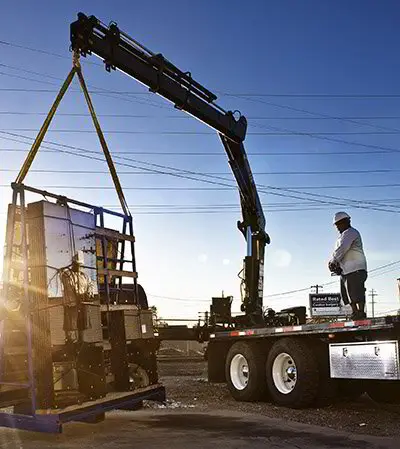
Utility crews set poles, transformers and vaults, often near energized lines. Public works teams replace culverts, pump-station equipment and signs. Much of this is done with boom trucks and articulating cranes rather than large lattice machines.
For those teams, our articulating crane certification prep covers NCCCO ABC, ABL and ABW exams, while operators on telescopic boom trucks and hydraulic cranes prepare through mobile crane certification prep. Supervisors who write lift plans or manage a department's crane program get the most from the Managing Crane Safety class, which covers OSHA compliance, inspections, planning and liability.
Power line safety deserves special attention. OSHA 1926.1408 sets out procedures for cranes working near power lines, and it comes up often in utility training.
Severe Weather and Seasonal Planning
Central Illinois sees strong spring and summer thunderstorms and tornado activity, and winters bring ice and cold. Crews here need a clear rule for when to stop lifting as wind picks up, and a plan for securing cranes before a storm.
Weather also shapes training dates. On-site practical sessions go best in mild months, while the Seffner center is an option when Springfield is under snow.
Agricultural lifting is worth a mention as well. Grain bin construction, elevator maintenance and equipment setting on farms around Sangamon County often involve hydraulic cranes on uneven or soft ground. Operators who handle that work should be confident with outrigger setup, cribbing and reading the chart for the actual configuration rather than the one they wish they had.
Rules, Records and Next Steps
Illinois is not commonly cited as having its own statewide crane operator license, so federal OSHA rules, including 29 CFR 1926.1427 for construction cranes, govern most work here. Agencies and employers may set stricter internal requirements, and the City of Chicago's rules do not carry over to Springfield. Our Illinois statewide page covers the bigger picture.
To set up on-site training, tell us how many candidates you have, what equipment they run and which certifications you need. Individuals can travel to Seffner, where CCO written exams are held monthly. Start with a note through our contact page.
Keeping certifications current
CCO certifications last five years, and it is easy for a department to lose track when several operators were certified at different times. Keep a simple roster of expiration dates and plan recertification during each operator's final year. Grouping renewals together often makes an on-site visit worthwhile even for a small agency, and it avoids the scramble of an operator who cannot run the crane because a card lapsed during a busy season.