
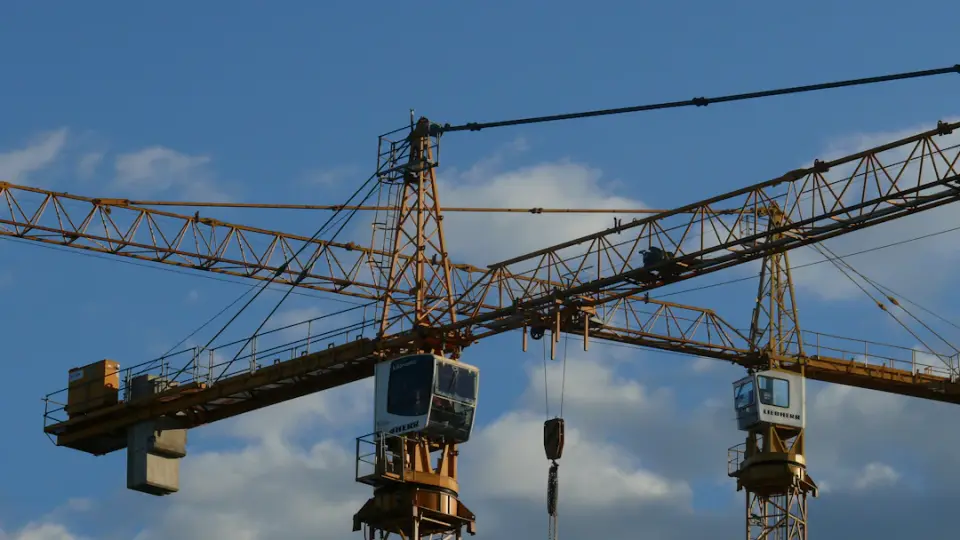
Signalperson directing a mobile crane lift near campus buildings in South Bend, Indiana
South Bend, Indiana

South Bend Crane Operator Certification and Rigging Prep

NCCCO preparation for northern Indiana operators and ground crews, at your job site or at our training center in Florida.

Crane Work Across the South Bend Area

South Bend's construction activity includes university and hospital projects, manufacturing plants and steady commercial and residential building around St. Joseph County. Campus work in particular tends to put cranes in tight quarters near occupied buildings and foot traffic, where planning and communication matter as much as stick time.

The Crane School offers crane operator certification prep for South Bend employers through on-site training at your facility, or through open-enrollment classes at our training center in Seffner, Florida. We have no office in Indiana, so our Florida staff handles scheduling directly with you.

Lake-Effect Snow and the Northern Indiana Season

South Bend is close enough to Lake Michigan to get lake-effect snow, and winter can shut down outdoor lifting for days at a time. Snow loads on booms and materials, frozen ground under outriggers, and short daylight all change how a lift should be planned.

We cover cold-weather considerations when we train on site, but many South Bend companies prefer to schedule hands-on sessions between spring and fall. If an operator needs certification in winter, a trip to Seffner offers outdoor practice time in milder weather. Our blog has more on crane safety in extreme weather.

Plants and Fabrication Shops

Beyond campus and commercial building, the South Bend area has manufacturing and fabrication shops where overhead cranes, hoists and forklifts with attachments do much of the lifting. Those shops often bring in a mobile crane only a few times a year, for equipment installs or roof work, and the in-house crew has to work safely alongside an outside operator.

Training the in-house team in rigging and signaling closes that gap. When the plant's riggers know how to calculate sling loads and give standard signals, the visiting operator can focus on the crane. We can tailor an on-site session to your shop's typical loads, from machine moves to structural steel, and pair it with formal NCCCO rigger or signalperson exams for anyone who wants the credential. That combination is often a better fit for a shop than full operator certification for everyone.

Building a Crew, Not Just an Operator

Busy campus and urban sites depend on clear signals. A crane working blind behind a building relies entirely on the signalperson, and OSHA 1926.1428 requires that person to be qualified. Our signalperson qualification and certification program prepares candidates for NCCCO's signalperson written and practical exams.

For operators, these are the usual starting points:

  • Experienced hands ready to certify or renew: mobile crane certification prep for TSS, TLL and LAT
  • Newcomers: the initial mobile crane operator program in three- and five-week versions
  • Riggers: Level I and II preparation

Regulations and Next Steps

Indiana is not on the commonly cited list of states with their own crane operator licensing, so federal OSHA rules, including 29 CFR 1926.1427, apply to construction cranes here. If your crews also work across the line in Michigan, check Michigan's requirements separately. Our Indiana overview explains the statewide picture.

To get started, tell us how many people need training, what they operate and whether you want testing on your equipment. Our accredited practical examiners can run CCO practical exams at your site, and written exams are coordinated with NCCCO.

Frequently Asked Questions

Can South Bend crews train on site during winter?

Classroom training can happen any time. Hands-on practice and practical exams depend on safe weather and ground conditions, so we plan those dates with you.

Do signalpersons in Indiana need certification?

OSHA requires signalpersons to be qualified, either through a third-party qualifier such as NCCCO or through an employer's qualified evaluator.

Is a CDL required to operate a crane?

No. A CDL is not required to operate a crane, though employers may require one for driving a crane on public roads.

The Crane School

Training Programs & Services

All programs are delivered in compliance with current OSHA regulations.

Mobile Crane Operator Certification Prep Program

For experienced operators ready to certify or recertify. Includes NCCCO TSS, TLL and LAT written and practical exams.

Learn more about Mobile Crane Certification Prep

Initial Mobile Crane Operator Training Program

For people with little or no crane experience. 3-week (TSS/TLL) and 5-week (adds LAT) programs with NCCCO exams.

Learn more about Initial Mobile Crane Training (3 & 5 Week)

Articulating Crane Operator Certification Prep Program

For knuckle-boom operators. Prepares you for the NCCCO ABC, ABL and ABW written and practical exams.

Learn more about Articulating Crane Certification Prep

Rigger Qualification / Certification Program

For personnel who rig loads to cranes — supports your rigger qualification and NCCCO Rigger Level I/II exams.

Learn more about Rigger Level 1 & 2

Signalperson Qualification / Certification Program

Standard hand and voice signals for directing cranes, plus preparation for the NCCCO Signalperson exams.

Learn more about Signalperson

Managing Crane Safety Class

For managers and supervisors: OSHA compliance, lift planning, inspections, certification and liability.

Learn more about Managing Crane Safety

Telehandler Operator Program

Certification or recertification for telehandler operators. Includes the NCCCO THO written and practical exams.

Learn more about Telehandler Operator

Crane Inspection Services

Annual, monthly, post-assembly and post-incident inspections plus load testing by NCCCO-certified inspectors.

Learn more about Crane Inspections

Related Reading

Crane Operator Practice Test

Ten quick questions on crane safety rules and NCCCO basics. Pick one answer per question — your score shows on the next page.

1. Which OSHA standard covers cranes and derricks used in construction?
2. How long is an NCCCO crane operator certification valid before recertification?
3. What does NCCCO stand for?
4. Under OSHA's current construction crane rule, operator certification must be obtained by:
5. Under OSHA Table A (1926.1408), what is the minimum clearance from power lines rated up to 50 kV?
6. When is a signal person required?
7. Whose emergency stop signal must a crane operator obey?
8. What does an anti-two-block device prevent?
9. Which document gives a crane's rated capacity for a given boom length and radius?
10. Which NCCCO designation covers telescopic boom cranes with a swing cab?