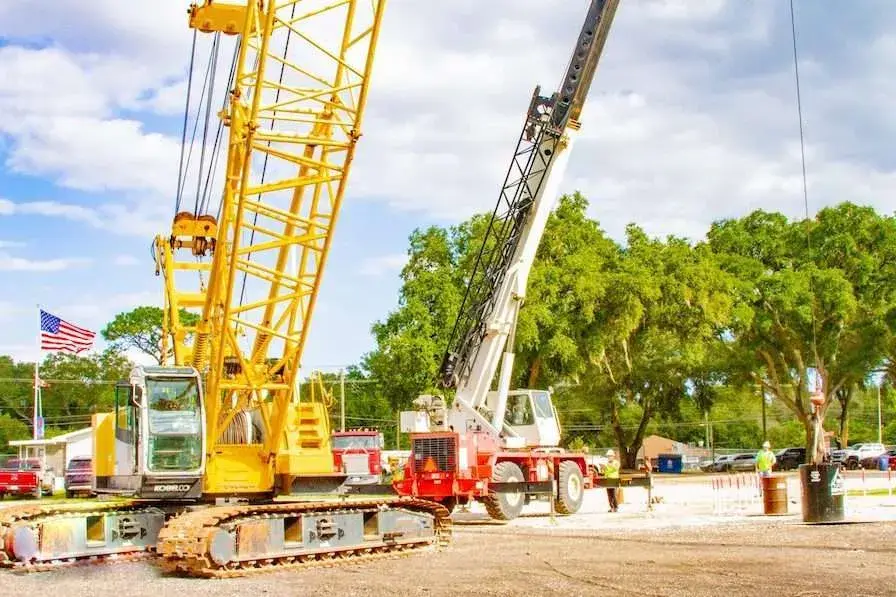
Crane setting steel for a new bourbon aging warehouse in the Bluegrass region near Lexington, Kentucky
Lexington, Kentucky

NCCCO Crane Certification Prep in Lexington, Kentucky

Bluegrass contractors, farms and distilleries can have operators, riggers and signalers trained on their own property, or send them to class in Seffner, Florida.

Lifting Work Across the Bluegrass

Lexington's crane work is unusually varied. The University of Kentucky and the city's hospitals keep campus and healthcare construction busy, while the surrounding Bluegrass region is home to horse farms, bourbon distilleries and nearby manufacturing plants. Hanging steel on a new medical building and setting stills in an expanding distillery are very different picks, and both happen here.

For Central Kentucky employers, we handle NCCCO crane certification prep at your location, or we host your people at our Seffner, Florida yard. There is no Lexington office, and we will not pretend otherwise; our Florida team coordinates every class.

Distilleries, Warehouses and Rural Sites

Kentucky's bourbon industry has driven new construction of distilleries and large aging warehouses. Those projects involve tall steel structures, heavy tanks and stills, and long, repetitive lifts that reward consistent technique. Rural sites can also mean narrow farm roads, limited laydown areas and soft ground after rain.

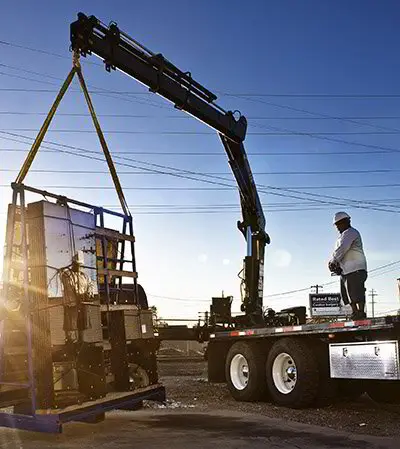
Out in the country, it's mostly knuckle booms and boom trucks doing the lifting, whether that means trusses for a new barn or a tank for a farm operation. People who run them can work toward ABC, ABL and ABW in our knuckle boom exam prep. Mobile crane operators on the larger structural lifts prepare through our TSS, TLL and LAT prep.

Training the Whole Lift Team

On hospital and campus projects, much of the risk sits with the people around the crane: riggers choosing hardware and signalpersons directing blind picks near occupied buildings. Contractors working those sites often send ground crews through our signalperson qualification program and rigger certification alongside their operators.

Supervisors who oversee lifting but don't operate can take Managing Crane Safety, which approaches inspections, lift planning, liability and OSHA compliance from the management chair. Our post on why operator training shouldn't stop after certification makes the longer-term case.

Kentucky Rules and Certification Terms

Kentucky typically isn't named among states that license crane operators on their own. That puts federal OSHA in control, and its rule at 29 CFR 1926.1427 calls for construction operators to hold certification for each crane type they run. Employers and owners can set stricter requirements. More detail is on our Kentucky NCCCO training overview.

CCO certifications are valid for five years. Begin renewal prep during year five, so a hectic season doesn't catch anyone with an expired card.

Choosing On-Site or Seffner

On-site training fits contractors and plants with several candidates and their own equipment. Wherever your yard is, our accredited examiners can bring the NCCCO practical to it. Seffner's public classes suit solo operators, newcomers and anyone who studies better away from the daily grind. Use our contact page to compare options.

Central Kentucky's weather is milder than the northern states, but spring storms, summer heat and occasional winter ice still shape the schedule. Hands-on sessions are easiest to book in spring and fall. For an on-site visit, you'll need a room big enough for the class plus a flat stretch of ground with space for the practical course. Most horse farms and distilleries can provide both; a busy urban job site may need to find an alternate yard nearby.

Frequently Asked Questions

What certification does a farm boom truck operator need?

It depends on the machine. A knuckle boom goes with NCCCO's articulating tests, while a telescopic boom truck is covered by the mobile crane tests. Tell us the make and model and we'll point you to the right exam.

Can our ground crew train with our operators?

Yes. We can add rigging and signalperson prep to the same on-site visit so they learn side by side with the operators.

When should I start recertification prep?

Start once your CCO card enters its final year. Certifications last five years.

The Crane School

Training Programs & Services

All programs are delivered in compliance with current OSHA regulations.

Mobile Crane Operator Certification Prep Program

For experienced operators ready to certify or recertify. Includes NCCCO TSS, TLL and LAT written and practical exams.

Learn more about Mobile Crane Certification Prep

Initial Mobile Crane Operator Training Program

For people with little or no crane experience. 3-week (TSS/TLL) and 5-week (adds LAT) programs with NCCCO exams.

Learn more about Initial Mobile Crane Training (3 & 5 Week)

Articulating Crane Operator Certification Prep Program

For knuckle-boom operators. Prepares you for the NCCCO ABC, ABL and ABW written and practical exams.

Learn more about Articulating Crane Certification Prep

Rigger Qualification / Certification Program

For personnel who rig loads to cranes — supports your rigger qualification and NCCCO Rigger Level I/II exams.

Learn more about Rigger Level 1 & 2

Signalperson Qualification / Certification Program

Standard hand and voice signals for directing cranes, plus preparation for the NCCCO Signalperson exams.

Learn more about Signalperson

Managing Crane Safety Class

For managers and supervisors: OSHA compliance, lift planning, inspections, certification and liability.

Learn more about Managing Crane Safety

Telehandler Operator Program

Certification or recertification for telehandler operators. Includes the NCCCO THO written and practical exams.

Learn more about Telehandler Operator

Crane Inspection Services

Annual, monthly, post-assembly and post-incident inspections plus load testing by NCCCO-certified inspectors.

Learn more about Crane Inspections

Related Reading

Crane Operator Practice Test

Ten quick questions on crane safety rules and NCCCO basics. Pick one answer per question — your score shows on the next page.

1. Which OSHA standard covers cranes and derricks used in construction?
2. How long is an NCCCO crane operator certification valid before recertification?
3. What does NCCCO stand for?
4. Under OSHA's current construction crane rule, operator certification must be obtained by:
5. Under OSHA Table A (1926.1408), what is the minimum clearance from power lines rated up to 50 kV?
6. When is a signal person required?
7. Whose emergency stop signal must a crane operator obey?
8. What does an anti-two-block device prevent?
9. Which document gives a crane's rated capacity for a given boom length and radius?
10. Which NCCCO designation covers telescopic boom cranes with a swing cab?