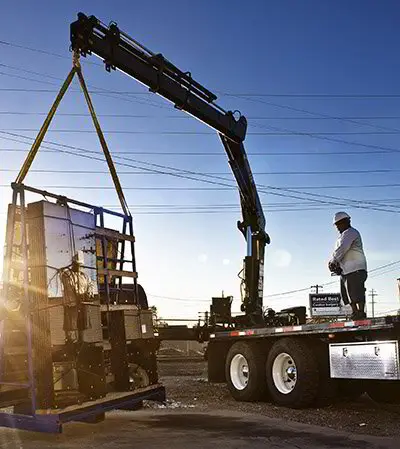
Crane loading materials at a river terminal on the Ohio River in Owensboro, Kentucky
Owensboro, Kentucky

NCCCO Crane Training for Owensboro, Kentucky

River terminal hands, plant maintenance crews and builders in western Kentucky can prep for NCCCO testing at home, or travel to our Seffner, Florida yard.

Owensboro on the Ohio

Owensboro sits on a bend of the Ohio River in western Kentucky, with an economy built on manufacturing, agriculture, distilling and river commerce. Terminals load grain and bulk materials onto barges, industrial plants run regular maintenance outages, and contractors handle commercial and riverfront projects around Daviess County.

The Crane School supports those employers with crane training in two ways. One option puts our instructors at your plant or dock, with an accredited examiner testing your operators on your own cranes. The other sends your people south to an open class in Seffner, Florida. We have no Owensboro office.

Training That Matches Terminal and Plant Work

River terminals depend on crane operators who are comfortable with repetitive lifts, changing water levels and loads that move with a vessel. During an outage, weeks of picks get crammed into days, and outside contractors end up shoulder to shoulder with plant employees.

Whether it's the dock or the plant, a lift only goes right when qualified riggers and signalpersons back up the operator. Riggers can work toward NCCCO Level I and II in our rigging course, and the signal training drills the standard hand and voice signals. Seasoned operators handle first cards and renewals for TSS, TLL and LAT in the monthly mobile crane prep.

Agriculture and Distilling

Across western Kentucky's farm country, cranes set grain bins, dryers and conveyors, while distilleries add tanks, stills and warehouse steel. These jobs often use boom trucks or articulating cranes on rural sites with uneven ground.

If you run a knuckle boom, the NCCCO articulating crane track is the one for you. Whatever the machine, we emphasize ground evaluation, cribbing and wind awareness, because rural sites rarely come with a prepared crane pad. Harvest season also tends to compress this work, so certifying operators before the busy months is worth the effort.

Kentucky Regulations

Kentucky is not on the commonly cited list of states with their own crane operator licensing, so federal OSHA rules govern. On construction work, 29 CFR 1926.1427 expects each operator to hold accredited certification, NCCCO for example, for every crane type they run. Owners and employers can raise that bar. Working across the bridge in Indiana? Look into its rules too. See our Kentucky overview for more.

How to Get Started

Tell us how many people you have, what machines they run and which cards they're after. From there we'll suggest whether hosting us or booking Seffner seats makes more sense. Newcomers can choose a three- or five-week beginner course, held full days Monday to Thursday. To get things moving, send the office a message.

For plant outages, reach out well before the shutdown window. Certifying operators and riggers ahead of time lets your outage plan assume a qualified crew rather than hoping one is available. Even when a contractor shows up with its own crane and operator, plant staff who know rigging and signaling can work around that machine far more safely.

Weather here swings from muggy summers to spring storms, with an ice storm now and then. We plan practical sessions around safe conditions, and if the weather does not cooperate, classroom work can continue while outdoor testing is rescheduled. Individuals who would rather avoid weather delays can train in Florida, where open-enrollment dates are published well in advance.

Frequently Asked Questions

Can you train our terminal crew around barge schedules?

We plan on-site sessions with you, so classroom time and hands-on practice can be scheduled around your operating windows.

Do riggers at an Owensboro plant need certification?

For certain crane tasks, OSHA insists the rigger be qualified. Holding NCCCO Rigger Level I or II is a broadly recognized way to show that, and lots of plants ask for it outright.

How do I check my exam results?

Log into the MyCCO app from NCCCO to see your scores. Certification cards typically arrive three to five weeks after passing.

The Crane School

Training Programs & Services

All programs are delivered in compliance with current OSHA regulations.

Mobile Crane Operator Certification Prep Program

For experienced operators ready to certify or recertify. Includes NCCCO TSS, TLL and LAT written and practical exams.

Learn more about Mobile Crane Certification Prep

Initial Mobile Crane Operator Training Program

For people with little or no crane experience. 3-week (TSS/TLL) and 5-week (adds LAT) programs with NCCCO exams.

Learn more about Initial Mobile Crane Training (3 & 5 Week)

Articulating Crane Operator Certification Prep Program

For knuckle-boom operators. Prepares you for the NCCCO ABC, ABL and ABW written and practical exams.

Learn more about Articulating Crane Certification Prep

Rigger Qualification / Certification Program

For personnel who rig loads to cranes — supports your rigger qualification and NCCCO Rigger Level I/II exams.

Learn more about Rigger Level 1 & 2

Signalperson Qualification / Certification Program

Standard hand and voice signals for directing cranes, plus preparation for the NCCCO Signalperson exams.

Learn more about Signalperson

Managing Crane Safety Class

For managers and supervisors: OSHA compliance, lift planning, inspections, certification and liability.

Learn more about Managing Crane Safety

Telehandler Operator Program

Certification or recertification for telehandler operators. Includes the NCCCO THO written and practical exams.

Learn more about Telehandler Operator

Crane Inspection Services

Annual, monthly, post-assembly and post-incident inspections plus load testing by NCCCO-certified inspectors.

Learn more about Crane Inspections

Related Reading

Crane Operator Practice Test

Ten quick questions on crane safety rules and NCCCO basics. Pick one answer per question — your score shows on the next page.

1. Which OSHA standard covers cranes and derricks used in construction?
2. How long is an NCCCO crane operator certification valid before recertification?
3. What does NCCCO stand for?
4. Under OSHA's current construction crane rule, operator certification must be obtained by:
5. Under OSHA Table A (1926.1408), what is the minimum clearance from power lines rated up to 50 kV?
6. When is a signal person required?
7. Whose emergency stop signal must a crane operator obey?
8. What does an anti-two-block device prevent?
9. Which document gives a crane's rated capacity for a given boom length and radius?
10. Which NCCCO designation covers telescopic boom cranes with a swing cab?