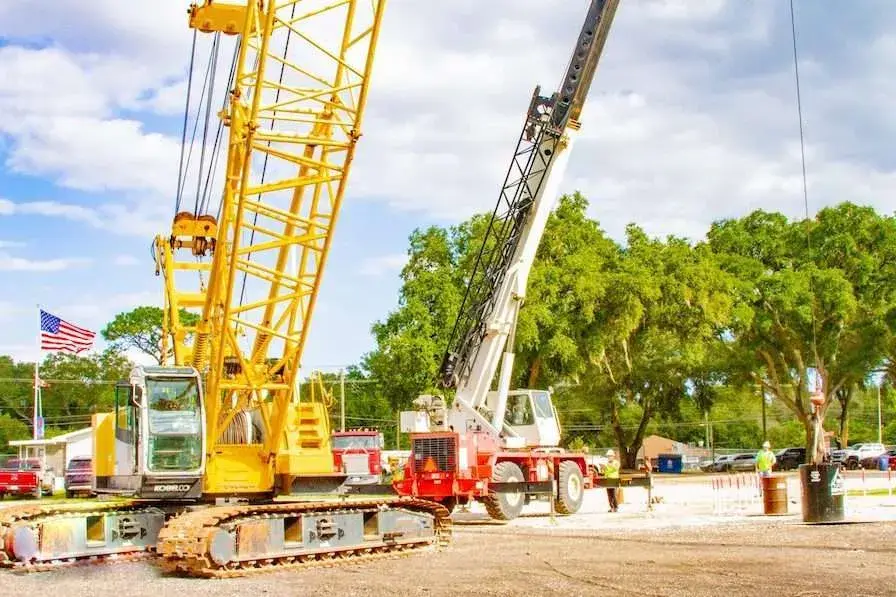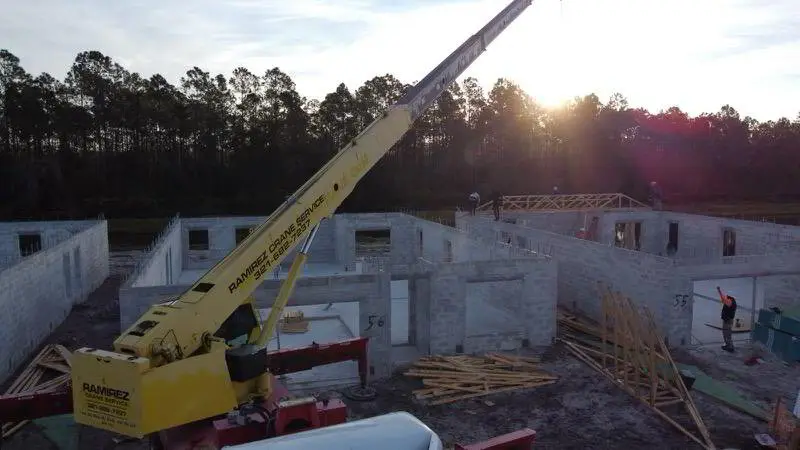

Hydraulic crane working beside an occupied campus building in Lincoln, Nebraska
Lincoln, NE

NCCCO Crane Classes for Lincoln, Nebraska Operators

Lincoln crews can tackle CCO written and hands-on test prep right where they work, or fly down for a scheduled class in Seffner, Florida.

Getting NCCCO crane classes in Lincoln

Being both Nebraska's capital and the University of Nebraska–Lincoln's hometown means a steady pipeline of state, campus and institutional building, on top of new shops and housing. Much of that work happens next to classrooms, offices and sidewalks full of people, and the lift crew has to be ready for it.

We do not run a Lincoln classroom. Instead, NCCCO crane classes for Lincoln NE happen one of two ways: our instructors travel to your company, or you join a posted open session at the Seffner, Florida yard.

Each route has a place. Half a dozen operators at one firm? Hosting us is usually quicker. One person switching careers? A full-time class far from home can help them focus. The tests don't change with the venue, and neither does the national credential you earn.

Lifts around occupied buildings

Campus and government projects often put a crane within a few hundred feet of people who have nothing to do with construction. Controlling the swing radius, barricading it off and keeping the operator and signalperson in clear contact all matter more as a result. Pedestrian routes, deliveries and building entrances all shift during a project, and the lift plan has to keep up.

For these sites we often suggest pairing operator prep with the signalperson certification program. If everyone uses identical hand and voice signals, nobody has to guess once the load disappears behind a building.

A track for supervisors and safety staff

Project managers and facility safety staff in Lincoln are often responsible for crane work they do not personally perform. That's the audience for Managing Crane Safety: it works through planning lifts, reviewing inspections, understanding certification, assigning responsibilities and meeting OSHA and industry expectations.

Schedule it during the same visit as operator training and the office and the field get one consistent message. Supervisors leave with a clearer idea of what to check on a lift plan, an inspection record and an operator's credentials, and operators know what their supervisors will be looking for.

Recertifying experienced operators

CCO certifications last five years. If your Lincoln operators are approaching expiration, the mobile crane recertification route is the classroom-only prep followed by the written exams, plus a practical exam where NCCCO requires one.

  • Begin sometime in the twelve months before your expiration date.
  • Recertification classroom prep is offered in Seffner and can also be arranged on-site for a group.
  • For a walkthrough of applications, testing and results, read our NCCCO process explainer.

Check the class schedule for upcoming monthly prep dates. If you'd like more stick time first, Seffner offers hour-long practice blocks the day before Friday's practicals.

Licensing in Lincoln and across Nebraska

Nebraska isn't typically named among states that license crane operators statewide. In Lincoln, operator certification on construction jobs follows the federal OSHA rule, with employers free to ask for more. Omaha is a different case: the city is known for its own requirements, so look them up before heading east on I-80 for a job. Public owners such as the state or the university may also write certification requirements into their contracts, so read the bid documents closely.

Our Nebraska crane certification page covers other cities and options in the state.

Frequently Asked Questions

Can Lincoln operators take the CCO written exam without traveling?

Our Seffner headquarters holds a written testing day monthly. For on-site groups, talk with us about how exam delivery can be arranged for your location.

Who is Managing Crane Safety meant for?

Mainly supervisors, PMs and safety staff. Veteran operators stepping into a lead position also get a lot out of it.

What goes in my bag for training?

Boots with protective toes, gloves, a hard hat and clothes for yard work, along with a driver's license in good standing and a government-issued photo ID. We provide training materials.

The Crane School

Training Programs & Services

All programs are delivered in compliance with current OSHA regulations.

Mobile Crane Operator Certification Prep Program

For experienced operators ready to certify or recertify. Includes NCCCO TSS, TLL and LAT written and practical exams.

Learn more about Mobile Crane Certification Prep

Initial Mobile Crane Operator Training Program

For people with little or no crane experience. 3-week (TSS/TLL) and 5-week (adds LAT) programs with NCCCO exams.

Learn more about Initial Mobile Crane Training (3 & 5 Week)

Articulating Crane Operator Certification Prep Program

For knuckle-boom operators. Prepares you for the NCCCO ABC, ABL and ABW written and practical exams.

Learn more about Articulating Crane Certification Prep

Rigger Qualification / Certification Program

For personnel who rig loads to cranes — supports your rigger qualification and NCCCO Rigger Level I/II exams.

Learn more about Rigger Level 1 & 2

Signalperson Qualification / Certification Program

Standard hand and voice signals for directing cranes, plus preparation for the NCCCO Signalperson exams.

Learn more about Signalperson

Managing Crane Safety Class

For managers and supervisors: OSHA compliance, lift planning, inspections, certification and liability.

Learn more about Managing Crane Safety

Telehandler Operator Program

Certification or recertification for telehandler operators. Includes the NCCCO THO written and practical exams.

Learn more about Telehandler Operator

Crane Inspection Services

Annual, monthly, post-assembly and post-incident inspections plus load testing by NCCCO-certified inspectors.

Learn more about Crane Inspections

Related Reading

Crane Operator Practice Test

Ten quick questions on crane safety rules and NCCCO basics. Pick one answer per question — your score shows on the next page.

1. Which OSHA standard covers cranes and derricks used in construction?
2. How long is an NCCCO crane operator certification valid before recertification?
3. What does NCCCO stand for?
4. Under OSHA's current construction crane rule, operator certification must be obtained by:
5. Under OSHA Table A (1926.1408), what is the minimum clearance from power lines rated up to 50 kV?
6. When is a signal person required?
7. Whose emergency stop signal must a crane operator obey?
8. What does an anti-two-block device prevent?
9. Which document gives a crane's rated capacity for a given boom length and radius?
10. Which NCCCO designation covers telescopic boom cranes with a swing cab?