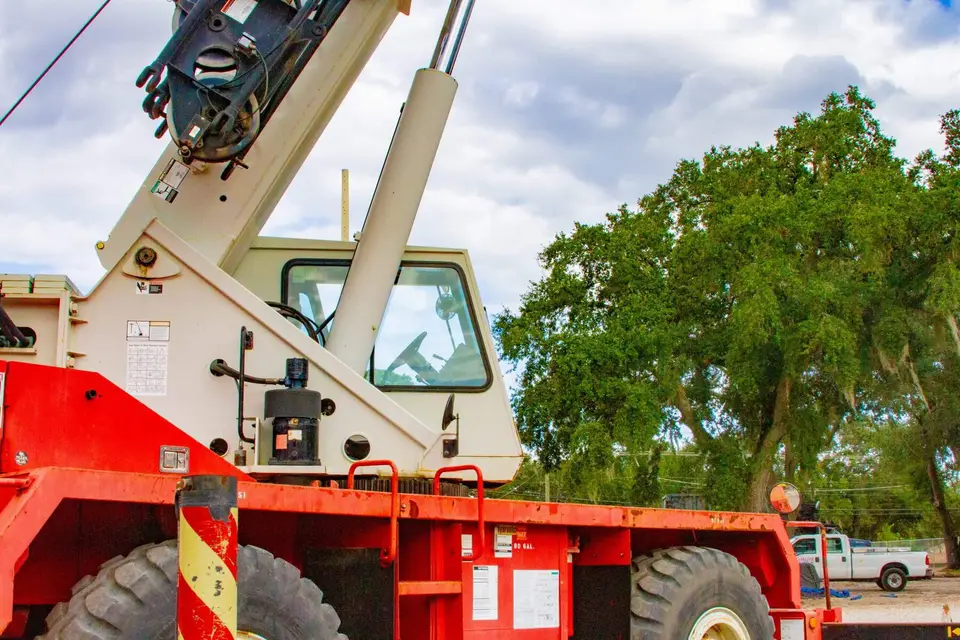

Lattice boom crawler crane setting steel near the Missouri River in Omaha, Nebraska
Omaha, Nebraska

Omaha NCCCO Crane Operator Training and Exam Prep

Omaha contractors can schedule CCO prep and practical exams on-site, while individual operators can train at our Seffner, Florida center.

Omaha crane licensing comes first

Omaha is one of only a handful of U.S. cities usually named as running its own crane operator licensing, apart from federal OSHA and from the rest of Nebraska. In practice, an NCCCO card might cover only part of what you need to operate within city limits. Before taking a job there, check the City of Omaha's current requirements and go over NCCCO's information on state and city licensing.

Our role is the certification side. Omaha NCCCO crane operator training from The Crane School gets candidates ready for the written and practical tests that many licensing processes point to. For most operators, it makes sense to earn the certification first and then deal with any city paperwork.

What Omaha jobs ask of operators

As Nebraska's biggest metro, Omaha is a freight and rail hub on the Missouri River, crossed by Interstate 80. Riverfront and downtown construction, medical and office buildings, and distribution centers on the metro's fringe all keep cranes in demand.

That work calls for many kinds of machines. Hydraulic telescopic cranes take most commercial jobs, and lattice boom crawlers appear on heavier bridge and structural work. Because our prep course for working mobile crane operators covers TSS, TLL and LAT, a single class can handle several configurations.

Winter plays a role as well. Cold, snow cover and windy days trim the hours available for outdoor work, so a lot of contractors schedule certification for late winter or early spring, just ahead of the busy season.

Building a lift team, not just an operator

Downtown, the operator is only as good as the crew rigging and signaling the load. When those roles train side by side, everyone uses the same terms.

  • Riggers can work toward NCCCO Rigger Level I or II in our rigger certification course.
  • Signalpersons study standard hand and voice signals and get ready for the NCCCO signalperson tests.
  • Supervisors can take Managing Crane Safety for planning and compliance.

With the whole lift team trained to one standard, pre-lift meetings move quicker and less gets left to guesswork once a load is hanging.

Two ways to get Omaha crane operator training

At your Omaha facility

Scheduled programs that include the required NCCCO exams can be held anywhere in the U.S., your yard or project included. Practicals run on your cranes, overseen by our accredited examiners.

At our Seffner campus

Individual students can sign up for an open-enrollment class outside Tampa. Prep for experienced operators happens monthly, Friday to Monday, and beginners can pick a 3-week or 5-week initial course held Monday through Thursday. The negotiated hotel rate is described on our hotel information page. Fly into Tampa International; Seffner is just east of the city.

Next steps

Let us know what machines your operators use, how many need certifying and whether any are renewing. From there we'll recommend which programs to combine and when, based on your season. New operators will have a longer road than seasoned ones, and supervisors may want to add the management class. When the plan is settled, ask for a quote or class details. Statewide information is on our Nebraska crane certification page.
Frequently Asked Questions

Is NCCCO certification enough to run a crane in Omaha?

It may not be. Omaha is often named as having its own city-level operator licensing, so check the City of Omaha's current rules before you operate there.

Can we test on our own lattice boom crane?

Yes, LAT practicals can happen on-site if your crane and testing area meet NCCCO's standards. We'll go through the specifics with you during planning.

Does The Crane School issue the certification?

No. Our job is training and exam prep; the CCO card comes from NCCCO, an independent non-profit, once you pass its exams.

How soon do certification cards arrive?

Most cards come three to five weeks after a passing result, and NCCCO's MyCCO app shows your scores before then.

The Crane School

Training Programs & Services

All programs are delivered in compliance with current OSHA regulations.

Mobile Crane Operator Certification Prep Program

For experienced operators ready to certify or recertify. Includes NCCCO TSS, TLL and LAT written and practical exams.

Learn more about Mobile Crane Certification Prep

Initial Mobile Crane Operator Training Program

For people with little or no crane experience. 3-week (TSS/TLL) and 5-week (adds LAT) programs with NCCCO exams.

Learn more about Initial Mobile Crane Training (3 & 5 Week)

Articulating Crane Operator Certification Prep Program

For knuckle-boom operators. Prepares you for the NCCCO ABC, ABL and ABW written and practical exams.

Learn more about Articulating Crane Certification Prep

Rigger Qualification / Certification Program

For personnel who rig loads to cranes — supports your rigger qualification and NCCCO Rigger Level I/II exams.

Learn more about Rigger Level 1 & 2

Signalperson Qualification / Certification Program

Standard hand and voice signals for directing cranes, plus preparation for the NCCCO Signalperson exams.

Learn more about Signalperson

Managing Crane Safety Class

For managers and supervisors: OSHA compliance, lift planning, inspections, certification and liability.

Learn more about Managing Crane Safety

Telehandler Operator Program

Certification or recertification for telehandler operators. Includes the NCCCO THO written and practical exams.

Learn more about Telehandler Operator

Crane Inspection Services

Annual, monthly, post-assembly and post-incident inspections plus load testing by NCCCO-certified inspectors.

Learn more about Crane Inspections

Related Reading

Crane Operator Practice Test

Ten quick questions on crane safety rules and NCCCO basics. Pick one answer per question — your score shows on the next page.

1. Which OSHA standard covers cranes and derricks used in construction?
2. How long is an NCCCO crane operator certification valid before recertification?
3. What does NCCCO stand for?
4. Under OSHA's current construction crane rule, operator certification must be obtained by:
5. Under OSHA Table A (1926.1408), what is the minimum clearance from power lines rated up to 50 kV?
6. When is a signal person required?
7. Whose emergency stop signal must a crane operator obey?
8. What does an anti-two-block device prevent?
9. Which document gives a crane's rated capacity for a given boom length and radius?
10. Which NCCCO designation covers telescopic boom cranes with a swing cab?