
How Concord crews get crane operator certification training
Concord is New Hampshire's capital, set along the Merrimack River in the middle of the state. Its lifting work is a mix of state and municipal projects, bridge and road maintenance, utility work, and commercial and residential building that stretches out along the I-89 and I-93 corridors.
We do not keep an office anywhere in New England. Instead, crane operator certification training in Concord, NH is delivered one of two ways: an instructor travels to your yard, or your people come to the Seffner, Florida training center. Either way, the goal is passing the written and practical tests of the National Commission for the Certification of Crane Operators (NCCCO), which is the body that actually grants the credential.
Equipment you will see around the capital
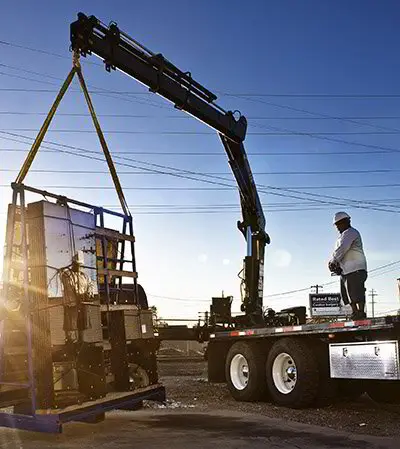
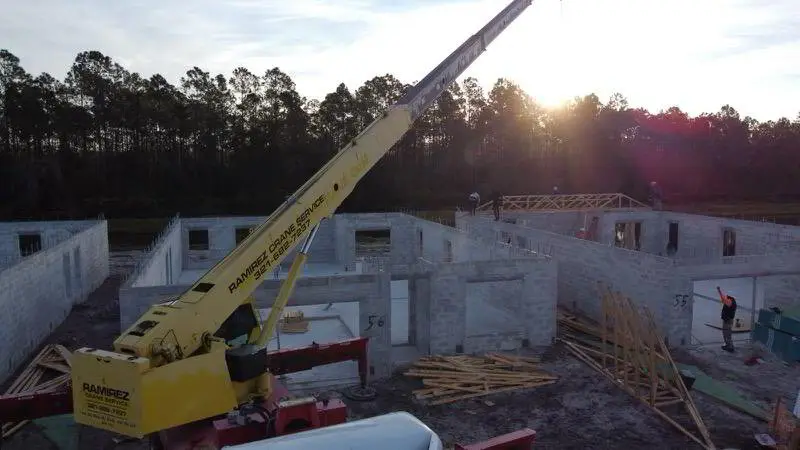
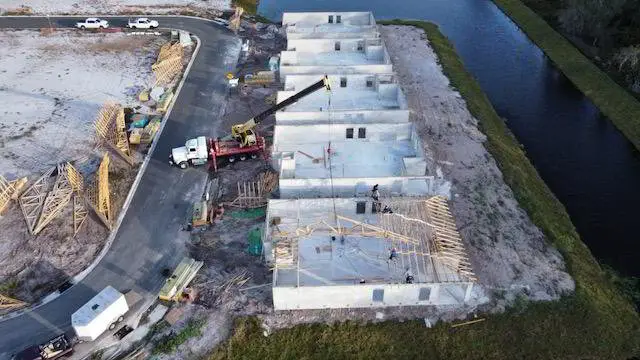
Municipal and utility crews in central New Hampshire rely on boom trucks for setting catch basins, poles, signs and precast structures. Hydraulic telescopic cranes show up for bridge beams, structural steel and rooftop units, while telehandlers move much of the material around building sites.
That spread maps to a few programs:
- Boom truck and knuckle-boom operators preparing for ABC, ABL or ABW can use our articulating boom crane prep.
- Mobile crane certification prep for telescopic boom operators working toward TSS and TLL, with LAT for lattice boom crews.
- The telehandler operator program for THO candidates.
Crew members with zero cab time should begin with the three- or five-week beginner course instead.
Planning around New England seasons
Winter in the middle of the state means snow, ice and frost-locked soil, and the spring thaw that follows turns ground soft and muddy. Each season changes how outriggers should be cribbed and how much margin a lift plan needs.
Late fall and early spring are popular windows for on-site crane training here, since field work quiets down yet the yard is usually still workable for practicals. Our instructors adjust the outdoor schedule to the weather and spend time on ground conditions, which is a common source of setup problems in thaw season. For more on handling cold, wind and storms, see our extreme-weather crane safety article.
What New Hampshire requires
You will not find New Hampshire on the usual lists of states that license crane operators themselves. That leaves federal OSHA in charge, including the construction certification rule at 29 CFR 1926.1427, though an employer or project owner can always demand more. State and municipal contracts sometimes spell out credential requirements, so read bid documents closely.
Crews crossing into Massachusetts face a different picture, because that state is commonly cited as having its own crane rules, so check them before the job starts. Statewide options are summarized on our New Hampshire NCCCO prep page.
Supervisors and safety coordinators
State agencies, towns and contractors around Concord often assign crane oversight to someone who never sits in the cab. That person still signs off on lift plans, checks inspection records and verifies operator credentials.
That role is the audience for our Managing Crane Safety course. Topics include OSHA and industry compliance, preventing accidents, lift planning, inspections, certification and ways to limit liability. Running it in the same week as an operator session means managers and crews leave with the same expectations, which tends to make the next pre-lift meeting shorter and more productive.
Booking a session
Groups should start by telling us how many people need training, which cranes they run and when any cards come up for renewal. From there we build the class around your crew and line up an NCCCO accredited examiner to test on your machines.
Individuals can join the monthly Friday-to-Monday prep weekend in Seffner, where CCO written exams are also given each month. The nearest big airport to us is Tampa International; upcoming class dates are on the schedule page.