Public works, bridges and capital projects
New Jersey's capital sits on the Delaware River, looking across at Pennsylvania. State office buildings, river bridges, highway work along Route 1 and I-95, water and utility upgrades and a string of redevelopment projects all keep Trenton's lifting crews employed.
Operators can take NCCCO crane classes for Trenton, NJ either at their own facility or through open enrollment at our training center in Seffner, Florida. We don't keep an office in New Jersey.
It's common for a public agency to have a handful of employees coming due for certification together, so bringing a session to a municipal yard makes sense. A contractor with only one or two candidates may find it simpler to fit into the Florida calendar.
Boom trucks and utility crews
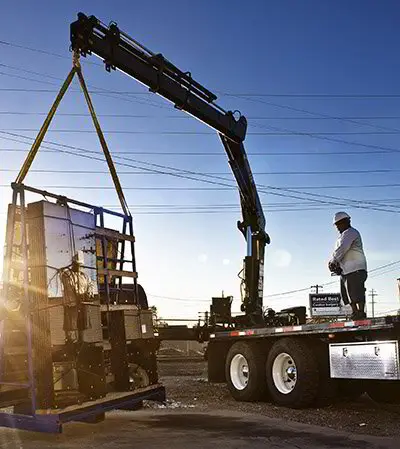
Across Mercer County, municipal and utility crews use boom trucks to place vaults, pipe, poles and signs. Our knuckle-boom certification prep gets articulating operators ready for NCCCO ABC, ABL and ABW; depending on the truck, telescopic boom truck crews may need a mobile crane designation instead.
Not sure which exam fits a given machine? Send over the make and model, and we'll sort out the right certification for each operator before testing day.
Roles also tend to rotate on public works crews: whoever runs the boom truck this morning could be rigging or signaling after lunch. Cross-training several people as operators, riggers and signalpersons gives an agency room to maneuver and keeps safety habits the same whoever is at the controls.
Winter changes the picture as well. Icy decks, frozen ground and short daylight hours all affect setup, and plenty of agencies schedule training during their quieter months.
Training for supervisors and inspectors
In many agencies, oversight of crane work falls to a supervisor who never operates. That's who our course on managing crane safety is for, covering OSHA and industry compliance, accident prevention, lift planning, inspections and certification.
If your equipment needs checking too, ask about our inspection services for cranes: annual, monthly and post-incident inspections carried out by NCCCO certified crane inspectors, with load testing when needed.
Scheduling the supervisor class and an operator session the same week puts everyone on the same page.
New Jersey and Pennsylvania rules
On top of federal OSHA, New Jersey sets its own crane operator requirements. Before your crew runs a crane there, verify the rules now in force with the responsible New Jersey agency and look over NCCCO's state licensing information.
Trenton crews regularly work on the Pennsylvania side too, and Pennsylvania is also frequently listed among states with their own operator requirements; look up its current rules before taking a job there. Public contracts on either side of the river can add credential demands, so read the bid documents before assigning anyone.
Booking NCCCO crane classes for your Trenton crew
On-site
Our instructors travel to your yard, teach on your machines and line up practicals with our NCCCO accredited examiners, a good fit when an agency or contractor has several people to certify.
Seffner
Individual students can join the monthly Friday-to-Monday prep or, if they're new, the 3-week or 5-week beginner program. Seffner hosts written testing every month.
For statewide options, read our New Jersey crane certification page, and look through our step-by-step NCCCO certification walkthrough before getting started. Once you've gathered names and equipment details, reach out to schedule.