
Capital Region lifting work
Set on the Hudson's west bank where several interstates and rail lines meet, Albany serves as the seat of New York State government. State government buildings, university and hospital campuses, the Port of Albany, bridge and highway work, and a growing list of commercial and residential projects across the Capital Region all depend on certified crane crews.
Crane operator certification in Albany, NY through The Crane School starts with one of two options. Either we deliver the course at your jobsite or shop, or your people fly down and sit in a scheduled class at our Seffner, Florida yard. Keep in mind that we don't run a New York branch, and the certificate itself comes from NCCCO after a passing score.
State requirements to sort out first
Albany is where New York's state agencies are based, and the state does maintain crane operator requirements beyond federal OSHA. So before anyone operates in New York, have them check today's requirements with the appropriate state office and line those up against NCCCO's licensing notes for the state. Crews heading down to New York City face another layer: the city issues its own hoisting licenses through the Department of Buildings.
Think of NCCCO certification as the national foundation and the state requirement as a parallel task. Starting both early keeps your operators from waiting on paperwork when a job is ready. Public owners in the Capital Region, including state agencies and authorities, may also list specific credentials in their contract documents, so read the specifications before assigning crews.
Crane operator certification programs for Albany crews
Contractors running hydraulic and lattice cranes
Operators who already have seat time can target TSS, TLL and LAT through our NCCCO mobile crane prep.
Municipal and utility crews
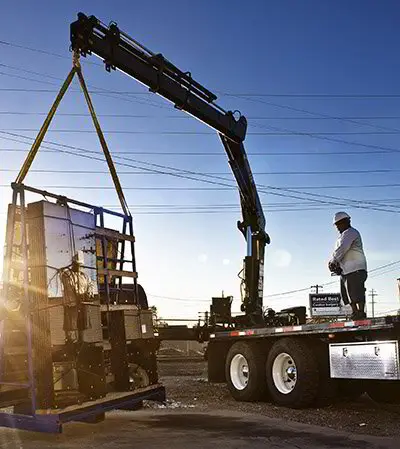
Towns, counties and utilities around the Capital Region often run knuckle-boom trucks. Those crews can work toward ABC, ABL and ABW in our knuckle boom certification prep.
Riggers at the port and on bridge work
Heavy cargo and structural steel call for skilled riggers. We get those riggers ready for NCCCO's Level I and Level II exams.
Managers
Supervisors who own compliance can take Managing Crane Safety, which walks through planning picks, inspections, certification and ways to reduce liability.
Not sure which exam matches a particular machine? Give us the crane's make, model and setup, and we'll match it to the right test before you register anyone.
Working through upstate seasons
Capital Region winters bring snow, ice and deep cold, and spring thaw often leaves soft ground at job sites. Wind along the Hudson can also be stronger than it feels at street level.
Lots of local employers book on-site crane training for the shoulder seasons, late fall or early spring, when projects quiet down yet the weather still allows hands-on work. We shift yard sessions around the forecast and put more emphasis on cribbing, ground bearing capacity and cold-start inspections.
Short winter days also limit practical time. Two or three consecutive days of decent weather is usually enough for a group practical session, and we stay flexible on dates so a storm does not waste a trip. Classroom portions can proceed regardless of conditions.
Planning a session
For a group, tell us your headcount, equipment and any recertification dates. From that, we build a course at your site and arrange for our accredited NCCCO examiners to test on your own cranes. Single operators can fly from Albany International to Tampa, with connections, and join the Friday-to-Monday prep we hold every month in Seffner.
If your cranes also need inspection, see our New York crane inspection services. For the rest of the state, see our New York NCCCO prep overview.