
Lifting Work Around Durham's Campuses and Labs
Durham's construction mix leans toward universities, medical centers and the laboratory and office buildings in and around Research Triangle Park. Those jobs bring a particular kind of pick: rooftop air handlers, chillers, lab exhaust fans and modular components set over occupied buildings with little room to stage.
That is where NCCCO crane certification in Durham, NC earns its keep. A certified operator who can read a load chart under pressure, and a signalperson who can manage a blind lift over a roofline, are the difference between a smooth Saturday pick and a costly delay.
Programs Durham Crews Ask About Most
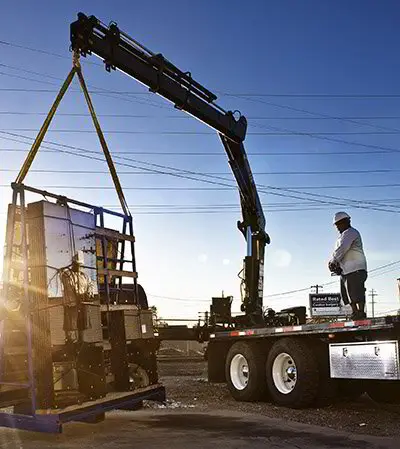
Mechanical and specialty contractors in the Triangle frequently run knuckle-boom trucks for deliveries and rooftop sets. Our articulating crane certification prep covers the ABC, ABL and ABW exams for operators who already have time on those machines.
Larger picks over occupied spaces almost always involve a signalperson working out of the operator's view. The signalperson qualification program teaches standard hand and voice signals and prepares candidates for the NCCCO written and practical exams. Material handling crews on campus projects often add the telehandler program as well.
Questions to settle before a campus lift
- Who controls the exclusion zone around the building entrance?
- Will the signalperson have radio contact with the operator?
- Has the roof structure been checked for the outrigger or mat loads?
On-Site Sessions or a Trip to Seffner
There is no Crane School office in Durham. When an employer has a group to certify, our instructors come to you, teach the classroom portion in your training room, and run practical exams on your equipment at a suitable spot in your yard.
Individual operators can instead join an open-enrollment class at our training center in Seffner, Florida. Raleigh-Durham International has regular service to Tampa, and CCO written exams are offered every month at the Seffner headquarters. Look over the upcoming class dates to plan around your workload.
How Certification Rules Apply in North Carolina
There is no separate North Carolina crane operator license. The federal crane standard for construction, OSHA 1926 Subpart CC, applies, and the state's own occupational safety program enforces equivalent rules. Owners such as universities and hospital systems may set tighter contractor requirements, so check your contract documents.
If a project owner asks for proof of qualification, a current NCCCO wallet card or the MyCCO app record is usually the quickest answer. Keep copies on file for every operator, rigger and signalperson you send to a campus site.
You can compare training options across the state on our North Carolina NCCCO prep page.
Building a Bench of Certified Operators
Facilities groups at large institutions often depend on one or two people who can run the crane or boom truck. When one of them retires or changes jobs, rooftop work stalls until a contractor can be brought in. Certifying a second or third operator spreads that risk.
For employees with some seat time, a short on-site prep class followed by practical exams can close the gap without sending anyone out of state. For someone starting from zero, the initial mobile crane operator program in Seffner builds skills from the ground up over three or five weeks, Monday through Thursday.
Whichever route you take, keep records of each person's certification dates, so renewals are planned well before the five-year expiry rather than discovered during a pre-job review.