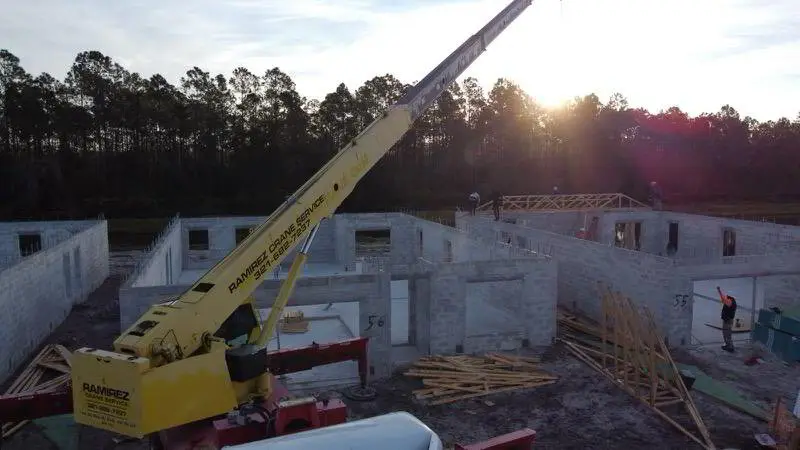

Lattice boom crane working on a bridge project over the Willamette River in Portland, Oregon
Portland metro

NCCCO Crane Training for Portland, Oregon

Certification prep for the operators, riggers and signalpersons behind Portland's port, riverfront, bridge and downtown lifts.

Two Rivers, a Port and a Growing City

Portland sits where the Willamette River meets the Columbia, and the Port of Portland's marine terminals, river industries and the city's many bridges generate a lot of heavy lifting. Add downtown and Pearl District towers, hospital and university buildings, transit projects and industrial work along the rivers, and you get a market that uses everything from tower cranes to barge-mounted lattice cranes.

Our NCCCO crane training in Portland, Oregon is aimed at that mix, helping both cab and ground crews earn the credentials these jobs call for.

Urban Sites Put the Ground Crew First

Downtown lots are so cramped that the person in the cab frequently loses sight of the load at pickup, at landing or both. Every pick then rests on riggers who know each load's weight and balance point, and on signalpersons giving clear direction, often over the radio from several stories up.

For the ground side, we offer rigging certification at Level I and Level II aimed at the NCCCO Rigger exams, and a signalperson course built on standard hand and voice signals that leads to NCCCO testing. Training them alongside your operators builds one communication standard for the whole crew.

Rivers, Rain and Lattice Booms

Along the Willamette and Columbia, bridge and marine contractors lean on lattice boom crawlers, some of them set up on barges. Moving decks, river currents and limited landing areas add complexity. Seasoned operators can work toward LAT, plus TSS and TLL, in our monthly mobile crane prep weekend.

Portland's long rainy season matters on land too. Saturated soils, slick steel and gusty winds during storms change how lifts should be planned. Recheck ground support after heavy rain and stick to the manufacturer's wind limits.

Seismic upgrades

The Pacific Northwest's earthquake risk has driven seismic retrofit work on older buildings and infrastructure. Those jobs often mean lifting steel bracing and equipment into occupied structures with very little room. Planning those picks carefully, with confirmed weights and clear signals, is where trained ground crews pay for themselves.

How Portland Crews Get Certified

The Crane School has no Portland office. Port employers and contractors with several candidates can bring our instructors and accredited practical examiners to their own site for the classroom sessions and for practicals on company cranes.

To plan the visit, we need a list of available cranes, a count of who is sitting written versus practical exams, and a level spot for the test course. Urban contractors without yard space sometimes use a rented lot or an equipment supplier's yard for the practical portion.

Individuals can also fly from PDX to Tampa and join an open-enrollment class at the Seffner, Florida, center. Newcomers can enroll in either the three-week or five-week beginner track there. Check the class calendar for dates.

Oregon OSHA and Washington Crossings

Oregon operates its own plan, Oregon OSHA, whose crane rules must match or exceed the federal standard and may include requirements unique to the state, so verify what applies to your job. Across the Columbia, Washington adds crane operator requirements of its own beyond OSHA, so anyone taking work on that side of the river should look up the current Washington rules and NCCCO's licensing pages first.

Statewide details live on our Oregon crane certification page.
Frequently Asked Questions

Do I need different certification to work in Vancouver, Washington?

Probably, because Washington sets its own crane operator requirements beyond the federal OSHA rule. Check the latest version with the Washington agency in charge, and NCCCO's licensing resources, before you cross the river for work.

Can our riggers and signalpersons certify during the same Portland on-site visit?

Yes. One visit can cover operators, riggers and signalpersons together, as long as your site has room for each practical.

Is there practice time available on lattice boom cranes?

Yes. Our Seffner, FL yard rents lattice crane seat time hourly, and you can book it with a coach or without one.

The Crane School

Training Programs & Services

All programs are delivered in compliance with current OSHA regulations.

Mobile Crane Operator Certification Prep Program

For experienced operators ready to certify or recertify. Includes NCCCO TSS, TLL and LAT written and practical exams.

Learn more about Mobile Crane Certification Prep

Initial Mobile Crane Operator Training Program

For people with little or no crane experience. 3-week (TSS/TLL) and 5-week (adds LAT) programs with NCCCO exams.

Learn more about Initial Mobile Crane Training (3 & 5 Week)

Articulating Crane Operator Certification Prep Program

For knuckle-boom operators. Prepares you for the NCCCO ABC, ABL and ABW written and practical exams.

Learn more about Articulating Crane Certification Prep

Rigger Qualification / Certification Program

For personnel who rig loads to cranes — supports your rigger qualification and NCCCO Rigger Level I/II exams.

Learn more about Rigger Level 1 & 2

Signalperson Qualification / Certification Program

Standard hand and voice signals for directing cranes, plus preparation for the NCCCO Signalperson exams.

Learn more about Signalperson

Managing Crane Safety Class

For managers and supervisors: OSHA compliance, lift planning, inspections, certification and liability.

Learn more about Managing Crane Safety

Telehandler Operator Program

Certification or recertification for telehandler operators. Includes the NCCCO THO written and practical exams.

Learn more about Telehandler Operator

Crane Inspection Services

Annual, monthly, post-assembly and post-incident inspections plus load testing by NCCCO-certified inspectors.

Learn more about Crane Inspections

Related Reading

Crane Operator Practice Test

Ten quick questions on crane safety rules and NCCCO basics. Pick one answer per question — your score shows on the next page.

1. Which OSHA standard covers cranes and derricks used in construction?
2. How long is an NCCCO crane operator certification valid before recertification?
3. What does NCCCO stand for?
4. Under OSHA's current construction crane rule, operator certification must be obtained by:
5. Under OSHA Table A (1926.1408), what is the minimum clearance from power lines rated up to 50 kV?
6. When is a signal person required?
7. Whose emergency stop signal must a crane operator obey?
8. What does an anti-two-block device prevent?
9. Which document gives a crane's rated capacity for a given boom length and radius?
10. Which NCCCO designation covers telescopic boom cranes with a swing cab?