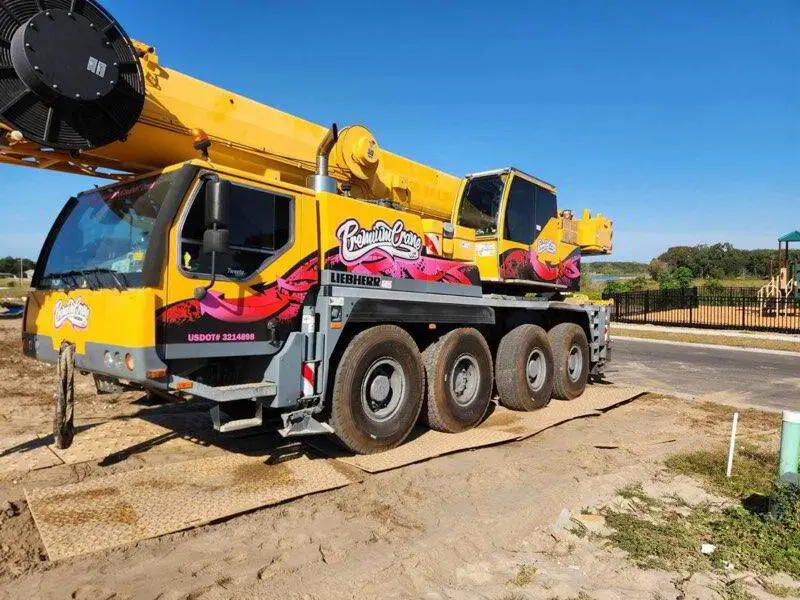
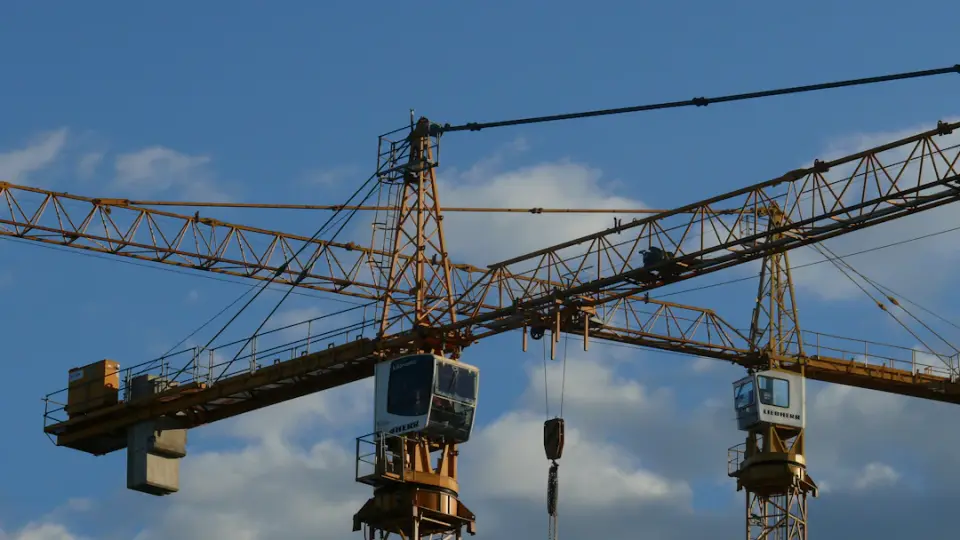
Hydraulic truck crane on a campus construction site in Columbia, South Carolina
Midlands crane training

NCCCO Crane Certification for Columbia, South Carolina

What the road to an NCCCO card looks like for Columbia's working operators, first-timers changing careers and the companies that hire them.

Where Columbia's Cranes Are Working

Being South Carolina's capital and the University of South Carolina's hometown keeps Columbia supplied with state, campus and hospital building projects. Its location where I-20, I-26 and I-77 meet also draws distribution and light manufacturing projects, and the Broad, Saluda and Congaree rivers mean regular bridge and utility work.

That spread works in your favor if you want NCCCO crane certification in Columbia, SC, since Midlands jobsites use hydraulic truck cranes, rough-terrain machines and boom trucks alike. Fort Jackson, one of the Army's major training installations, is also here, and many service members finishing their time in uniform look at equipment operation as a next career.

The Crane School has no Columbia office. You can train at an employer's Midlands site, or make the roughly one-day drive down to the Seffner, Florida, campus.

New to Cranes? Start Here

A good share of Midlands callers are starting over in a new trade, whether they are veterans transitioning out or laborers ready for a bigger role. If that is you, certification prep is not the first step. You need supervised time in the seat.

Students with little or no seat time belong in our beginner mobile crane course, which comes in two lengths:

  • Three weeks: telescopic boom machines, ending with NCCCO TSS and TLL testing.
  • Five weeks: all of that, plus lattice boom cranes and the LAT test.

Training is full-time at the Seffner, Florida campus, four days a week from Monday to Thursday, 7:00 AM until 4:00 PM. Where certified operators tend to head afterward is covered in our article on career moves after NCCCO certification.

Experienced Operators and Recertification

Columbia-area hands who already operate and need a first card or a renewal can take the quicker path: our once-a-month mobile crane prep. The format is Friday through Monday, with practicals on Friday, classroom review Saturday and Sunday, and the written exams first thing Monday. On the Thursday ahead, you can reserve optional practice time in one-hour blocks.

NCCCO certifications are valid for five years. Enroll during your last year so a scheduling conflict does not leave you uncertified.

Need only the book work? The recertification prep class reviews TSS, TLL and LAT written material and leaves out the practical. Practical exams can be added separately when your employer or the exam rules call for them.

Heat, Storms and the Training Calendar

Summer in Columbia is long and brutally hot, and afternoon lightning can halt crane work in minutes. For on-site training here, early starts and shaded breaks matter, and practical exam windows may need to shift around storm forecasts. Spring and fall are usually the most comfortable months for outdoor exam days.

Candidates who travel to Florida will find similar summer heat, so the same advice applies: hydrate, wear sunglasses in the field, and dress for long hours outdoors.

Rules and Next Steps

There is no commonly cited South Carolina crane operator license, which leaves OSHA's construction crane rules in force, though a given employer can ask for more. Our South Carolina crane certification page gives the statewide view; after that, reach out to us about dates, on-site training or a trip to Seffner.

The online store shows published prices for open-enrollment classes, and on-site pricing is something we work out with you directly.
Frequently Asked Questions

Can a person with zero crane experience still get certified?

Yes, but it starts with hands-on training. Both our three-week and five-week beginner tracks assume you are starting with little or no time in a crane.

Does running a crane in Columbia require a CDL?

A CDL is not required to operate a crane. That said, an employer may want one if you will be driving a truck-mounted crane on public roads.

Where can I look up crane operator pay?

See the U.S. Bureau of Labor Statistics Occupational Employment and Wage Statistics for crane and tower operators (53-7021).

The Crane School

Training Programs & Services

All programs are delivered in compliance with current OSHA regulations.

Mobile Crane Operator Certification Prep Program

For experienced operators ready to certify or recertify. Includes NCCCO TSS, TLL and LAT written and practical exams.

Learn more about Mobile Crane Certification Prep

Initial Mobile Crane Operator Training Program

For people with little or no crane experience. 3-week (TSS/TLL) and 5-week (adds LAT) programs with NCCCO exams.

Learn more about Initial Mobile Crane Training (3 & 5 Week)

Articulating Crane Operator Certification Prep Program

For knuckle-boom operators. Prepares you for the NCCCO ABC, ABL and ABW written and practical exams.

Learn more about Articulating Crane Certification Prep

Rigger Qualification / Certification Program

For personnel who rig loads to cranes — supports your rigger qualification and NCCCO Rigger Level I/II exams.

Learn more about Rigger Level 1 & 2

Signalperson Qualification / Certification Program

Standard hand and voice signals for directing cranes, plus preparation for the NCCCO Signalperson exams.

Learn more about Signalperson

Managing Crane Safety Class

For managers and supervisors: OSHA compliance, lift planning, inspections, certification and liability.

Learn more about Managing Crane Safety

Telehandler Operator Program

Certification or recertification for telehandler operators. Includes the NCCCO THO written and practical exams.

Learn more about Telehandler Operator

Crane Inspection Services

Annual, monthly, post-assembly and post-incident inspections plus load testing by NCCCO-certified inspectors.

Learn more about Crane Inspections

Related Reading

Crane Operator Practice Test

Ten quick questions on crane safety rules and NCCCO basics. Pick one answer per question — your score shows on the next page.

1. Which OSHA standard covers cranes and derricks used in construction?
2. How long is an NCCCO crane operator certification valid before recertification?
3. What does NCCCO stand for?
4. Under OSHA's current construction crane rule, operator certification must be obtained by:
5. Under OSHA Table A (1926.1408), what is the minimum clearance from power lines rated up to 50 kV?
6. When is a signal person required?
7. Whose emergency stop signal must a crane operator obey?
8. What does an anti-two-block device prevent?
9. Which document gives a crane's rated capacity for a given boom length and radius?
10. Which NCCCO designation covers telescopic boom cranes with a swing cab?