Growth Along Knik Arm
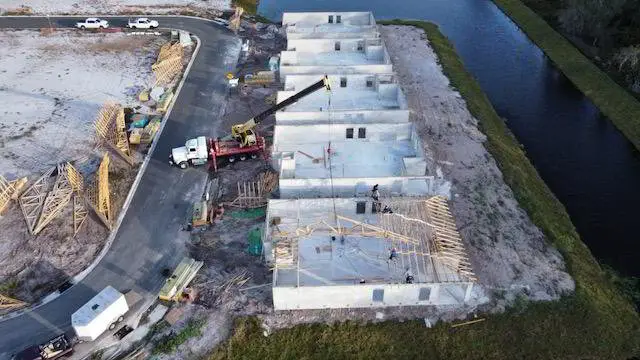
Knik-Fairview is a fast-growing community in the Matanuska-Susitna Borough, stretching along Knik-Goose Bay Road southwest of Wasilla. Much of the local construction is residential subdivisions, schools, roads and utility extensions, with the borough's port on Knik Arm at Port MacKenzie to the south. That kind of work keeps truck-mounted cranes, knuckle booms and telehandlers busy setting trusses, placing utility vaults and moving materials.
There are two ways we help with crane operator certification in Knik-Fairview: instructors fly up to train at a company's own shop, or operators head to Seffner, Florida for a scheduled class. No Crane School staff are stationed in Alaska.
Many residents also commute toward Anchorage or work rotations on the North Slope and other remote sites, so a credential that is recognized by employers across the state is useful. NCCCO certification is national and stays with the operator, not the employer, for its full five-year term.
Equipment Common on Mat-Su Job Sites
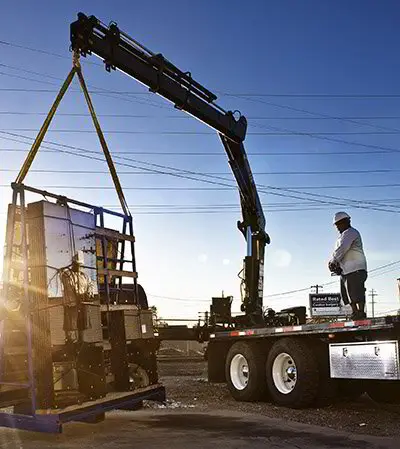
Home and light commercial builders around the valley lean on compact telescopic cranes and boom trucks; lumberyards drop their loads off knuckle booms. Site contractors lean on telehandlers. Each machine has its own NCCCO path:
- Hydraulic telescopic cranes lead to TSS and TLL, prepped in our mobile crane exam weekend
- Knuckle booms lead to ABC, ABL or ABW, prepped in the articulating crane course
- Telehandlers: the THO exam through the telehandler operator program
Matching the certification to the machine your crew actually runs avoids paying for exams that do not apply. OSHA ties each certification to a specific crane type, after all.
Starting From Scratch
Valley residents hoping to get into the trade can start with our beginner mobile crane course, which assumes little or no experience. Three weeks takes you through telescopic machines and the TSS and TLL tests, and five weeks tacks on lattice boom operation and LAT. Both run full-time in Seffner, Monday through Thursday.
That means planning for several weeks in Florida. Fly out of Anchorage, about an hour's drive from Knik-Fairview, into Tampa International. A hotel by the Tampa fairgrounds gives our students a reduced rate, and our lodging page spells out how to get it. Budget for meals and local transportation as well, since you will be commuting to the training yard each weekday for the length of the course.
On-Site Options for Valley Employers
Contractors with several operators can bring training to the Mat-Su Valley. Lectures can run in your shop or office, and the practical can be given on your cranes, provided you have a test area that satisfies NCCCO. Gravel yards and equipment lots often work well once snow is cleared and ground is firm.
Timing matters in a seasonal market. Training during the shoulder seasons lets crews start the summer certified rather than scrambling mid-project.
Help us plan by sending a headcount, the crane types each person operates, the capacities of machines available for testing and the weeks that suit you. If you also run telehandlers or knuckle booms, mention them; a single trip can cover several certifications when the equipment is on hand. Our onsite training tips explain how to prepare a site.
Rules That Apply in Alaska
Neither the State of Alaska nor the Mat-Su Borough issues a crane operator license. On construction, OSHA's crane standard and its operator certification rule at 29 CFR 1926.1427 control, and an employer can always ask for more. See our statewide Alaska page for more.