A Growing Highland Community
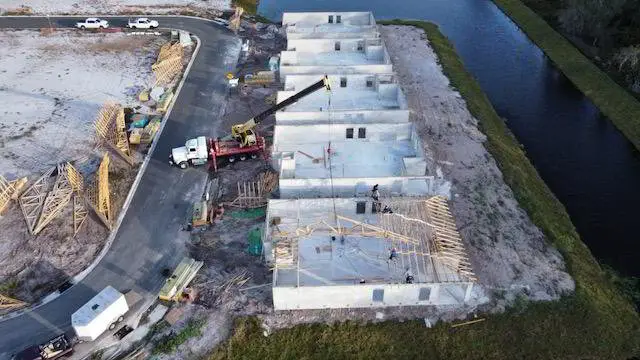
Perched in Arizona's central highlands at about a mile of elevation, Prescott Valley has expanded rapidly alongside its neighbor, Prescott. Most cranes you see around town are setting materials for subdivisions, shopping centers, schools, medical buildings and widened roads. Unlike the low desert, this area sees real winters, with freezing nights and occasional snow, along with summer monsoon storms.
Residents and employers here can get NCCCO crane training for Prescott Valley crews in two ways: we bring instructors to a local company's yard, or students travel to our single campus in Seffner, Florida.
The town's location between Phoenix and Flagstaff also means some local operators travel for work on projects elsewhere in the state. Because the NCCCO credential is recognized nationally, it travels with the operator, and that portability is part of why area builders favor certified hands even on modest lifts.
Starting a Crane Career from Prescott Valley
A lot of the calls we get from small Arizona towns come from people switching careers, such as truck drivers, veterans and operators of other heavy equipment who want a skilled trade. Sound familiar? Begin with the beginner mobile crane operator course. No prior seat time is assumed; it was designed around students with little or no crane experience.
- 3 weeks: telescopic boom cranes, finishing with the NCCCO TSS and TLL exams (written plus practical).
- 5 weeks: everything above plus lattice boom seat time and the LAT test.
Expect four long days each week, Monday to Thursday, 7:00 AM until 4:00 PM. For a realistic picture of the work, read our day-in-the-life article.
Programs for Local Contractors
Builders and site contractors in the Quad Cities area tend to run boom trucks, smaller hydraulic cranes and telehandlers. Hands who already run cranes can earn or renew their card through the Friday-to-Monday mobile crane prep weekend. For forklift-style reach equipment, the NCCCO THO exam is covered in our telehandler course, while lumber yards running knuckle-boom delivery trucks fit the articulating crane prep.
Have more than a handful of operators on payroll? On-site training may make more sense. We send instructors to your yard, and our accredited practical examiners can run the tests on your own machines, provided there is room to lay out the NCCCO course.
Winter scheduling deserves some thought in the high country. A cold, clear morning is fine for testing, but snow cover or frozen ruts in a gravel yard can make a practical course unsafe. For that reason, most high-country companies book on-site sessions in the shoulder seasons of spring and fall.
Planning the Trip to Florida
Students from Prescott Valley usually make the drive of less than two hours down to Phoenix Sky Harbor and catch a flight to Tampa International. From the Tampa airport, the Seffner campus is roughly a twenty-minute drive east. Signing up for a multi-week class? Ask about the discounted room rate we arranged near the Tampa fairgrounds, and come ready for humid Florida heat.
Pack a hard hat, gloves, hard-toe boots and work clothes; you will also need government-issued photo ID and a valid driver's license. Training materials are provided.
If you are weighing the 3-week against the 5-week option, think about the work you want. Many entry-level jobs in Arizona involve hydraulic telescopic cranes, which the shorter course covers. Go with the five-week course if your goal is lattice boom crawler work in steel erection, heavy industry or infrastructure.
Licensing in Arizona
There is no separate Arizona crane license; the state follows OSHA, so construction operators need certification under 29 CFR 1926.1427, and employers are free to ask for more. Statewide details are on our Arizona crane operator overview.