
What Gets Lifted Around Tucson
Tucson's economy leans on a few big pillars: Davis-Monthan Air Force Base, aerospace and defense manufacturing, the University of Arizona, and the copper mining operations found across Southern Arizona. Add solar installations, hospital expansions and road work, and the region needs operators comfortable with everything from rough terrain cranes on a mine site to boom trucks setting rooftop units on campus.
The Crane School supports crane operator certification in Tucson without a local office. Instructors and NCCCO accredited practical examiners travel to Tucson employers, and individuals can enroll in classes at our Seffner, Florida training center.
Mine Sites and Federal Facilities Have Their Own Rules
Crane work on mine property generally falls under the Mine Safety and Health Administration (MSHA), while construction outside the mine gate follows OSHA. Military and federal projects frequently add contract requirements on top of both. Our instructional staff is familiar with OSHA, MSHA and ANSI/ASME regulations, which helps when your crews move between those environments.
Whatever the jurisdiction, an NCCCO card shows that an operator has passed independent written and practical exams for a specific crane type. That is why many mining and defense contractors ask for it even where a regulation does not spell it out.
For supervisors who juggle those overlapping rules, the Managing Crane Safety class is worth a look. It covers responsibilities, lift planning, inspections, certification and how to limit liability, giving managers a clear framework for deciding who is qualified to do what on a given site.
Matching Programs to Tucson Crews
Operators with seat time
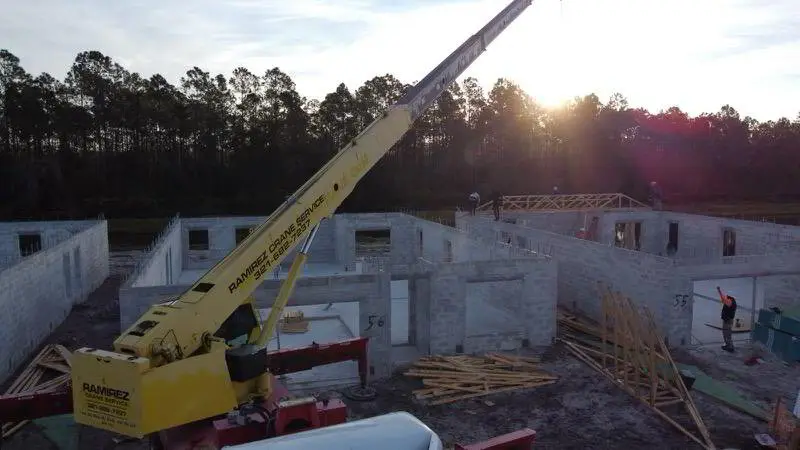
The mobile crane certification prep program covers NCCCO TSS, TLL and LAT exams for experienced telescopic and lattice boom operators.
Service and delivery trucks
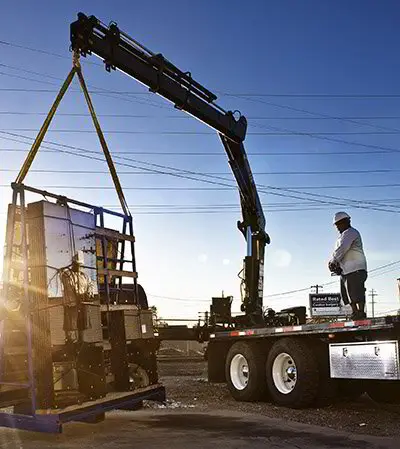
Mine service crews and building-supply drivers often run knuckle-boom cranes. The articulating crane prep program prepares them for ABC, ABL and ABW exams.
The rest of the lift team
Rigger and signalperson certification round out the crew, and crane inspection services from NCCCO certified inspectors are available for annual, monthly and post-incident inspections. Learn more on our inspection services page.
Two Ways to Train
On-site sessions bring our instructors to your facility. Classroom work happens in your training room, and practical exams can be set up on your own cranes when the site has a suitable test area. Tucson's dry climate makes outdoor testing workable most of the year, though summer sessions should start early to stay ahead of the heat and monsoon storms.
To train in Florida instead, fly out of Tucson International, usually with a connection, to Tampa International. Seffner is a short drive east. CCO written exams are held there every month, and our team can share the negotiated rate at a nearby hotel.
When you request on-site training, let us know whether candidates will be testing on mine-owned equipment, contractor cranes or both. Mine sites usually require site-specific safety orientation for visitors, so we may need to plan classroom sessions at an off-site location and schedule practical exams where access is simplest.
Arizona Requirements at a Glance
Arizona has no state crane operator license. Federal OSHA's crane standard, enforced through the state plan, requires construction operators to be certified under 29 CFR 1926.1427, and employers may set tighter rules. For more on statewide options, visit our Arizona training overview.