A Thanksgiving View from the Cab: 7 Things Every Florida Crane Operator Is Thankful For
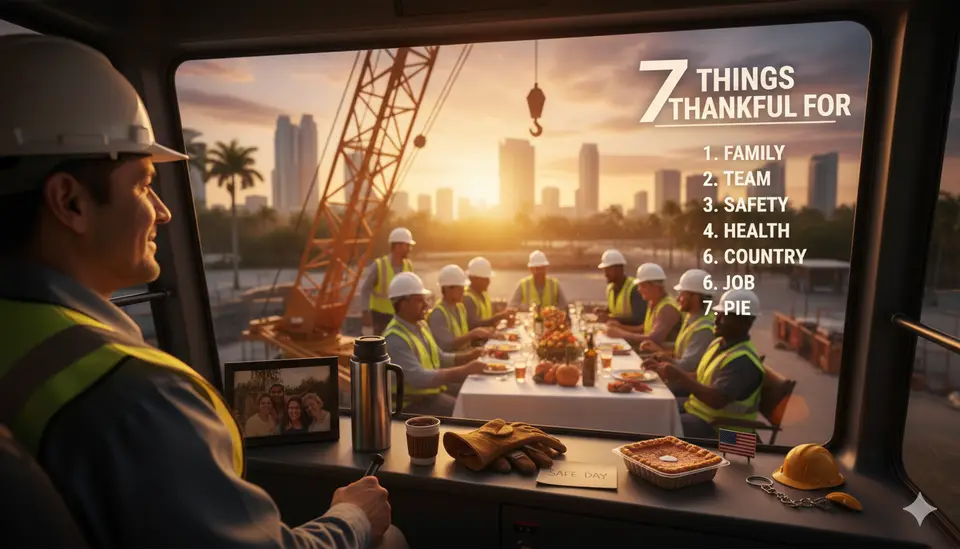
Gratitude From an Unusual Office
Thanksgiving is a time to count blessings, and most of them are universal: family, health, a roof overhead. People who spend their days in a crane cab tend to add a few that are specific to the trade.
Running a crane takes focus, discipline and a willingness to carry real responsibility. The rewards of a crane operator career in Florida come from the same place. Here are seven things operators often say they appreciate about the work.
1. A Skill You Can Point To
A lot of modern work is abstract. Crane work is not. At the end of a shift, an operator can point to a bridge girder, a set of roof trusses or a rooftop unit and say, "I set that."
In a state that keeps building, that connection to visible progress matters. Schools, hospitals, port facilities and homes all depend on someone who can place heavy loads safely. It is also a hands-on skill that has to be performed on site, which gives operators a sense of stability that many office jobs cannot match.
2. A Credential That Answers the Big Question
Every employer wants to know whether a new operator is safe and competent. A certification from the National Commission for the Certification of Crane Operators (NCCCO) answers that question in a way any contractor recognizes.
Operators earn certification by crane type through written and practical exams, and the card is valid for five years. Getting there takes classroom study and a lot of seat time. Many operators remember the instructor who finally made the load chart click, and the practice lifts that built their feel for the controls. You can read more about how the process works on our NCCCO certifications page.
3. A Team Built on Trust
The cab can feel solitary, but no lift is a solo act. Every pick depends on the operator, the rigger and the signalperson working as one.
The rigger
Operators rely on the rigger to inspect the gear, estimate the load's center of gravity and choose the right sling angles. Many operators take rigger training themselves so they better understand what their partner on the ground is doing.
The signalperson
On a blind lift, the signalperson becomes the operator's eyes. Trusting a calm voice on the radio, or a clear hand signal, and turning it into smooth machine movement is a kind of partnership few jobs offer.
4. The Authority to Say Stop
It may sound odd to be grateful for responsibility, but many operators are. Under OSHA's cranes and derricks rules, an operator who believes a lift is unsafe has the authority to refuse it until the concern is addressed. You can review the standard at osha.gov (opens in a new tab).
That authority means an operator is not just a button-pusher on someone else's schedule. Training teaches them to recognize the warning signs, such as rising wind, questionable rigging or soft ground, and gives them the standing to call a halt. It is a big part of why operators trust that they will get home at the end of the day.
5. A Trade That Supports a Household
Being able to provide for a family is a reason for gratitude in any line of work. Crane operation is a skilled trade, and a focused training program can lead into it without the time and debt of a four-year degree.
Pay varies widely by region, crane type, union status and experience, so we do not quote numbers. For current figures, check the U.S. Bureau of Labor Statistics Occupational Employment and Wage Statistics for crane and tower operators (53-7021). What operators consistently say is that the work rewards people who keep learning and keep their certifications current.
6. The View, and the Quiet
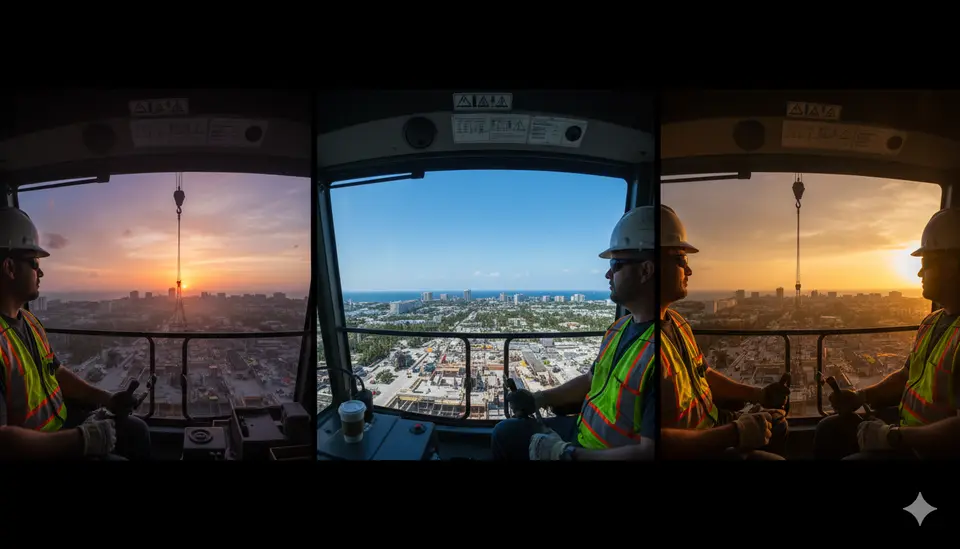
Operators spend long hours in a glass box above the site. Below them is noise and activity; in the cab, the job demands calm concentration. Many describe it as a kind of focus that is hard to find anywhere else.
The height also gives a unique view of progress. From the cab, you watch foundations get poured, steel go up and a building take its final shape. Few people on a project see it come together quite that way.
There is also satisfaction in the craft itself. A smooth swing, a load that lands softly on its marks, a long day with no surprises: these are small wins that experienced operators still notice years into the job.
7. The Chance to Help After a Storm
In Florida, hurricanes are part of life. When a storm passes, crane work shifts from building to recovery: clearing large debris, helping crews reach damaged structures and supporting utility and infrastructure repairs.
Operators often say this is where the job feels most meaningful. Using a hard-earned skill to help neighbors get back on their feet is a deep source of pride. We cover that role in more detail in the critical role of crane operators in Florida's hurricane season.
Starting a Career You Can Be Thankful For
Crane operation is not easy work, but it offers pride, purpose and a craft you can keep improving for decades. If you have little or no seat time, the initial mobile crane operator training program at our Seffner headquarters is built for new operators. Experienced operators who are ready to test can look at Florida crane operator certification prep instead. If you want to talk through which path fits your experience, reach out to The Crane School.
FAQ
Do I need a college degree to become a crane operator?
No. Most operators enter the trade through hands-on training and NCCCO certification for the crane types they will run, along with an employer's evaluation.
Where can I find reliable pay information for crane operators?
Use the U.S. Bureau of Labor Statistics Occupational Employment and Wage Statistics for crane and tower operators (53-7021). It breaks data down by state and metro area.
Can a crane operator refuse to make a lift?
Yes. Under OSHA's cranes and derricks standard, an operator who has a safety concern can refuse to operate until the issue is resolved.