The Steel Backbone of Recovery: Crane Operators in Florida's Hurricane Season
A Job Shaped by the Weather
When hurricane season arrives, Floridians stock up, review evacuation plans and watch the tropics. Crane operators get ready for a different kind of work. Their machines can become serious hazards if they are not secured, and after the storm, those same machines are among the most important tools for recovery.
Crane operations during hurricane season in Florida demand more than the skills needed to pass an exam. They call for solid judgment, respect for wind and a firm grip on manufacturer procedures. Here is what that work looks like at each stage.
Plan Before the Season Starts
The best storm response starts weeks before anything forms in the Atlantic. Hurricane season officially runs from June through November, and the time to plan is before the first watch is issued.
- Write the storm plan. Each crane on site should have a documented procedure based on the manufacturer's instructions, with names attached to each task.
- Set trigger points. Decide in advance when lifting stops, when securing begins and when the site is evacuated. Tie them to forecast milestones, not gut feel.
- Know your timing. Lowering a lattice boom or laying down a large telescopic boom can take hours. Some cranes need an assist crane. Build that time into the triggers.
- Check supplies. Mats, cribbing, tie-downs and fuel should be on hand before they become scarce.
- Train the crew. Walk operators, riggers and signalpersons through the plan so nobody is learning it while the wind is rising.
A rehearsed plan turns a frantic scramble into a checklist.
Before the Storm: Neutralize the Machine
Every crane type has manufacturer procedures for high winds and storms. A certified operator should know them for the machine they run, and the project should have a written storm plan well before a named storm approaches.
Tower cranes
Many tower cranes are designed to weathervane: with the slewing brake released according to the manufacturer's instructions, the jib can rotate freely to align with the wind, reducing load on the structure. Hook height, trolley position and other settings follow the manufacturer's out-of-service instructions. Skipping these steps can leave the crane exposed to forces it was never designed to resist sideways.
Mobile and crawler cranes
The usual goal is a low profile and a stable footprint. Booms are retracted and lowered, or laid down, as the manufacturer directs. Some configurations need boom sections or attachments removed. Ground support should be checked, because saturated soil can shift under outriggers or tracks.
Before the Storm: Lock Down the Site
Operators also help secure the rest of the job site, often with a long list of lifts in the final day or two.
- Materials: lumber, block, steel and formwork moved into low, secured stacks.
- Containers and dumpsters: consolidated and positioned where they are least likely to move.
- Potential projectiles: temporary signage, generators and other heavy items moved or secured.
This is high-pressure work against a deadline, which is exactly when shortcuts tempt crews. Normal procedures still apply: wind limits, rigging checks and a clear signalperson. As winds rise, the operator has the authority to stop, and the lifting has to end before conditions exceed the limits.
After the Storm: First-Wave Recovery
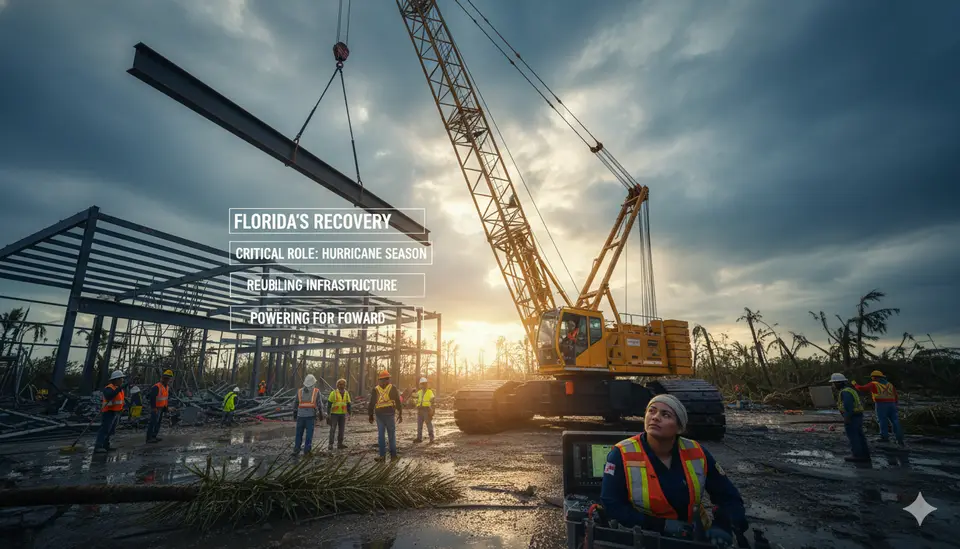
Once it is safe to work, crane operators become part of the first wave of recovery.
Clearing roads
Before crews can restore power or deliver supplies, roads must be opened. Grapple trucks and mobile cranes help lift fallen trees, poles and large debris that other equipment cannot handle.
Supporting utilities and infrastructure
Cranes help set poles and other utility equipment, and they support repairs to damaged structures and facilities.
Damaged buildings
Lifting debris from damaged structures, or helping stabilize them, requires careful planning. Loads may have unknown weights and hidden attachments, and structures may be weakened.
Hidden Hazards in Recovery Work
Post-storm sites are some of the most dangerous places an operator will work.
- Downed and energized power lines can be buried under debris. Treat every line as live until the utility confirms otherwise, and follow OSHA's power line safety requirements in the cranes and derricks standard (osha.gov (opens in a new tab)).
- Saturated ground can give way under outriggers. Use mats and assess support carefully.
- Unknown load weights: a tangled tree or a section of roof does not come with a tag. Estimate conservatively and watch the load moment indicator.
- Unstable debris can shift suddenly when one piece is lifted.
- Fatigue: long hours during recovery wear down attention. Rotate crews and take breaks.
Rigging and signaling are critical in these conditions. Crews with rigger qualification and signalperson training are better equipped to handle irregular loads safely.
Rebuilding: The Long Haul
Recovery does not end when roads are clear. Rebuilding homes, businesses, schools and public facilities can take months or years, keeping crane crews busy long after the storm leaves the news. Before resuming work on any crane that rode out a storm, check the manufacturer's requirements and your inspection program; a post-event inspection may be needed. The Crane School's crane inspection services include post-incident and specialized inspections.
Preparing Operators for Florida Conditions
Storm work rewards operators who know their machine's procedures, respect wind and ground conditions and stay disciplined under pressure. Those habits start in training. Explore Florida NCCCO training options, and for a broader look at the career, read 7 things Florida crane operators are thankful for. To prepare your crew before next season, contact The Crane School.
FAQ
Should a tower crane's slewing brake be released before a hurricane?
Many tower cranes are designed to weathervane in out-of-service conditions, but you must follow the specific manufacturer's instructions for your crane and configuration.
Does a crane need an inspection after a hurricane?
Check the manufacturer's requirements and your inspection program. A crane exposed to severe weather may need a documented inspection before returning to service.
What is the biggest hazard in post-storm crane work?
Downed power lines hidden in debris are among the most serious. Treat all lines as energized until the utility confirms they are de-energized.