Master Heavy Machinery Operation Safely: An Operator's Daily Playbook
Safety Starts in the Operator's Seat
Policies, signs and toolbox talks matter, but safe heavy machinery operation ultimately comes down to what the operator does with the controls. A machine weighing many tons has no margin for a distracted moment.
This playbook focuses on the operator's daily routine, from the walk-around to shutdown. If you supervise operators or run a safety program, our companion post on building a heavy equipment safety program covers the employer's side.
Before You Climb Aboard
Dress for the job
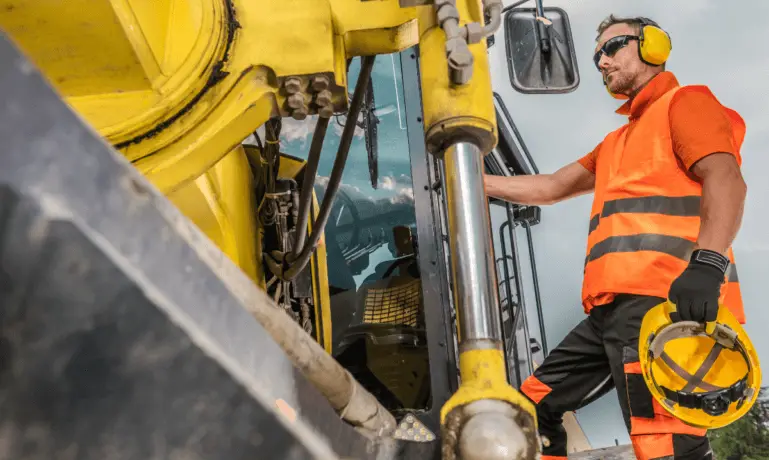
Wear the PPE your site requires: hard hat, high-visibility clothing, safety glasses, gloves and hard-toe boots at a minimum. Add hearing protection in loud cabs and sunglasses for glare in the field.
Walk around the machine
A pre-use inspection takes minutes and catches the problems that turn into incidents. Look for:
- Hydraulic leaks, damaged hoses and loose fittings
- Tire condition or track tension and damage
- Cracks, bent components or missing pins on booms, buckets and attachments
- Fluid levels and fuel
- Working lights, horn, backup alarm and cameras
- Clean windows and mirrors
- Fire extinguisher present and charged
If you find a defect that affects safe operation, tag the machine out and report it. Do not run it carefully.
Check the ground
Look for soft spots, trenches, buried utilities, overhead power lines and slopes. Ground conditions change overnight, especially after rain.
Mounting, Starting and Getting Familiar
Use three points of contact getting on and off. Never jump down from the cab or tracks. Fasten the seat belt before starting; on a rollover-protected machine, the belt is what keeps you inside the protective structure.
If the machine is new to you, take time with the operator's manual. Control patterns differ between manufacturers and even between models. Test every function at low speed in a clear area before you begin real work.
Know the Limits
Every machine has rated limits, and they are not suggestions.
- Lifting equipment such as cranes and telehandlers has a load chart. Capacity changes with boom length, angle and radius. Know the weight of the load and the rigging before you lift.
- Earthmoving equipment has limits on slope, bucket loads and travel speed. Exceeding them raises the risk of rollover.
- Attachments carry their own ratings and may reduce the base machine's capacity.
If you cannot confirm the load weight or the chart does not cover the configuration, stop and get answers. Our post on the importance of load calculations goes deeper for crane operators.
Protect the People Around You
Struck-by and caught-between incidents involve the people on the ground, not just the operator. Reduce the risk with these habits:
- Know your blind spots and use mirrors, cameras and spotters to cover them.
- Agree on signals before work begins. One person gives signals; anyone can call a stop.
- Barricade swing radius on cranes and excavators so no one walks into the pinch zone between the machine and a fixed object.
- Make eye contact before moving toward a worker on foot.
- Sound the horn before starting and moving.
For crane work, a qualified signal person matters. Our signalperson qualification program teaches the standard hand and voice signals.
Power Lines and Weather
Overhead power lines
Contact with energized lines is one of the deadliest hazards for booms, dump bodies and raised attachments. Before work starts, identify every line near your work area. For cranes in construction, OSHA 1926.1408 sets out planning steps and minimum clearances, and many sites require a dedicated spotter when equipment could get close. Treat every line as energized until the utility confirms otherwise.
If your machine does contact a line, stay in the cab unless there is a fire or other immediate danger, warn others to stay away and call for the utility to de-energize the line.
Wind, rain and heat
Wind affects lifted loads and extended booms; follow the manufacturer's wind limits and your site's rules. Rain softens ground and makes steps and controls slippery. Lightning means shutting down and getting to a safe shelter. In hot weather, heat stress builds slowly, so hydrate and rest before symptoms appear. Our post on crane safety in extreme weather covers these conditions in more detail.
Stay Sharp Through the Shift
Fatigue and complacency are quiet hazards. The routine pick you have made a thousand times is the one where attention drifts.
- Take scheduled breaks and drink water, especially in hot weather.
- Put the phone away while operating.
- Slow down at the end of a long day, when errors are more likely.
- Speak up if you are not fit to operate, whether from illness, medication or lack of sleep.
Shutting Down Right
At the end of a shift or before leaving the cab, lower attachments to the ground, set the parking brake, neutralize controls, shut down the engine and remove the key according to site rules. Park on level ground away from traffic and excavations. Note any problems on the inspection sheet for the next operator.
On cranes, follow the manufacturer's shutdown and securing procedure, which may include stowing the boom, setting swing locks and leaving the machine in a configuration rated for overnight wind. A machine left in the wrong configuration can become a hazard after everyone has gone home.
Training Builds the Habits
Good habits come from good instruction and supervised practice. The Crane School's programs focus on lifting equipment: the Initial Mobile Crane Operator Training Program for new operators and the Telehandler Operator Program for NCCCO telehandler certification. We do not teach earthmoving equipment, but the habits in this playbook apply to every machine you run.
Questions about which program fits you? Get in touch with us.
FAQ
What is the most important safety habit for heavy machinery operators?
A thorough pre-use inspection paired with the discipline to tag out a machine with a safety defect. Many incidents trace back to a problem that was visible before the shift began.
Why should operators use three points of contact?
Slips and falls getting on and off equipment are a common source of injury. Keeping two hands and a foot, or two feet and a hand, in contact reduces that risk.
Who is allowed to give signals to a crane operator?
For construction cranes, OSHA requires signals to come from a qualified signal person when signals are needed. Anyone on site may give an emergency stop signal.