Essential Crane Safety Guidelines for Operators
Why Operators Carry So Much Responsibility
Everyone on a lifting crew has a role, but the operator's decisions directly control the machine. That is why crane safety guidelines for operators deserve their own attention. Following them consistently protects you, the crew below and the public, and it supports compliance with OSHA's crane standard and your employer's policies.
Neglecting them can lead to injuries, equipment damage, citations and lost work. The guidelines below are organized the way a shift unfolds, so they are easier to turn into habits.
Before You Climb In: Personal Readiness and PPE
Start with yourself:
- Fit for duty: rested, alert and not impaired by alcohol, drugs or medication that affects judgment
- Hard hat and high-visibility vest for time on the ground
- Safety-toe boots with good grip for climbing on and off the machine
- Gloves for inspection tasks and handling rigging
- Eye protection and sunglasses where glare or debris is a concern
- Fall protection when your work requires access at height, such as on some tower cranes or during certain maintenance tasks
Use three points of contact when getting into and out of the cab. Many operator injuries happen on the steps, not during lifts.
Start of Shift: Inspect the Machine
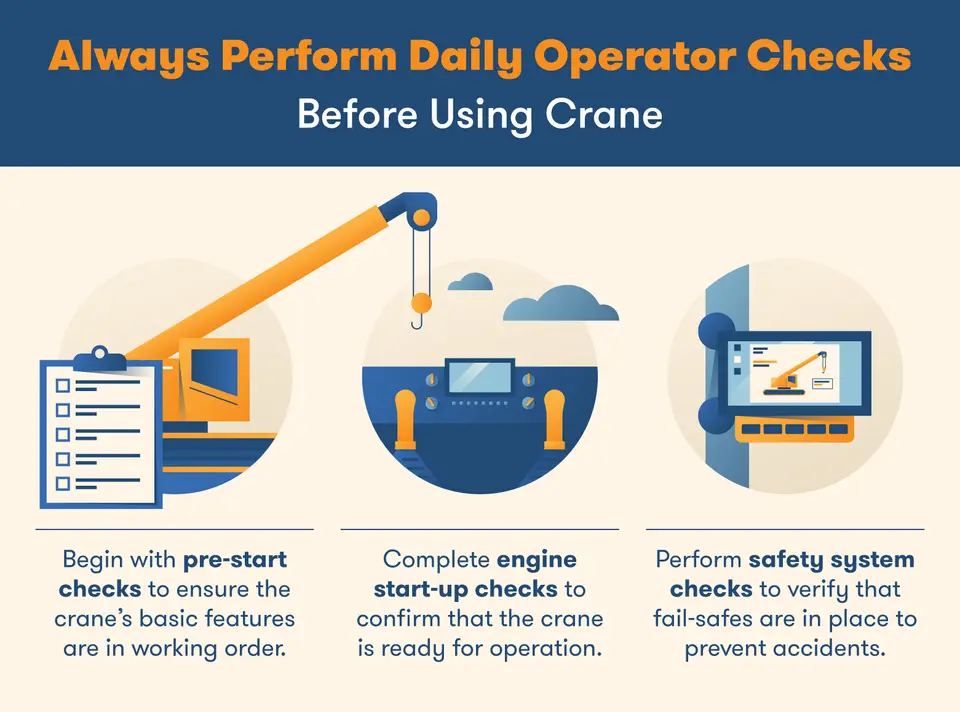
OSHA requires a competent person to inspect the crane each shift. A thorough walk-around usually includes:
- Fluid levels and visible leaks
- Hydraulic hoses and fittings
- Wire rope, sheaves and end connections
- Hook, latch and hook block
- Tires or tracks, outrigger beams, jacks and pads
- Lights, horn, gauges and warning devices
- Function test of controls and brakes
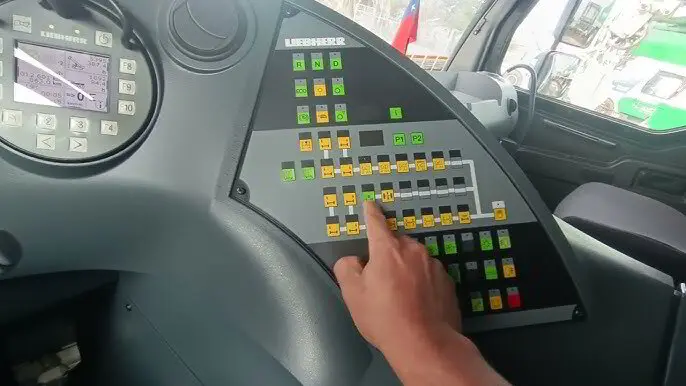
- Operator aids: load moment indicator, anti-two-block, level indicator and any range limiters
Record the results. If something affects safe operation, tag the crane out and report it.
Before the First Lift: Check the Site and the Plan
- Confirm ground conditions where the crane will set up and travel
- Identify power lines and confirm the clearance plan
- Barricade the swing radius of the counterweight
- Review the day's lifts, including load weights and maximum radius
- Meet the signalperson and riggers, agree on signals and radio channels
- Check the weather forecast and current wind speed against the manufacturer's limits
- Enter the correct configuration in the LMI
During Operations: Safe Lifting Practices
Know the load
Never lift an unknown weight. Include hook block and rigging, and check capacity at the farthest radius.
Lift a few inches first
Raise the load slightly and stop. Check that it is balanced, the rigging is seated, brakes are holding and the crane remains stable.
Move smoothly
Feather the controls. Smooth starts and stops reduce load swing and dynamic loading.
Keep people clear
Never move a load over workers. Stop if someone enters the load path or swing radius.
Follow one signalperson
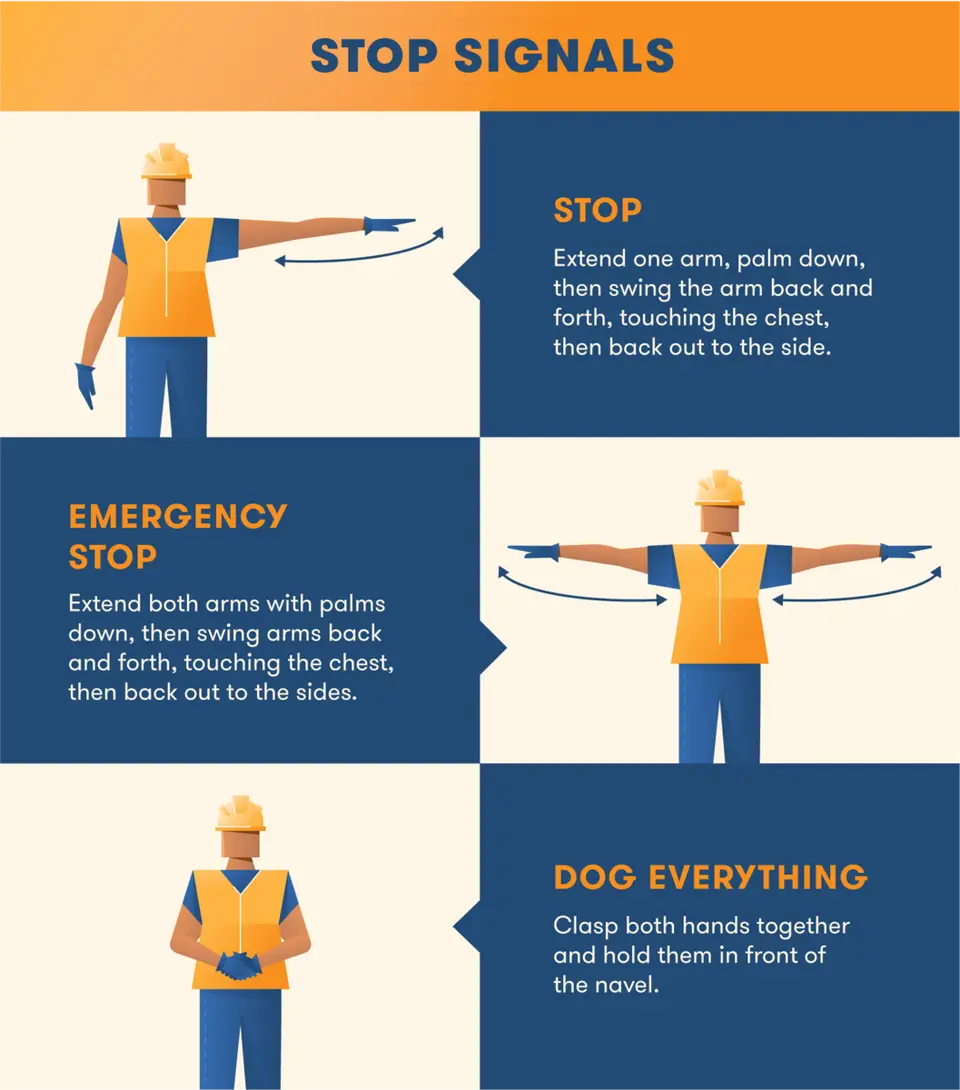
Take direction from the designated signalperson, but obey an emergency stop from anyone.
Never leave a suspended load
Do not leave the controls while a load is hanging, except as allowed under specific OSHA conditions.
Using Safety Devices the Right Way
Operator aids exist to back you up, not to replace your judgment:
- Load moment indicators warn as you approach capacity, but only if the configuration is set correctly.
- Anti-two-block devices prevent the hook block from contacting the boom tip.
- Swing and range limiters help keep the boom and load away from structures and power lines.
Do not bypass or disable these systems. If one fails, follow OSHA 1926.1416 and your company's procedures. Learn more in our post on crane safety devices.
Emergency Readiness
Know before you need it:
- Where the fire extinguisher and first aid kit are
- The emergency stop signal and radio call
- How to lower a load if a function fails, as described in the manual
- What to do if the crane contacts a power line
- Who to call and how to reach them
Our post on handling crane emergencies walks through common scenarios.
End of Shift: Secure the Crane
- Land any load. Never leave one suspended.
- Retract or lower the boom as the manufacturer directs, and secure it for wind if needed.
- Set brakes and locks, shut down the engine and remove the key.
- Note any problems on the inspection record for the next operator.
- Make sure the area is secure against unauthorized access.
Communication Habits That Prevent Incidents
Many crane incidents involve a breakdown in communication rather than a mechanical failure. Simple habits make a big difference:
- Repeat back critical information. If the rigger says the load is 4,200 pounds with rigging, say it back before you lift.
- Use one radio channel for the lift and keep chatter off it.
- Agree on what "stop" sounds like on the radio, and treat any unclear signal as a stop.
- Confirm the next move before making it during blind picks.
- Tell the crew when you are pausing, for example to check the chart or let a load settle.
Operators who also understand the signalperson's role communicate better. Many choose to earn a signalperson credential through a program like our signalperson qualification course.
Building a Safety-First Culture
Guidelines work best when the whole crew supports them. Operators help set that tone by:
- Speaking up during pre-lift briefings
- Reporting near-misses so others can learn
- Modeling patience instead of rushing
- Welcoming questions from newer workers
Keep Your Skills Current
Safe habits are reinforced through training and recertification every five years. Explore our training programs, see upcoming dates on the class schedule, or contact us to plan your next class.
FAQ
What PPE should a crane operator wear?
Typical PPE includes a hard hat, high-visibility vest, safety-toe boots, gloves and eye protection, plus fall protection when working at height. Follow your site and employer requirements.
How often must a crane be inspected by the operator?
OSHA requires a visual inspection by a competent person each shift, in addition to monthly and annual inspections.
Can an operator leave the controls with a load suspended?
Generally no. OSHA allows it only under specific limited conditions. The safe default is to land the load before leaving the controls.