Maximize Safety With Onsite Crane Training From The Crane School

Why Bring Training to Your Site
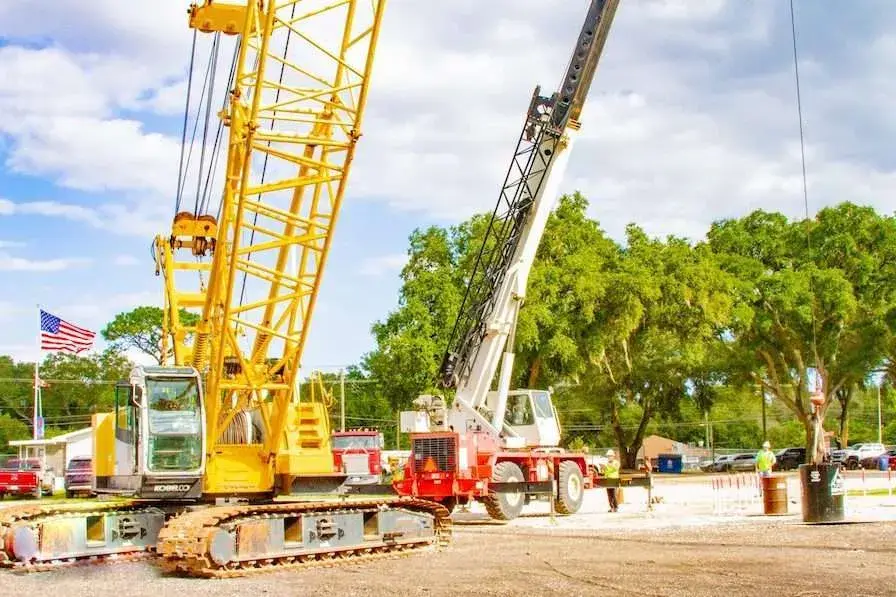
Sending operators away for training works well for individuals. When you need to train a crew, a department or a whole fleet, onsite crane training often makes more sense. The Crane School is based in Seffner, Florida, and delivers scheduled programs with required NCCCO exams at client facilities anywhere in the country. Our staff includes NCCCO accredited practical examiners, so practical exams can be scheduled nationwide as well.
The biggest advantage is relevance. Your people learn on the cranes they actually run, around the hazards they actually face, and they practice the communication habits your site needs.
Benefits for Employers and Crews
Training on familiar equipment
Operators practice on the same makes and configurations they use every day, which makes the jump from training to production smaller.
Site-specific hazards
Instructors can address your real conditions: tight plant aisles, nearby power lines, uneven yards or busy loading areas.
Less travel and downtime
No flights or hotel stays, and crews can return to work quickly after sessions.
Consistent standards across the team
Everyone hears the same expectations for inspections, signals and lift planning, which reduces "this is how we did it at my last job" confusion.
Team communication
Operators, riggers and signalpersons can train together, building the coordination that keeps lifts safe.
Signs Onsite Training Is the Right Fit
Onsite delivery is not the answer for everyone. It usually makes the most sense when one or more of these apply:
- You have several people to train at once. Group delivery spreads the cost of instructor travel across the whole crew.
- Your equipment is specialized. Operators of articulating cranes, digger derricks or unusual configurations benefit from training on the exact machines they use.
- Your site has unique hazards. Plants, utility corridors and congested urban jobs are hard to recreate elsewhere.
- Certifications are expiring together. Grouping recertification avoids a scramble of individual trips.
- You are building a new lifting team. Training operators, riggers and signalpersons together sets shared habits from the start.
If you only have one or two people to train, sending them to an open-enrollment class at our Seffner, Florida campus may be simpler. Check the class schedule for upcoming dates.
Programs That Work Well Onsite
Depending on your needs, onsite training can include:
- Mobile crane operator certification prep for TSS, TLL and LAT exams. See the mobile crane certification prep program.
- Articulating crane certification prep for ABC, ABL and ABW exams
- Rigger Level I and II qualification and certification prep. See the rigger qualification program.
- Signalperson qualification and certification prep
- Telehandler operator training for the THO exams
- Managing Crane Safety for supervisors and managers. See the Managing Crane Safety Class.
Mixing programs, for example operator prep for some employees and rigging or signalperson training for others, lets you build a fully qualified lifting team in one engagement.
Tailoring Training to Your Industry
Every industry uses cranes differently. Onsite training can focus on what matters most for your work:
- Construction: setup in confined spaces, working near other trades, steel and precast placement
- Utilities and energy: power line proximity, articulating and digger-style equipment, remote locations
- Manufacturing and plants: repetitive lifts, overhead hazards and coordination with production
- Ports, logistics and yards: precise placement, traffic management and wind exposure
- Municipal and public works: mixed fleets and crews with varied experience
Share your typical lifts and equipment list when you request a quote so the course can be shaped around them.
Onsite vs. Online Training
Online modules can cover regulations and theory, but they cannot replace practice at the controls. Onsite training adds:
- Immediate feedback from an instructor watching each lift
- Hands-on correction of habits before they become ingrained
- Interaction among crew members and with the instructor
- Practical exam readiness on real equipment
Many employers combine the two: online study before the instructor arrives, then onsite practice and exams. Our post on online crane safety training resources suggests good preparation materials.
How to Prepare Your Site
A little planning makes onsite training run smoothly:
- Identify participants and their experience levels, including who is new and who is recertifying.
- Confirm equipment availability, inspection status and the configurations to be used.
- Provide a practice area with enough space, firm ground and no overhead power lines.
- Reserve a classroom space with tables, power and a screen if possible.
- Arrange rigging and test loads as discussed with the instructor.
- Make sure participants bring hard-toe footwear, a hard hat, work clothing, gloves, sunglasses for field time, and government-issued photo ID.
- Plan production coverage so trainees are not pulled away mid-session.
Certification and Compliance
OSHA 1926.1427 requires construction crane operators to be certified or qualified by crane type, and OSHA 1926.1428 sets signal person qualification requirements. Onsite programs prepare participants for NCCCO written and practical exams, which are the certifications most employers rely on. NCCCO, not The Crane School, issues the certification after candidates pass.
CCO certifications are valid for five years. Scheduling recertification for a group on site is an efficient way to keep a whole team current.
Keep the Momentum After Training
Training is the start, not the finish. After the instructor leaves:
- Pair newly certified operators with experienced mentors
- Build lessons into toolbox talks
- Review lift plans with the habits taught in class
- Schedule refresher topics before recertification
For more on sustaining skills, see our post on ongoing crane operator training.
Request Onsite Training
Tell us about your crew, equipment and goals, and we will help you plan the right mix of programs. Contact The Crane School to request onsite training or practical exams at your facility.
FAQ
Can The Crane School train our crew at our facility?
Yes. Scheduled programs with required NCCCO exams can be delivered at client facilities anywhere in the country.
Can NCCCO practical exams be held at our site?
Yes. The Crane School staff includes NCCCO accredited practical examiners, and practical exams can be scheduled nationwide. Site and equipment requirements apply.
Is onsite crane training required by OSHA?
OSHA does not require that training happen onsite, but it does require operator certification or qualification and employer training. Onsite delivery is one efficient way to meet those needs.
What equipment do we need for onsite training?
Typically the crane types being trained on, a suitable practice area, rigging and test loads, and a classroom space. We confirm details when planning the course.