Master Crane Safety With Hands-On Operation Demo Videos

Why Watching Helps
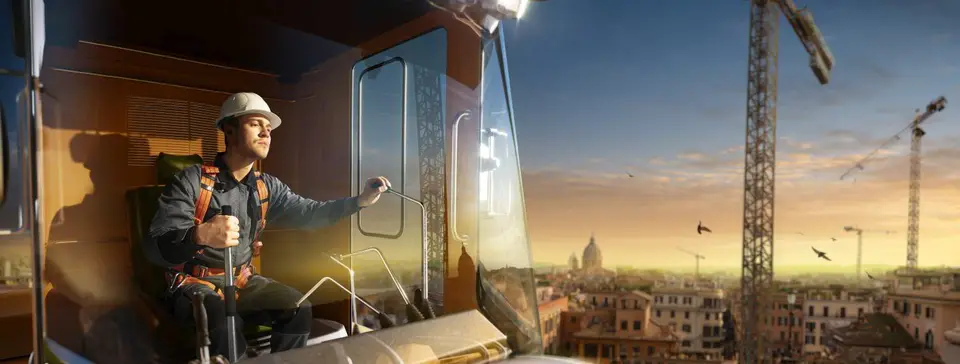
Crane operation is a visual and physical skill. Reading that you should "feather the controls" is one thing. Seeing an experienced operator ease a load off the ground, pause, then swing it smoothly to a precise landing is another.
Good crane operation demo videos let you watch techniques many times, slow them down and notice details you might miss on a busy job site. They help connect the classroom to the cab. They also give you a preview of what practical exam tasks and real lifts look like before you are the one at the controls.
What Videos Do Well, and Where They Stop
Strengths
- Clear demonstrations of inspection steps, setup and hand signals
- Repetition at your own pace
- Exposure to scenarios you may not see often, such as tight sites or blind picks
- Support for different learning styles, since many people learn faster by watching
Limits
- You cannot feel the machine, the load or the wind through a screen
- Videos rarely show the full context of a site, such as ground conditions or power lines off camera
- Poor-quality videos can teach bad habits as easily as good ones
The takeaway: videos are a strong supplement to hands-on training, not a substitute for it. NCCCO practical exams are taken on real cranes.
How to Pick Quality Demo Videos
Use this checklist before you rely on a video:
- Credible source: a training provider, manufacturer, safety organization or experienced, certified operator
- Safety shown correctly: PPE worn, swing radius barricaded, no one under the load, signals used properly
- Pre-operational checks included: good videos show the walk-around, not just the exciting part
- Clear narration or captions: explaining why each step is done, not just what
- Right equipment: matches the crane type you are training on, such as telescopic boom, lattice boom or articulating
- Clear footage: good enough to see the controls, hook and load
- Current practices: consistent with today's OSHA requirements
If a video shows someone riding the load, skipping inspections or ignoring signals, treat it as an example of what not to do.
Topics Worth Watching
Controls and operator aids
Videos that explain each lever, pedal and display, including the load moment indicator and anti-two-block system, help new operators get oriented before their first session in the seat.
Pre-shift inspections
Watching a thorough walk-around shows what wire rope damage, hook wear and hydraulic leaks look like.
Setup
Outrigger deployment, mat placement and leveling are easy to demonstrate on video.
Load control
Look for slow-motion clips that show smooth acceleration, stopping without swing and precise landings.
Signals and communication
Videos are an efficient way to learn standard hand signals and see voice and radio procedures in use. Our signalperson certification program builds on the same signals in person.
Practical exam tasks
Seeing the type of tasks used in practical testing helps candidates know what to practice.
How to Study a Video Like a Pro
Watching passively is not the same as learning. Try this approach:
- Watch once straight through to understand the task.
- Watch again and pause at each step. Ask why the operator did it that way.
- Write down the sequence, such as inspection items or setup steps, from memory.
- Spot the hazards in the frame: people, power lines, obstructions, ground.
- Compare with the manual for your crane to see what differs.
- Practice on real equipment as soon as possible, ideally with an instructor watching.
- Rewatch after practice. You will notice new details once you have felt the controls yourself.
Using Videos in a Company Safety Program
Employers can make videos part of a broader training plan:
- Pre-shift briefings: a two-minute clip on a specific hazard, such as power line clearance, can anchor a toolbox talk.
- New hire orientation: short videos on site rules and signals give a consistent message.
- Refresher training: revisit videos before seasonal changes, such as storm season, or before unusual lifts.
- Lessons learned: with appropriate permissions, footage of your own practice lifts can be reviewed to improve technique.
Pair every video with discussion. Ask the crew how the scenario applies to your site and equipment. That conversation is where much of the learning happens.
Recording Your Own Practice
Some of the most useful videos are the ones you make yourself. With the permission of your instructor or employer, a phone on a tripod or a short clip filmed by a coworker can show things you cannot see from the seat:
- How much the load swings when you stop a swing motion
- Whether your hook is centered over the load before the pick
- How quickly you respond to a signal
- Whether the tagline handler is standing in a safe position
Reviewing that footage with an experienced operator turns a vague sense of "that felt rough" into specific corrections. It also builds the habit of self-assessment that good operators keep throughout their careers. Keep site rules in mind: some job sites and clients restrict filming, so always ask first and avoid capturing people or property that should not be recorded.
Videos Within a Blended Approach
The most effective training mixes formats: classroom instruction, online study, demonstration videos and plenty of supervised seat time. For more on combining digital tools with real equipment, see our posts on online crane safety training resources and crane simulator training.
Turn What You Watched Into Real Skill
At The Crane School, students practice on real cranes with instructors who have years of operating experience. If you are new to cranes, the Initial Mobile Crane Operator Training Program gives you the seat time videos cannot. Contact us to find a start date.
FAQ
Can crane demo videos replace hands-on training?
No. Videos help you understand techniques and safety procedures, but control skills and judgment come from supervised practice on real equipment, and the NCCCO practical exam is taken on a real crane.
Are demo videos useful for experienced operators?
Yes. Experienced operators use them to review procedures before recertification, learn a new crane model or refresh safety topics with their crews.
What should a good crane safety video include?
Correct PPE and site controls, a pre-operational inspection, clear explanations of each step, proper signals, and equipment that matches your crane type.