Crane Certification Courses Explained: Which Type Fits Your Experience?

Start With Where You Are, Not the Crane
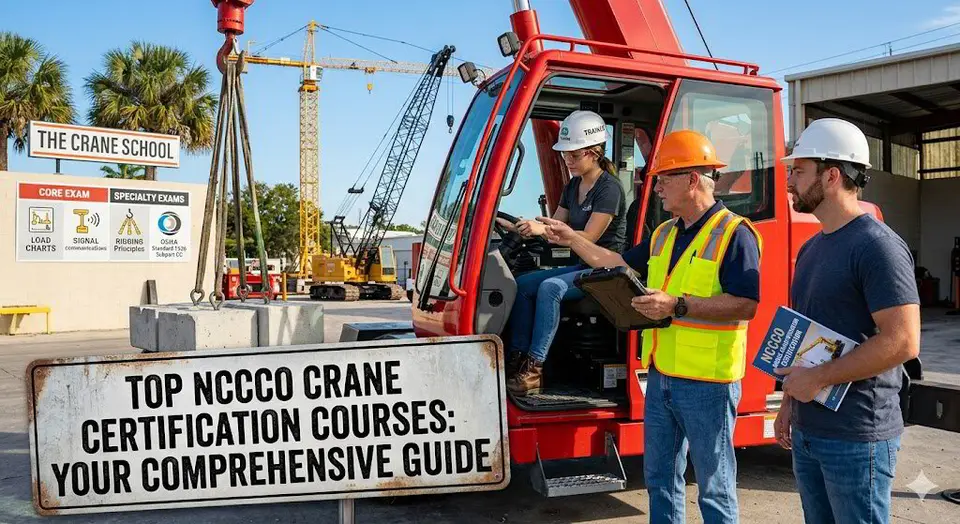
Search for crane certification courses and you will find everything from weekend classes to programs that run more than a month. They are not interchangeable. A short prep class can be a perfect fit for one person and a waste of money for the next.
The biggest factor in choosing is your starting point: how much real operating time you have, whether you are already certified, and what role you play on the crew. This post sorts courses by that starting point. If you already know your experience level and want to match a course to a specific NCCCO designation, read our companion post on NCCCO crane certification courses by designation.
Type 1: Full Training for Beginners
Who it is for: people with little or no crane experience, including career changers, veterans and workers moving over from other equipment.
What it includes:
- Classroom fundamentals: components, terminology, OSHA rules, signals and rigging basics.
- Extensive load chart instruction.
- Daily operating time, building from single motions to precise placement.
- NCCCO written and practical exams scheduled within the program.
Typical length: several weeks of full-time training. At The Crane School, the initial mobile crane operator training program runs 3 weeks for telescopic cranes (TSS and TLL exams) or 5 weeks with lattice boom added (TSS, TLL and LAT exams). Classes run Monday through Thursday, 7:00 AM to 4:00 PM.
What to look for: how many hours you personally spend in the seat, and whether exams are built in.
Type 2: Certification Prep for Experienced Operators
Who it is for: operators who already run cranes and need to pass NCCCO exams.
What it includes:
- Focused review of exam content, especially load charts.
- Exam strategy for written and practical tests.
- Practical exams on the crane type, often with optional practice time beforehand.
- Written exams at the end of the program.
Typical length: a few days. Our mobile crane certification prep program runs once a month, Friday through Monday, with practicals on Friday, classroom work over the weekend and written exams Monday morning. We offer a similar prep program for articulating cranes and one for telehandlers.
What to look for: an honest instructor who will tell you if you are not ready, and access to practice time on the exam crane.
Type 3: Recertification Courses
Who it is for: certified operators within the final year before their certification expires.
What it includes: a refresher on exam content and any changes since you last tested, plus the specialty written exams. A practical exam is added if you do not have the documented experience NCCCO requires to skip it.
Typical length: a few days, or less for classroom-only options. The Crane School offers a classroom-only TSS, TLL and LAT recertification prep class, and recertifying operators can also join the full prep program.
What to look for: a course that covers updated rules, not just the same material you saw five years ago.
Type 4: Ground Crew Courses
Who it is for: riggers, signal persons, and operators who want to understand the ground side of the lift.
What it includes:
- Rigger courses: selecting and inspecting rigging, sling angles, load weights, centers of gravity and hitches. Our rigger qualification and certification program covers Level 1 and Level 2.
- Signalperson courses: standard hand and voice signals, signal person responsibilities, and qualification under OSHA 1926.1428.
Typical length: two to three days. Qualification classes run two days; certification options that include the NCCCO practical run three.
What to look for: plenty of hands-on practice, not just slides.
Type 5: Courses for Managers and Supervisors
Who it is for: project managers, superintendents, safety managers and anyone responsible for crane operations without necessarily operating.
What it includes: OSHA and industry compliance, preventing accidents, responsibilities, lift planning, inspections, certification requirements and limiting liability. Our Managing Crane Safety class is built around these topics.
What to look for: practical examples from real operations, and guidance you can turn into site procedures. The best classes leave you with checklists and documentation habits you can put to work on Monday morning, not just a certificate of attendance.
How to Judge Any Crane Course
Whatever type you choose, ask these questions before you pay:
- Who are the instructors? Look for certified operators with real field time. Credentials such as NCCCO practical examiner or inspector are a plus.
- How much hands-on time will I get? Ask for hours per student, not hours of class.
- Are NCCCO exams included or scheduled for me? Find out what is and is not covered in the price.
- What happens if I do not pass? Ask about retest options and any guarantee. The Crane School offers a written-exam guarantee; ask for the terms.
- Can the course come to us? Employers training groups often save time and travel with on-site delivery.
Courses that answer clearly and in writing are usually the ones worth taking.
Find Your Starting Point
Most people can place themselves in one of the five types above within a minute. If you are on the line between two, for example an equipment operator with a little crane time, it is usually better to choose the more thorough option.
Browse all of our training programs, or call (813) 402-2017 and tell us about your experience. We will point you toward the course that fits.
FAQ
What is the difference between crane training and a certification prep course?
Training builds operating skill from the ground up over weeks. A prep course assumes you can already operate and focuses on passing NCCCO exams in a few days.
Can I take a prep course if I have operated other heavy equipment?
Experience on excavators or forklifts helps, but it is not crane experience. Most people in that position do better in a full training program.
Are rigger and signalperson courses only for ground crews?
No. Many operators take them to understand the whole lift and to be more flexible on crews.
Do crane courses include the NCCCO exam fees?
It depends on the course. Always ask what the price includes before you enroll.