NCCCO Crane Certification Courses Matched to Each Designation
Working Backward From the Card
NCCCO certifies by designation, and each designation has its own written and practical exams. The fastest way to choose among NCCCO crane certification courses is to start with the designation your work requires and work backward to the course that prepares you for it.
Below is a designation-by-designation map of the programs The Crane School offers. If you are still deciding what kind of course suits your experience level, read crane certification courses explained by experience level first, then come back here.
Mobile Cranes: TSS, TLL and LAT
What the designations mean
- TSS: telescopic boom crane, fixed cab. Common on boom trucks and carrier-mounted cranes.
- TLL: telescopic boom crane, swing cab. Rough-terrain, all-terrain and many truck cranes.
- LAT: lattice boom cranes, on crawlers or trucks, used on many of the largest lifts.
All three require the mobile crane core written exam, a specialty written exam for the type, and a practical exam.
Courses that prepare you
- New to cranes: the initial mobile crane operator training program. The 3-week version prepares you for TSS and TLL. The 5-week version adds lattice boom and LAT.
- Experienced operator or recertifying: the mobile crane certification prep program, held monthly from Friday to Monday, covers TSS, TLL and LAT written and practical exams.
- Lattice focus: a 4-week lattice crane class is also listed in our store.
- Extra seat time: hourly practice is available for telescopic and lattice cranes.
Articulating Cranes: ABC, ABL and ABW
What the designations mean
Articulating (knuckle boom) cranes have their own NCCCO program with three designations:
- ABC: articulating boom crane.
- ABL: articulating boom loader, typically used to load and unload material from a truck bed.
- ABW: articulating boom crane equipped with a winch.
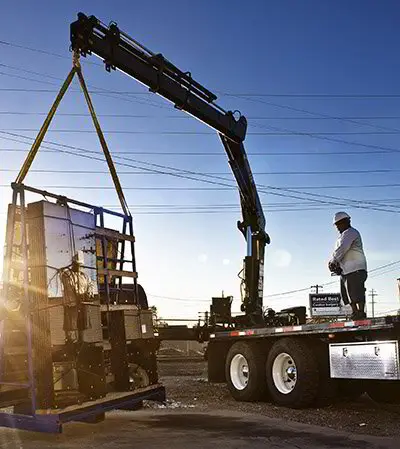
These cranes are common in building material delivery, sign and utility work, and many trades. Remote controls are often used, which changes the operator's viewpoint.
Course that prepares you
The articulating crane operator certification prep program is for people with articulating crane experience and covers ABC, ABL and ABW written and practical exams. The program follows the same pattern as our mobile crane prep: focused classroom review, practical exams on the crane type, and written exams.
Telehandlers: THO
What the designation means
THO is NCCCO's telehandler operator certification. Telehandlers are generally treated as forklifts rather than cranes under OSHA, unless they are rigged to hoist suspended loads with a winch or hook. Many contractors still want operators certified because telehandlers are involved in many lifting operations.
Telehandlers also bring their own hazards: changing capacity as the boom extends, attachments that each carry their own load chart, and stability on uneven ground. A course built for THO focuses on those specifics rather than treating the machine as a simple forklift.
Course that prepares you
Our telehandler operator program prepares candidates for THO written and practical exams, for both initial certification and recertification.
Rigger Level I and Level II
What the designations mean
- Rigger Level I: can perform simple, repetitive rigging tasks when the load weight, center of gravity and rigging are already determined.
- Rigger Level II: can select and inspect rigging, determine load weights and centers of gravity, and handle more complex rigging decisions on their own.
OSHA requires qualified riggers for certain work under Subpart CC, and many sites ask for third-party certification.
Courses that prepare you
The rigger qualification and certification program covers both levels. Options include a 2-day qualification class, a 2-day recertification class, and a certification option that includes the NCCCO practical.
Signalperson
What the designation means
NCCCO signalperson certification covers standard hand and voice signals and the duties of the person directing a crane. OSHA 1926.1428 requires signal persons to be qualified, and certification by a third party is one recognized way to show it.
Courses that prepare you
The signalperson qualification and certification program includes a 2-day qualification class and a 3-day certification option with the NCCCO practical. Operators often take it to understand the other side of the radio.
Supervisors and Managers
Not everyone responsible for crane safety needs a card. Supervisors, project managers and safety staff benefit from the Managing Crane Safety class, which covers OSHA and industry compliance, planning, inspections, certification requirements and limiting liability.
Designations We Do Not Train For
NCCCO also offers certifications such as tower crane, overhead crane, digger derrick, service truck crane, lift director and crane inspector. The Crane School does not run dedicated preparation programs for those. If you need one of them, check NCCCO's site for approved training and test options. For crane owners, our NCCCO-certified inspectors do provide annual and other inspections through our inspection services.
Training a Group or Crew
Employers often certify several people at once. The Crane School can deliver scheduled programs, including the required NCCCO exams, at your facility anywhere in the country. Our accredited practical examiners can also schedule practical exams nationwide, and written exams are given monthly at our Seffner, Florida headquarters.
Group training works especially well when crews run the same equipment every day, since practicals can take place on familiar cranes in familiar conditions. It also keeps everyone on the same schedule for recertification five years later, which makes tracking much simpler for the safety department.
Next step
If you know the designations you need, contact us for dates or an on-site quote, or browse open sessions on the class schedule.
FAQ
Do I need separate courses for TSS and TLL?
No. Both are covered in the same mobile crane programs, and many candidates test for both in one session.
Is THO certification a crane certification?
THO is NCCCO’s telehandler certification. Telehandlers are usually treated as forklifts under OSHA unless used to hoist suspended loads, but many employers require THO anyway.
Can a crew take NCCCO courses at our own site?
Yes. Scheduled programs and required NCCCO exams can be delivered at your facility anywhere in the country.
Does The Crane School offer tower crane certification courses?
No. Our programs focus on mobile, articulating, telehandler, rigger and signalperson designations, plus crane safety for managers.