Mastering Crane Operation Skills

Breaking Crane Operation Skills Into Parts
Watch an experienced operator place a load and it looks like one smooth motion. In reality, it is a stack of separate crane operation skills working together: inspection, setup, calculation, control, awareness and communication.
When operators struggle, it is usually one of those parts, not all of them. Breaking the job down lets you find your weak spot and practice it directly instead of just logging more hours and hoping.
The skills below are listed roughly in the order they happen on a real lift.
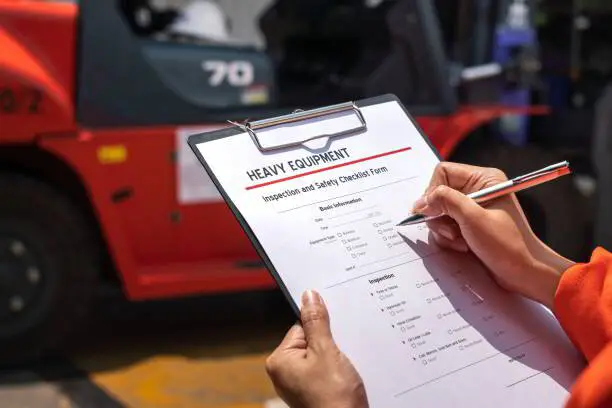
Skill 1: Inspection You Actually See
Every operator does a walk-around. Fewer operators see what they are looking at.
Practice it: Build a fixed route around the machine and follow it every time. Look at wire rope for broken wires, kinks and crushing; check hooks and latches; look for hydraulic leaks, damaged hoses, tire or track problems, and loose pins. Inside the cab, test the load moment indicator, anti-two-block device, horn and controls before the first lift.
Common gap: Rushing the check because the crew is waiting. A five-minute delay is cheaper than a mid-lift failure.
Skill 2: Setup and Leveling
A crane is only as stable as what it stands on.
Practice it: Set up on different surfaces and confirm level with the onboard indicator and a visual check. Use proper cribbing under outrigger pads. Learn to estimate ground conditions: fresh fill, buried utilities, soft shoulders and areas near excavations all deserve caution.
Common gap: Setting outriggers partially when the chart requires full extension. Your chart must match your actual configuration.
Skill 3: Load Chart Fluency
Reading the chart should be routine, not a puzzle.
Practice it: Work chart problems away from the crane until they become fast:
- Identify the correct chart for boom length, counterweight and outrigger position.
- Find the rated capacity at the planned radius.
- Subtract deductions such as hook block, rigging and any stowed attachments, as required by the manufacturer.
- Compare the net capacity with the load weight.
- Repeat for the farthest radius the load will reach during the swing.
The NCCCO written exams include chart questions for each crane type, so this skill pays off twice.
Skill 4: Smooth, Feathered Controls
Jerky inputs swing loads, shock rigging and make signalpersons nervous.
Practice it: Start and stop every function slowly. Practice hoisting and lowering a test weight to an exact mark, then combine functions, such as hoist with swing, while keeping the load steady. On the practical exam, smoothness and control are part of what examiners evaluate.
Common gap: Correcting a swinging load with sharp opposite inputs, which often makes it worse. Small, timed corrections work better.
Skill 5: Swing and Load Control
Practice it: Swing to a target and stop the load without overshoot. Learn how boom length and line length change the pendulum effect. Practice placing loads into tight spaces, such as between barrels or through a marked zone, the way practical exam courses are laid out.
Common gap: Watching only the boom tip. Keep the load, the path and the people in your scan.
Skill 6: Situational Awareness
Practice it: Before each lift, name the hazards out loud: power lines, other equipment, pedestrians, wind and overhead obstructions. During the lift, keep scanning. After the lift, ask what changed on the site since the morning.
Federal rules set minimum clearances from power lines (29 CFR 1926.1408). Know the distances that apply to your work and when a dedicated spotter is required.
Skill 7: Communication
Practice it: Run drills with a signalperson using standard hand signals until you respond without thinking. Agree on a stop signal and radio procedure before every job. If you cannot see your signalperson or do not understand a signal, stop.
Operators who have trained as signalpersons often communicate better because they know what the ground sees. The signalperson program is a short, practical way to learn both sides.
Skill 8: Knowing When to Stop
The least visible operating skill is judgment. It is also the one that prevents the worst outcomes.
Practice it: Before each lift, set your own stop conditions: a wind speed, a ground condition, a loss of signal contact, a load that does not lift level. Say them out loud during the pre-lift meeting so the crew knows them too. When one of them happens, stop without debate and reassess.
Common gap: Letting schedule pressure override a stop. Remember that the operator has the authority, and the responsibility, to refuse a lift that is not safe. Experienced operators often say this was the hardest skill for them to learn, and the one they are proudest of.
How Skills Show Up on the NCCCO Practical
The practical exam is a compressed version of the skills above. Candidates demonstrate control on a set course within time limits, and examiners watch for smooth operation, accurate placement and safe habits. The exact tasks vary by crane type, so review NCCCO's current candidate materials for yours.
If one skill keeps tripping you up in practice, it will likely show up on exam day. Fix it in practice first.
Turning Practice Into Progress
Hours alone do not build skill; focused hours do. A few habits help:
- Pick one skill per session. Spend an hour on smooth stops, not a general session.
- Get coached. An instructor can spot habits you cannot feel. The Crane School offers telescopic crane practice by the hour, with or without coaching, and lattice practice as well.
- Record and review. Note what went wrong and what fixed it.
- Test yourself. Set up a short course with targets and time limits.
For broader guidance on making the most of a training program, see tips for success in professional crane training.
Book Focused Seat Time
If you have a practical exam coming up or want to fix one specific habit, coached practice is the most direct route. Check the class schedule or contact us to reserve time.
FAQ
What is the hardest crane skill to learn?
Many operators say smooth load control, especially stopping a swing without overshoot. It takes focused practice and coaching more than raw hours.
Can I practice before my NCCCO practical exam?
Yes. Hourly practice slots are available, and certification prep students can reserve practice time the Thursday before the Friday practical exams.
Do I need to memorize load charts?
No. You need to read them quickly and accurately, including deductions, for the crane configuration you are using.