Navigating the Future: Advanced Technologies in Crane Operation Training
Why Training Technology Is Changing
Learning to run a crane has always meant hours at the controls with an experienced instructor nearby. That model still works, but it has limits. Seat time is expensive, weather cancels practice, and nobody wants a beginner to experience a real emergency.
Crane simulator training and related tools such as virtual reality (VR) and augmented reality (AR) aim to fill those gaps. Used well, they help trainees build skills and judgment before and between sessions on a real machine. Used poorly, they create false confidence.
This post looks at the training side of crane technology. If you are curious about where the industry itself is heading, read our companion post on the future of crane operation.
Simulators: Practice Without the Risk
A crane simulator reproduces the cab, controls and view from the seat, usually on screens or a VR headset. Higher-end units add motion platforms that tilt and shake.
What simulators do well
- Control familiarity: trainees learn which lever does what before they touch a real crane.
- Repetition: the same lift can be repeated many times, with instant reset.
- Emergencies: scenarios like a sudden gust, a two-block warning or a hydraulic failure can be practiced safely.
- Measurement: many systems score smoothness, swing control and time, giving instructors objective feedback.
What simulators do not do
- Reproduce the feel of a real load fully, including boom deflection and subtle machine feedback
- Replace setup tasks such as checking ground conditions and placing outrigger mats
- Teach real-world communication with a rigging crew under noise and pressure
Virtual and Augmented Reality
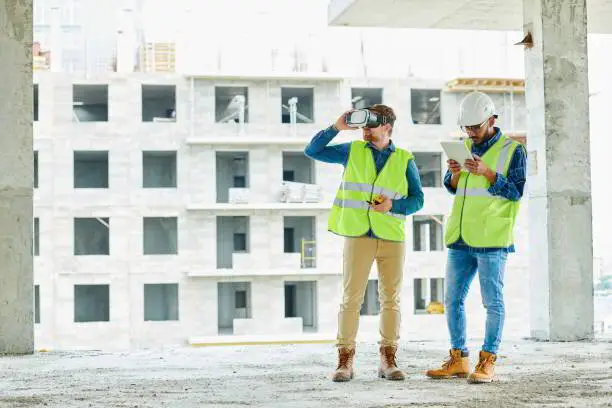
VR places the trainee inside a 3D jobsite. It can be used for operating practice, but it is also useful for walk-around inspections, hazard recognition and understanding blind spots.
AR overlays digital information on the real world through a tablet or headset. In training, AR can label crane components during an inspection lesson or show a projected load path on a practice yard. It keeps the trainee connected to real equipment while adding information.
Both technologies can make classroom topics such as load charts and rigging geometry more visual. They are tools for understanding, not certificates of skill.
Drones as a Teaching Tool
Drones are better known for inspections, but they also help in training. Overhead video of a practice lift lets an instructor show a trainee exactly how the load swung or where the tagline handler stood. Reviewing that footage afterward can be more convincing than any verbal correction.
E-Learning and Mobile Study Tools
Not all training technology is high-end hardware. Some of the most practical tools are simple:
- Online modules that cover OSHA rules, hand signals and rigging basics at the trainee's own pace
- Load chart practice software and worksheets that let trainees work dozens of problems before the written exam
- Video demonstrations of inspections, setups and practical exam tasks
- Mobile apps with quick-reference signal charts and inspection checklists
These tools are inexpensive and easy to revisit, which makes them valuable for refreshers as well as initial training. Our post on crane operation demo videos explains how to pick videos that actually teach good habits.
Measuring the Impact on Training Outcomes
When training technology is used thoughtfully, programs often aim for three benefits:
Safer learning
Mistakes in a simulator cost nothing. Trainees can learn what an overload or two-block situation looks like without endangering anyone.
Faster early progress
Trainees who already know the controls can spend real seat time on finer skills such as feathering, load control and precise placement.
Better access
Some theory and familiarization can be delivered in shorter sessions or closer to where trainees work.
Results depend on how the tools are integrated, the quality of the scenarios and the instructor's involvement. Technology without coaching rarely helps much.
Why Real Seat Time Still Decides the Outcome
NCCCO (National Commission for the Certification of Crane Operators) practical exams are taken on real cranes, and job sites expect operators who can handle real loads. That makes hands-on practice the non-negotiable core of any program.
At The Crane School, training is built around time on actual equipment with experienced instructors, and practice time on telescopic and lattice boom cranes can be booked by the hour through the store. Our Initial Mobile Crane Operator Training Program is designed for people with little or no experience who need that seat time.
Simulator or VR time can be a helpful supplement, but ask any training provider how much real operating time you will get before your practical exam.
Building a Blended Training Plan
Employers and trainees can get the best of both worlds with a blended approach:
- Classroom and digital study for regulations, load charts and rigging principles.
- Simulator or VR practice to learn controls and rehearse emergencies, where available.
- Supervised seat time on the crane type you will operate.
- Practical exam preparation focused on the specific tasks you will be tested on.
- On-the-job mentoring after certification.
Supervisors planning this kind of program for a crew can find related guidance in our post on ongoing crane operator training.
Questions to Ask a Training Provider About Technology
- How much time will I spend on real cranes compared with simulators or video?
- Which crane types will I practice on, and do they match the exams I am taking?
- How do instructors use performance data to coach me?
- Is the technology optional support or a required part of the course?
Clear answers help you judge whether technology is improving the training or standing in for it.
Start With Real Equipment
Technology will keep changing how operators learn, but confident operators are still made on real machines with good coaching. Check the class schedule or contact The Crane School to plan your training.
FAQ
Does simulator time count toward NCCCO certification?
NCCCO certification is earned by passing written and practical exams. The practical exam is taken on a real crane, so simulator time can help you prepare but does not replace hands-on practice.
Is VR crane training effective?
VR can be effective for learning controls, recognizing hazards and practicing emergencies, especially when an instructor coaches the session. It works best as a supplement to real equipment.
What is augmented reality in crane training?
AR overlays digital information, such as component labels or load paths, onto a real view through a tablet or headset, helping trainees connect theory to real equipment.