The Florida Construction Chess Match: Choosing the Right Crane for the Job

Why Crane Selection Is a Strategic Decision
To a passerby, a crane is a crane. To the people planning a job, picking the machine is a strategic move that affects safety, schedule and cost. Bring too little crane and you cannot make the pick safely. Bring too much and you waste money and space on a tight site.
For operators, understanding choosing the right crane for the job is more than trivia. It helps you contribute to lift planning, explains why certification is by crane type, and shows you which certifications to pursue next.
Hydraulic Mobile Cranes: The Everyday Workhorse
Hydraulic mobile cranes ride on rubber tires, either a truck carrier or a multi-axle all-terrain carrier, with a telescoping boom that extends in minutes.
Where you see them in Florida
- Setting trusses, lumber and block on residential and commercial projects.
- Placing rooftop HVAC units on retail and light commercial buildings.
- Highway work: sound walls, light poles, sign structures and smaller precast pieces.
- Storm recovery, where fast arrival and setup matter.
Strengths
- Mobility: they drive on public roads and can serve more than one site in a week.
- Quick setup: drive in, deploy outriggers and work, often the same day.
- Range of sizes: from boom trucks to large all-terrain cranes.
Limits
- Capacity drops quickly as radius increases.
- They need firm, level support for outriggers. On sandy or saturated Florida soils, that often means crane mats and careful ground assessment.
Mobile cranes are where most operators start. NCCCO's TSS and TLL designations cover telescopic boom cranes, and The Crane School's initial mobile crane program trains beginners on them.
Tower Cranes: Built for Vertical Work
Tower cranes are assembled on site and stay for the life of a high-rise or large single-site project.
- Strengths: great height and working radius from a small footprint, which is essential on dense urban lots.
- Limits: erection and dismantling are major operations, often requiring a large mobile crane. Tower cranes are sensitive to wind, and in Florida, hurricane preparation is a serious planning item.
Tower crane operation requires its own certification. Read more in our guide to tower crane operator requirements in Florida.
Crawler Cranes: Heavy Lifting on Tracks
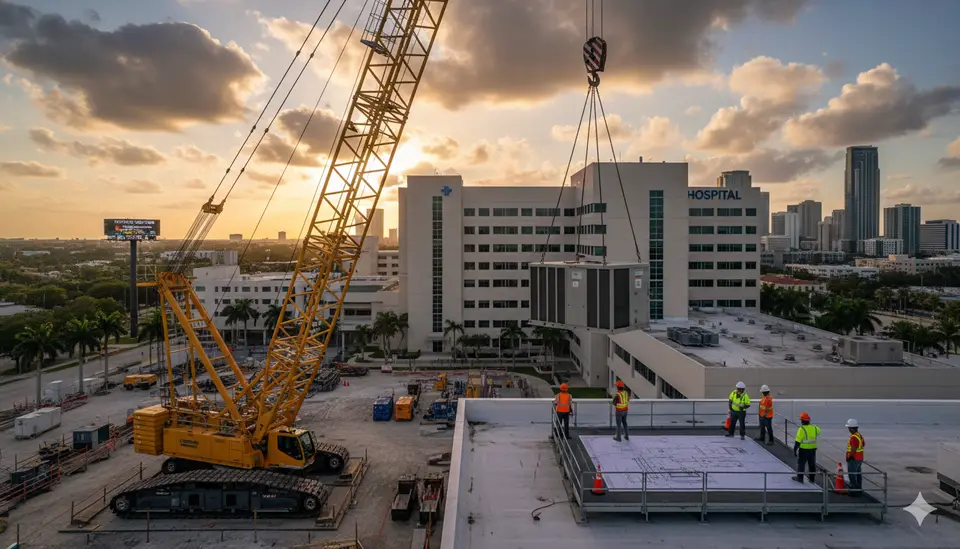
Crawler cranes ride on tracks and usually carry lattice booms. They are transported in pieces and assembled on site.
- Strengths: very high capacity, and tracks spread the load over a larger area. Many crawlers can travel with a load (within manufacturer limits), which helps on bridge, port and industrial projects.
- Limits: slow to mobilize and assemble, and they still need well-prepared ground.
Lattice boom crawler and truck cranes fall under NCCCO's LAT designation, included in the 5-week version of the initial training program and the mobile crane certification prep program.
Articulating Boom Cranes: Precision Delivery
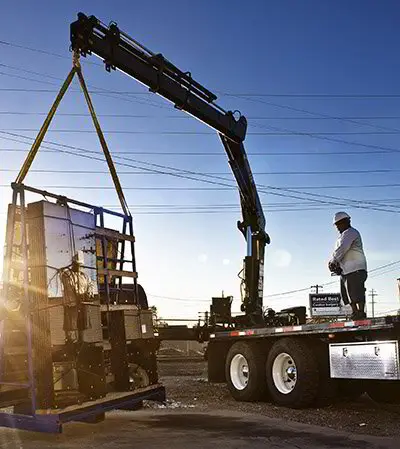
Articulating, or knuckle boom, cranes are typically truck-mounted and fold for transport. They excel at delivering and placing materials such as block, trusses, roofing and building supplies at the point of use.
- Strengths: precise placement, compact footprint and the ability to reach over and around obstacles.
- Limits: lower capacity than larger mobile cranes at long reach.
NCCCO certifies articulating crane operators through the ABC, ABL and ABW designations, covered in the articulating crane certification prep program.
Telehandlers: More Than a Forklift
Telehandlers are telescopic material handlers used widely on residential and commercial sites. With certain attachments, such as a winch or hook, they can be used as cranes, which brings crane rules into play. NCCCO's THO designation certifies telehandler operators, and the telehandler operator program prepares candidates for it.
On many Florida residential and light commercial jobs, a telehandler handles pallets, trusses and roofing materials that would otherwise call for a small crane. Knowing when the machine is acting as a forklift and when it is acting as a crane matters for both rules and safe operation.
Florida Conditions That Change the Equation
Florida adds a few twists to crane selection:
- Soils. Sandy, organic or saturated ground can limit where outriggers and tracks can go. A crane that fits on paper may need mats, cribbing or a different setup location.
- Wind and storms. Afternoon thunderstorms and hurricane season affect long-duration machines most. A tower crane on site for a year must be planned around storm procedures; a mobile crane can simply leave.
- Tight urban sites. Dense downtown lots push projects toward tower cranes or smaller mobile cranes that fit limited space.
- Coastal and port work. Waterfront projects may call for crawler cranes, sometimes on barges or prepared pads.
These conditions are why lift planners look beyond the load chart.
Factors That Drive the Choice
Experienced planners weigh these questions before choosing a machine:
- Load weight and dimensions, including rigging, and the heaviest pick on the job.
- Radius and height needed for the farthest and highest placements.
- Ground conditions and space for outriggers, tracks or a tower foundation.
- Site access for transport and assembly.
- Duration of the work: a single day or months.
- Obstructions and power lines near the swing path.
- Weather exposure, especially wind and hurricane season.
Operators who think through these questions earn a seat at the planning table. For a worked example, see our illustrative critical lift walk-through.
Build a Versatile Skill Set
The more crane types you understand and are certified on, the more moves you can make in your career. Explore the Florida NCCCO training options or contact The Crane School to talk about which certification to add next.
FAQ
Does one crane certification cover all crane types?
No. Certification is by crane type. Mobile telescopic, lattice boom, tower, articulating and telehandler operation each have separate certifications.
Why do Florida sites use crane mats so often?
Many Florida soils are sandy or become saturated after rain. Mats spread outrigger or track loads over a larger area to improve support.
Can a telehandler be used as a crane?
With certain attachments, yes, and crane requirements then apply. Check the manufacturer's guidance and applicable OSHA rules.